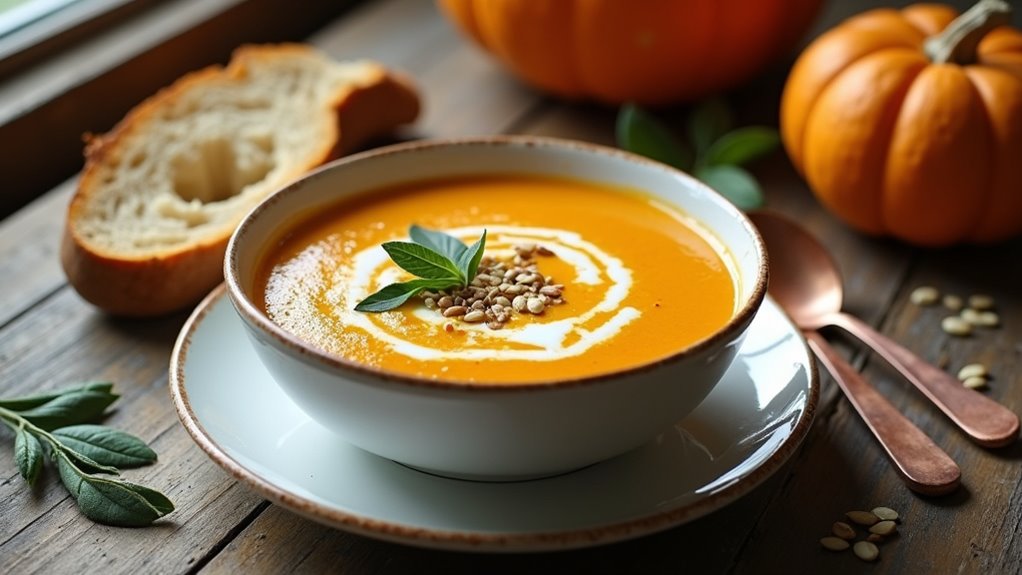
Butternut squash transforms under heat. Roasting caramelizes sugars, deepens flavors, and concentrates sweetness. The humble gourd becomes extraordinary. Vegan adaptations replace cream with plant alternatives without sacrificing richness. Texture matters—silky smoothness comes from proper technique, not dairy. Professional chefs know: garnishes aren’t decorative afterthoughts but critical flavor enhancers. The right toppings elevate home cooking to restaurant quality. The difference between adequate and exceptional soup? Details most cooks overlook.
Some of the links in this article may be affiliate links. If you make a purchase through these links, we may earn a small commission at no extra cost to you. Thank you.
The Magic of Roasting Butternut Squash
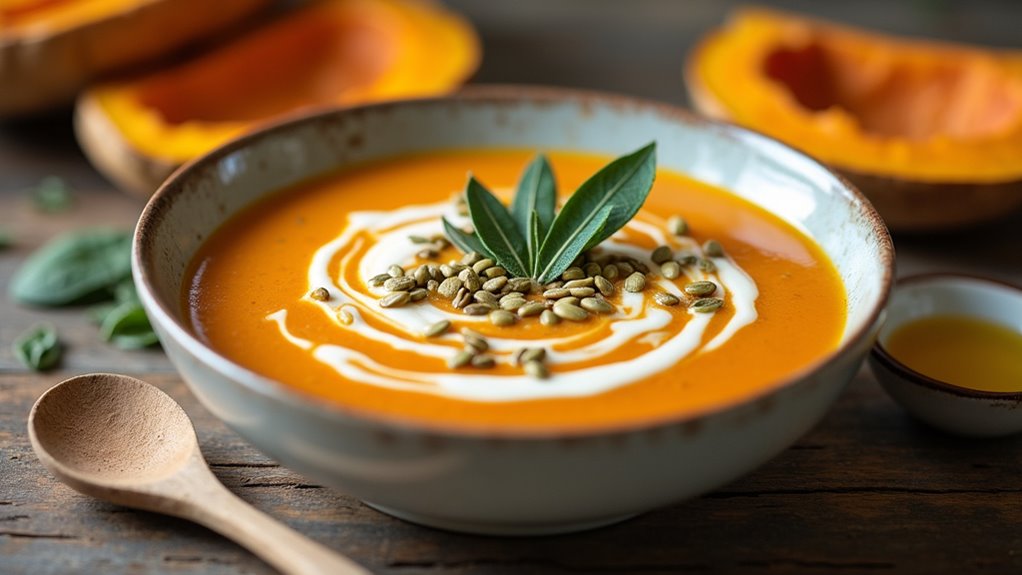
While many soup recipes call for boiling squash directly in the pot, roasting transforms this humble gourd into something extraordinary. The high, dry heat caramelizes natural sugars, creating complex flavor development impossible to achieve through boiling. Smart roasting techniques matter: halve the squash, scoop seeds, brush with olive oil, then place cut-side down. This traps steam, ensuring flesh softens while still developing those vital browned edges. At 400°F for 35-45 minutes, the squash develops nutty, caramel notes that form the backbone of an exceptional soup. No shortcuts here – this preparation method simply cannot be skipped.
Key Ingredients for Creamy Vegan Soup
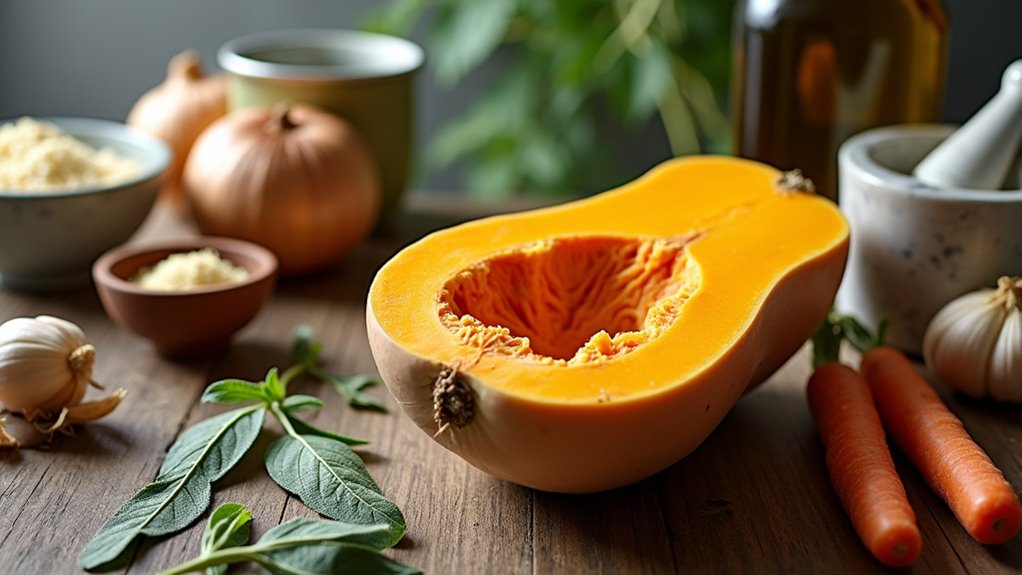
Creating velvety, dairy-free soup requires strategic ingredient selection. Potatoes serve as the unsung hero, providing creamy texture without cream. Roasted butternut squash delivers natural sweetness and body—non-negotiable.
Balance comes from aromatics. Onions and garlic build the flavor foundation; celery and carrots add depth. Salt isn’t optional—it’s essential for revealing flavors.
The magic happens in technique. Proper roasting caramelizes sugars in squash. Sautéing onions until translucent releases their sweetness.
For ideal flavor balance, don’t skip black pepper or olive oil. Finish with roasted pumpkin seeds—they’re not mere garnish but textural counterpoint.
Step-by-Step Cooking Guide
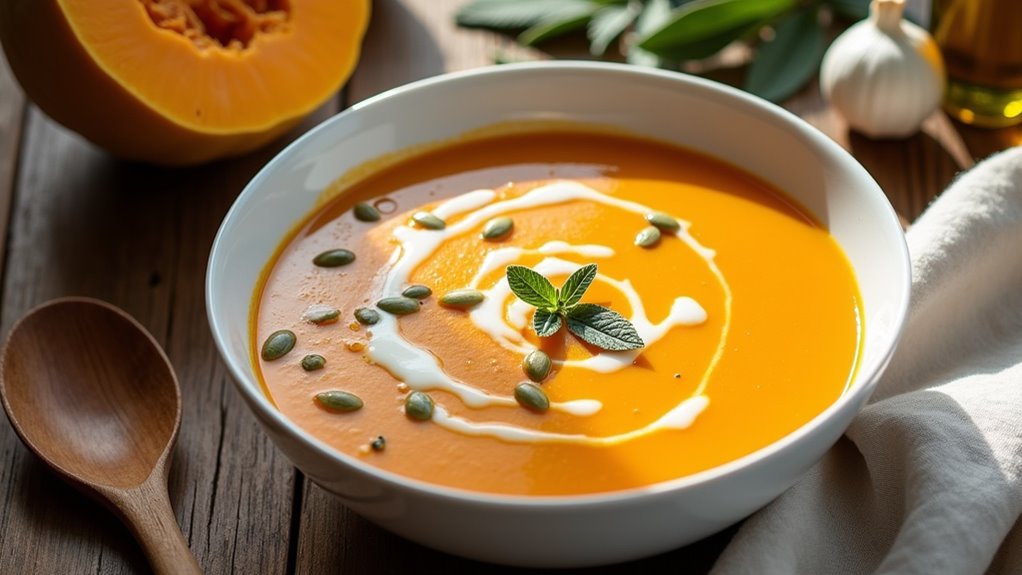
To begin crafting this velvety soup, follow precise temperature control and timing. Roasting squash at exactly 400°F for 35-45 minutes develops caramelization essential for depth. Don’t rush this step—it’s non-negotiable for proper soup texture.
Meanwhile, sauté onions until translucent (5-7 minutes), then add garlic. Quick tip: crush, don’t mince. Cooking methods matter here. Simmer vegetables exactly 15 minutes—not a minute longer—to maintain nutritional integrity.
After cooling roasted squash for 10 minutes (set a timer), blend everything with an immersion blender. Want silkier results? Use a Vitamix. Garnish with freshly roasted pumpkin seeds. No substitutions.
Garnishing Tips for a Professional Finish
For the perfect butternut squash soup, presentation matters just as much as flavor. Professional-looking garnish options transform a simple soup into restaurant-quality fare with minimal effort.
- Toasted pumpkin seeds – add essential textural contrast and nutty flavor
- Microgreens or fresh herbs – scatter cilantro, chives, or thyme for color pop
- Swirl of coconut cream – creates elegant visual appeal against orange background
- Drizzle of herb-infused olive oil – adds glossy finish and flavor depth
- Crispy fried sage leaves – provide aromatic crunch and sophisticated presentation techniques
Master these simple presentation techniques, and even weeknight soup becomes Instagram-worthy.
Frequently Asked Questions
Can I Make This Soup Ahead and Freeze It?
This soup freezes well when stored in airtight containers. Freezing techniques include portioning into single servings for convenience. For ideal soup storage, consume within three months after freezing.
How Do I Select the Perfect Butternut Squash?
When selecting ripe squash, look for butternut squash varieties with uniform tan color, no green patches, and a matte finish. Choose heavy specimens with intact stems and firm skin.
What Can I Substitute for Pumpkin Seeds?
Like stars scattered across a night sky, sunflower seeds offer a perfect crunch substitute for pumpkin seeds. Hemp hearts provide a nutritious alternative with their nutty flavor and soft texture.
Is There a Nut-Free Alternative to Make It Creamy?
For nut-free creaminess, coconut milk offers a rich alternative to cashew cream. The potato already included in the recipe also contributes significant creaminess without nuts when properly blended.
How Long Does This Soup Keep in the Refrigerator?
Fresh as a daisy, this soup keeps 4-5 days when refrigerated in airtight containers. Following proper soup preservation tips and refrigeration guidelines guarantees maximum flavor retention and food safety.
Conclusion
Butternut squash soup isn’t just delicious—it’s nutritional dynamite. Studies show that regular consumption of carotenoid-rich foods like butternut squash can reduce heart disease risk by up to 26%. This vegan version eliminates dairy without sacrificing creaminess, proving that plant-based comfort food requires no compromise. Master this recipe, impress your guests, and boost your health simultaneously. Efficiency and flavor in perfect harmony.
About The Author