Sleep troubles have become increasingly common in our hectic lives. Lavender oil offers a natural solution that many swear by, but its true power lies in the science. Research suggests the aromatic compounds interact with our brain chemistry in surprising ways. Not all lavender products work equally well, though. Some combinations amplify its effects, while others might actually diminish them. What if the secret to better sleep has been hiding in plain sight all this time?
Some of the links in this article may be affiliate links. If you make a purchase through these links, we may earn a small commission at no extra cost to you. Thank you.
The Science Behind Lavender’s Sleep-Enhancing Properties
Although many people rely on lavender oil as a sleep aid based on anecdotal evidence, there’s actually compelling scientific research that explains why this fragrant purple flower works so effectively.
Recent sleep studies have shown that inhaling lavender compounds can increase slow-wave sleep patterns, the deepest and most restorative phase of rest.
The secret lies in lavender chemistry – specifically in linalool and linalyl acetate, compounds that interact with neurotransmitters in the brain.
These natural chemicals appear to activate parasympathetic responses, perhaps by mimicking certain calming processes already present in our nervous system.
I think this biological connection explains why so many find it genuinely effective, not just pleasantly scented.
Five Essential Oil Blends for Your Bedtime Ritual
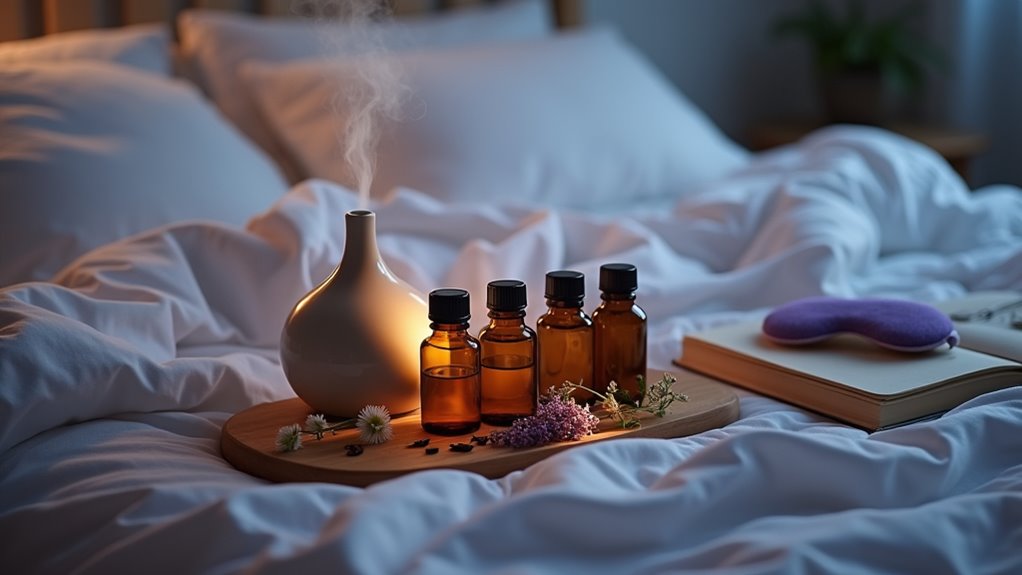
How can anyone create the perfect environment for sleep? I think it’s all about finding those essential oil combinations that signal to your body it’s time to wind down.
Creating a sleep sanctuary begins with the right essential oil blend to help your body recognize it’s time to rest.
The most effective bedtime blends often feature lavender as their foundation. Try combining lavender with tangerine for a sweet, calming atmosphere, or perhaps mix it with geranium for a floral touch.
Bath enthusiasts might prefer lavender with sandalwood swirled in warm water.
For those who enjoy massage, lavender blended with linaloe wood and sweet almond carrier oil creates a soothing experience.
Beyond Diffusers: Creative Ways to Use Lavender for Sleep
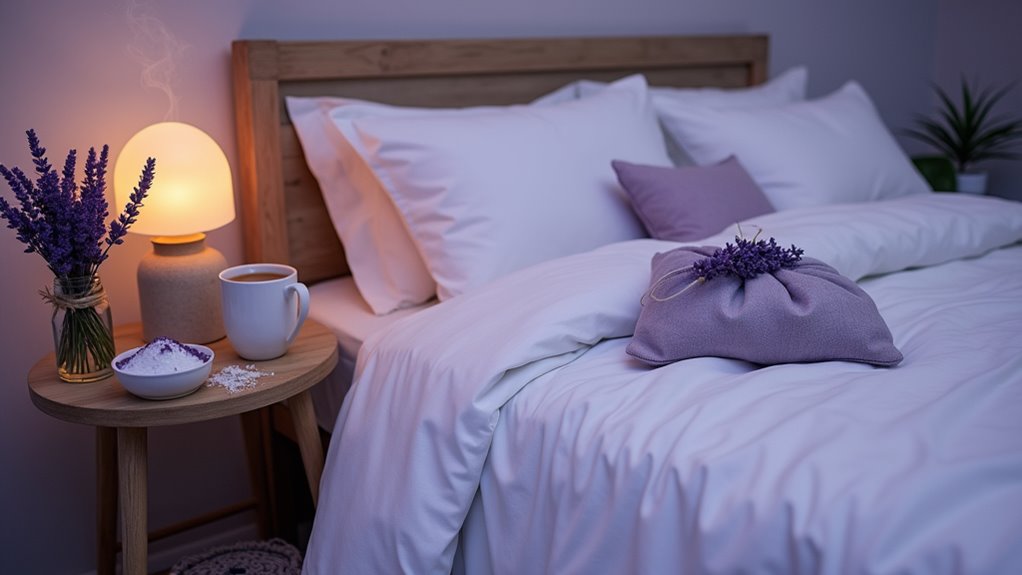
While diffusers effectively disperse lavender’s soothing aroma throughout a bedroom, they represent just one method in a vast array of sleep-supporting applications.
Handmade lavender sachets tucked beneath pillows release gentle scents throughout the night, perhaps more subtly than mechanical alternatives. Some find this gradual release more conducive to maintaining sleep quality.
Sleep pillows, small cushions filled with dried lavender flowers, offer another approach. These can be positioned strategically – maybe under the neck or beside the head – creating a personalized aromatherapy experience.
I think the tactile nature of these applications adds another dimension to the sleep ritual, engaging multiple senses and deepening the relaxation response.
Customizing Lavender Treatments for Different Age Groups
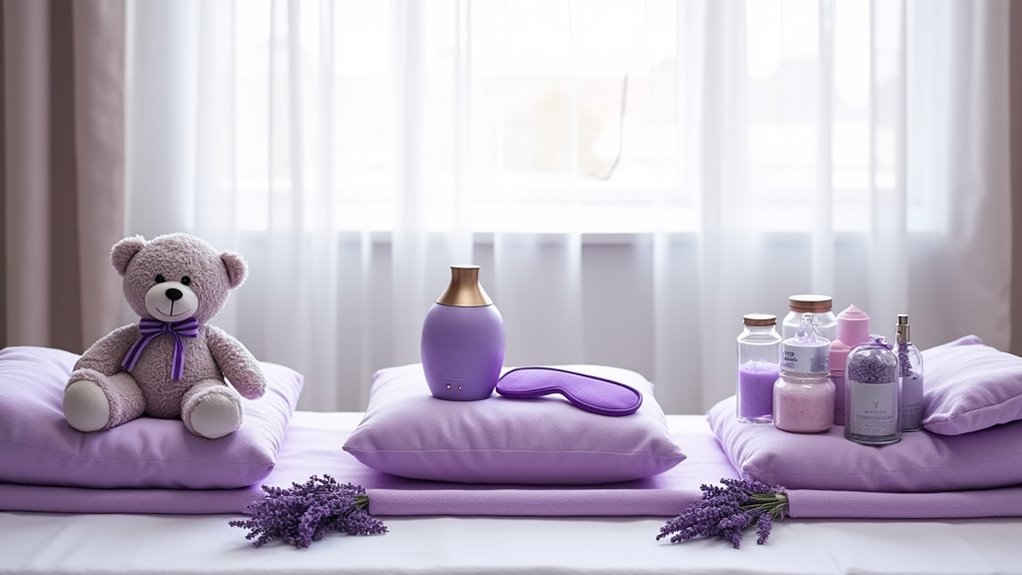
Lavender treatments must be adjusted according to age groups, as sensitivity to essential oils varies greatly throughout the lifespan.
Infants and young children, for instance, require considerably higher dilution rates—perhaps 0.5% concentration at most—compared to adults who can tolerate 2-3%.
Age-specific applications matter tremendously when designing sleep routines. For seniors, whose skin tends to be thinner, gentler dilution guidelines should be followed, though they might benefit from slightly stronger aromatherapy diffusion.
I think the key is gradual introduction at any age, monitoring individual responses, and adjusting concentration accordingly. Everyone’s sensitivity is uniquely their own.
Pairing Lavender With Complementary Sleep Practices
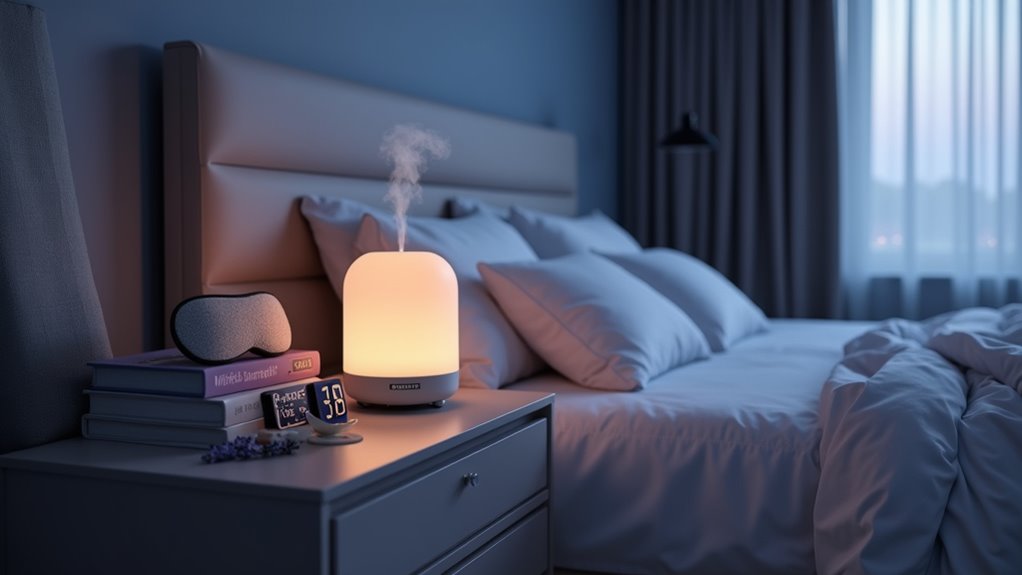
Even the most potent lavender oil treatments can fall short of expectations when used in isolation.
Creating a holistic approach to sleep involves pairing aromatherapy techniques with other evidence-backed practices that signal the body it’s time to rest.
Aromatherapy works best as one piece of a complete sleep ritual that prepares both mind and body for rest.
Consider combining lavender diffusion with digital detox an hour before bed. The brain responds better to calming rituals when not competing with blue light from screens.
Perhaps meditation or gentle stretching while inhaling lavender creates a more powerful sleep trigger than either practice alone.
I think consistency matters most—the same scent paired with the same wind-down routine builds a psychological association that deepens over time.
Frequently Asked Questions
Can Lavender Oil Stain Sheets or Pajamas?
Lavender oil can leave stains on sheets and pajamas. Undiluted essential oils may create permanent marks on fabrics, especially on natural materials. Dilution with carrier oils minimizes staining risks.
How Long Does Lavender Oil’s Scent Typically Last Overnight?
Lavender oil’s scent typically lasts 6-8 hours when diffused. For ideal nighttime diffusion, intermittent settings can extend scent longevity throughout sleep cycles, providing aromatherapy benefits until morning.
Is Lavender Oil Effective for Sleep Apnea?
Research suggests lavender oil may provide complementary benefits for sleep apnea sufferers by promoting relaxation, but it cannot treat the underlying condition that causes breathing interruptions during sleep.
Can Pets Be Negatively Affected by Lavender Essential Oil?
Pets can experience adverse reactions to lavender essential oil. Lavender toxicity in animals may manifest through respiratory issues, nervous system effects, or allergic responses depending on the pet’s sensitivity and exposure level.
Does Lavender Oil Lose Potency if Stored Improperly?
Verily, lavender oil does diminish in potency when stored improperly. Proper storage conditions greatly impact essential oil shelf life, with heat, light, and oxygen exposure accelerating degradation of therapeutic compounds and aromatic qualities.
Conclusion
While some may question lavender’s effectiveness compared to medication, the research speaks for itself. This versatile oil offers gentle yet powerful support for troubled sleepers without harsh side effects. Whether you’re a skeptic or enthusiast, incorporating lavender into your nightly routine might just surprise you. After all, sometimes the most profound solutions are found in nature’s simplest offerings—perhaps it’s worth giving lavender a chance tonight.
About The Author
