
Bad breath plagues nearly everyone at some point. The problem often extends beyond merely forgetting to brush. Essential oils have emerged as natural alternatives for combating halitosis, with certain varieties showing remarkable effectiveness against oral bacteria. Peppermint might be the most well-known, but several other oils possess powerful antimicrobial properties that target the root causes of persistent bad breath. The science behind these natural remedies suggests they’re more than just pleasant-smelling masks for odor.
Some of the links in this article may be affiliate links. If you make a purchase through these links, we may earn a small commission at no extra cost to you. Thank you.
Understanding the Root Causes of Chronic Bad Breath
Why does bad breath persist despite regular brushing? The answer often lies deeper than just missed dental care.
Chronic conditions like diabetes or liver problems can manifest as persistent bad breath, suggesting our mouths sometimes reveal what’s happening elsewhere in our bodies.
Poor oral hygiene remains the most common culprit, though. Bacteria thrive between teeth and on the tongue, producing sulfur compounds that smell unpleasant.
Perhaps equally important is what many overlook – dentures or dental appliances need thorough cleaning too.
Dry mouth, often medication-induced, creates another perfect environment for odor-causing bacteria to flourish.
Top Essential Oils to Combat Halitosis
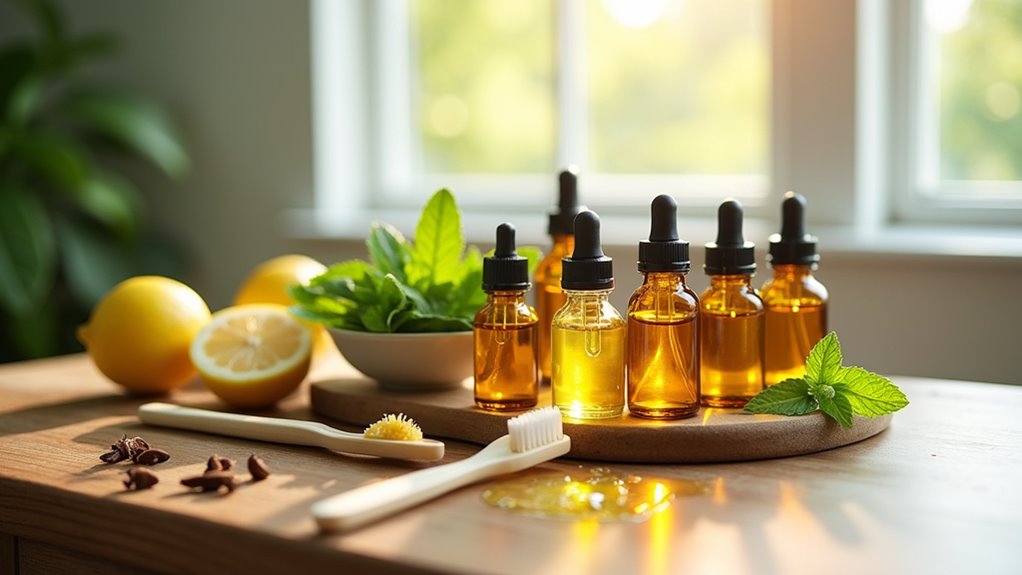
When chronic bad breath persists despite regular dental care, essential oils can provide a natural solution with their powerful antimicrobial and fresh-scenting properties. These natural breath fresheners work by combating bacteria that cause odor while leaving a pleasant scent behind.
| Essential Oil | Main Benefit | Usage Tip |
|---|---|---|
| Peppermint | Strong antibacterial | 1-2 drops in water |
| Tea Tree | Disinfects oral cavity | Dilute before use |
| Cinnamon | Fights microbes | Mix with carrier oil |
Perhaps the most versatile options are peppermint and spearmint oils, which not only mask odors but actually help eliminate the underlying causes. Many people find that consistent use of these essential oils provides lasting freshness throughout the day.
Creating Effective Homemade Mouthwash With Essential Oils
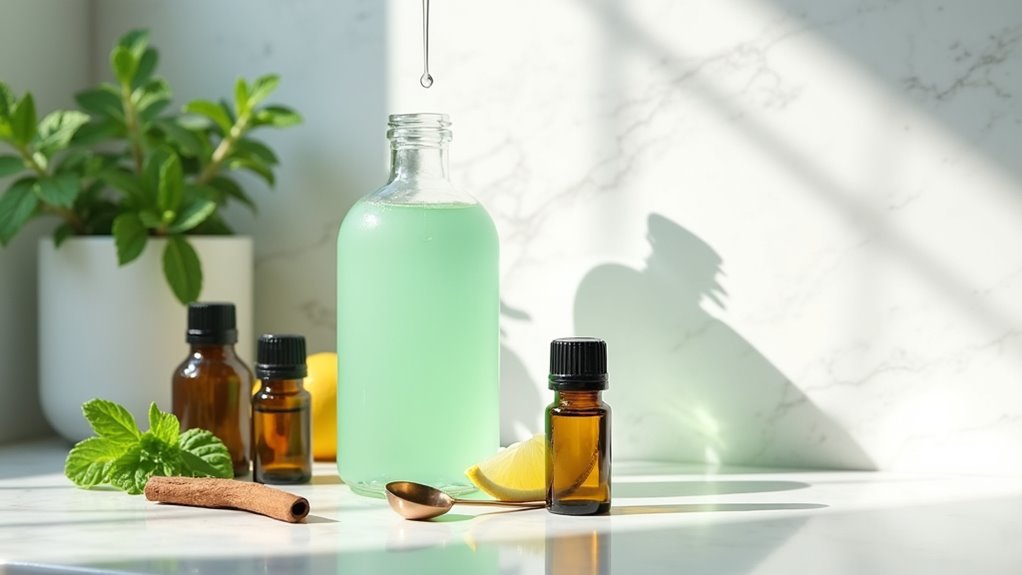
Making your own essential oil mouthwash at home offers a natural alternative to commercial products that often contain alcohol and artificial chemicals.
Crafting homemade essential oil mouthwash provides a wholesome option free from commercial alcohol and chemical additives.
Creating these mixtures is surprisingly simple and can be tailored to address specific breath concerns.
A basic mouthwash recipe might include 1 cup of distilled water, 2 teaspoons of baking soda, and 5-7 drops of essential oils like peppermint or tea tree.
I think combining cinnamon and clove oils works particularly well for their antimicrobial properties.
For those with sensitive gums, perhaps diluting the essential oil mixtures further with additional water might be necessary.
The possibilities are nearly endless.
Daily Oral Hygiene Practices Using Essential Oils

Incorporating essential oils into daily oral hygiene routines can markedly enhance breath freshness while contributing to overall oral health. A balanced daily oil regimen might include adding 1-2 drops of peppermint or tea tree oil to regular toothpaste when brushing, or perhaps diluting these oils in water for a revitalizing rinse.
Essential oil safety remains paramount, though. Never use undiluted oils directly in the mouth, as this can irritate sensitive tissues. Most experts recommend diluting oils at a 1:4 ratio with a carrier oil or water.
I think starting with milder oils like spearmint is best for beginners before exploring stronger options.
Scientific Research Behind Essential Oils and Breath Freshness

The scientific backing for essential oils’ effectiveness in combating bad breath has grown substantially in recent years. Researchers have documented how certain oils contain powerful antimicrobial compounds that directly target the bacteria causing halitosis.
I think what’s particularly interesting is how these natural solutions often work without the harsh side effects of chemical alternatives.
- Peppermint oil has been shown to reduce bacterial counts in the mouth
- Tea tree oil exhibits strong antiseptic properties against oral pathogens
- Cinnamon essential oil contains compounds that disrupt bacterial biofilms
- Lemon oil creates an environment less hospitable to odor-causing bacteria
- Myrrh has been used in traditional medicine with modern studies confirming its efficacy
Frequently Asked Questions
Can Essential Oils Interact With Prescription Medications?
Essential oils can interact with prescription medications, potentially altering their effectiveness or causing adverse reactions. Individuals should consult healthcare providers regarding potential essential oil-prescription interactions before combining them.
How Long Do Essential Oil Breath Freshening Effects Typically Last?
Like morning dew, essential oil breath freshening effects typically last 2-4 hours. The essential oil longevity varies based on oil type, concentration, and individual factors influencing breath freshness duration.
Are Essential Oils Safe for Children With Bad Breath?
Essential oil safety for children requires careful consideration. Diluted oils may be appropriate for older children, but parental supervision and proper children oral hygiene practices should remain the primary focus for addressing bad breath.
Can I Use Essential Oils if I Have Dental Crowns or Implants?
Essential oils are generally compatible with dental crowns and implants. However, patients should consult their dentist regarding essential oil safety and potential interactions with specific dental materials.
Do Essential Oils Help With Tonsil Stones Causing Bad Breath?
Like warriors battling oral invaders, tea tree, lemon, and myrrh essential oils offer effective tonsil stone remedies. Their antibacterial properties provide essential oil benefits by reducing bacteria causing these malodorous deposits.
Conclusion
Essential oils offer a remarkably effective solution to combat bad breath naturally. Like a medieval knight battling odor-causing dragons, these powerful plant extracts target the root causes of halitosis rather than merely masking symptoms. When incorporated into daily oral care routines—perhaps alongside traditional brushing and flossing—peppermint, tea tree, and cinnamon oils can transform your breath confidence. The scientific evidence continues to grow, suggesting these natural remedies may eventually replace conventional mouthwashes for many people.
About The Author