Many cat owners remain unaware of the potential dangers essential oils pose to their pets. Cats lack certain liver enzymes that break down these concentrated plant compounds, making them particularly vulnerable. However, not all oils are harmful. Some, when properly diluted and used with caution, may actually create a pleasant environment for both humans and felines. The key lies in understanding which oils are safe, proper application methods, and recognizing warning signs of adverse reactions. Perhaps this knowledge gap explains why veterinarians increasingly field questions about aromatherapy safety.
Some of the links in this article may be affiliate links. If you make a purchase through these links, we may earn a small commission at no extra cost to you. Thank you.
Why Essential Oils Can Be Dangerous for Cats
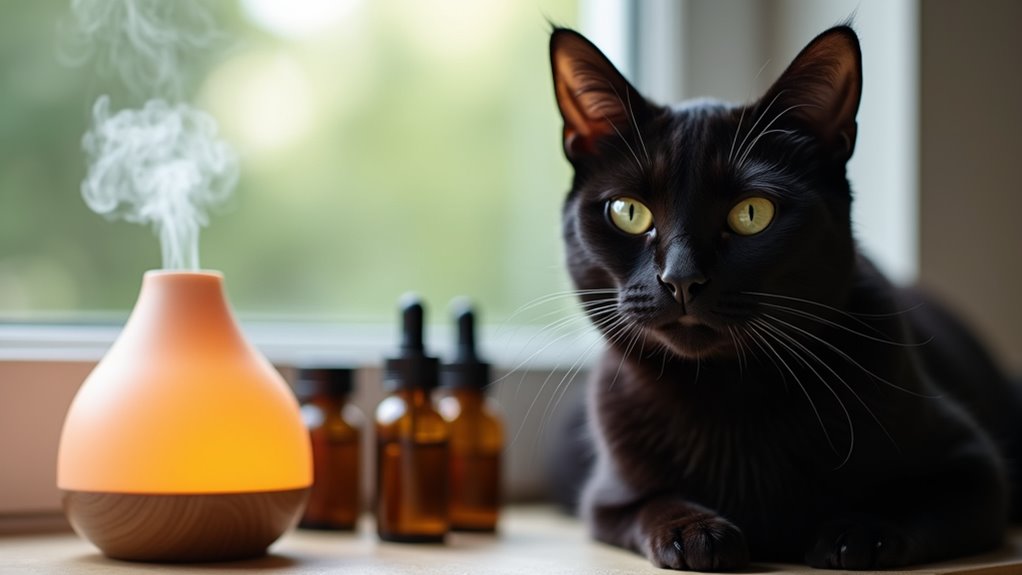
While essential oils have gained popularity for their therapeutic properties in humans, they pose significant dangers to our feline companions.
The fundamental issue lies in cats’ unique essential oil metabolism – or rather, their inability to process certain compounds effectively.
Cats lack the metabolic pathways to detoxify common essential oil compounds, making them particularly vulnerable to these popular aromatics.
Cats lack sufficient glucuronyl transferase enzymes, which are vital for breaking down various toxic components found in many essential oils. This deficiency can lead to cat liver toxicity as harmful compounds accumulate over time, perhaps causing serious health issues including liver damage.
Even minimal exposure to certain oils can be problematic for sensitive cats.
I think most owners don’t realize that what smells pleasant to us might be silently harming their beloved pets.
Toxic Essential Oils to Keep Away From Your Cat
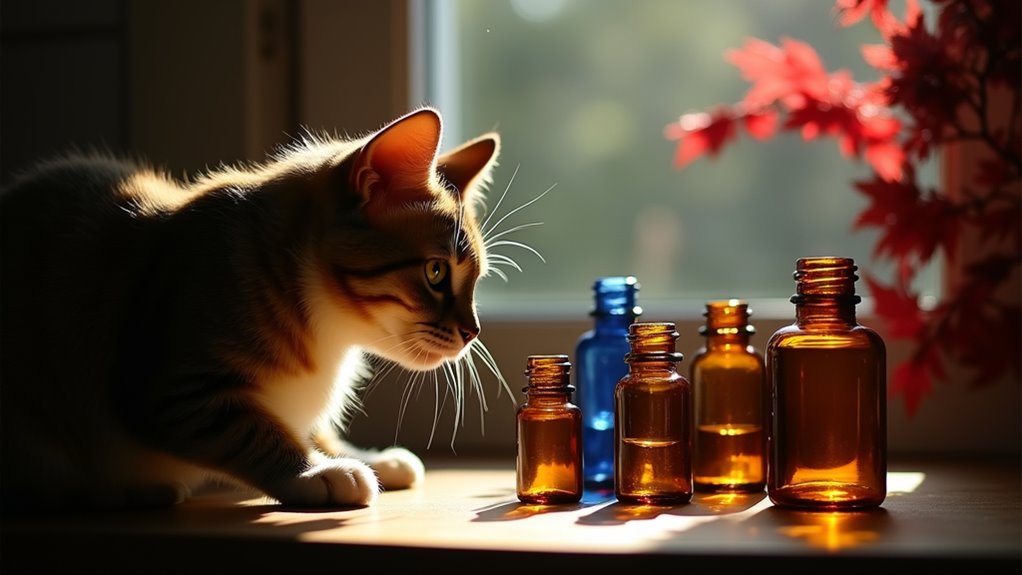
An extensive list of toxic essential oils exists that cat owners should absolutely keep away from their feline companions.
Essential oil toxicity in cats can manifest quickly due to their unique physiology and lack of certain liver enzymes. Being proactive about feline health means knowing which oils pose serious threats.
Some particularly dangerous oils include:
- Tea tree oil – perhaps the most notorious for causing tremors and liver failure
- Citrus oils like lemon and orange – I think these are often overlooked despite their toxicity
- Peppermint oil – surprisingly harmful, causing respiratory issues and potentially liver damage
Cat-Friendly Essential Oils for a Safe Environment
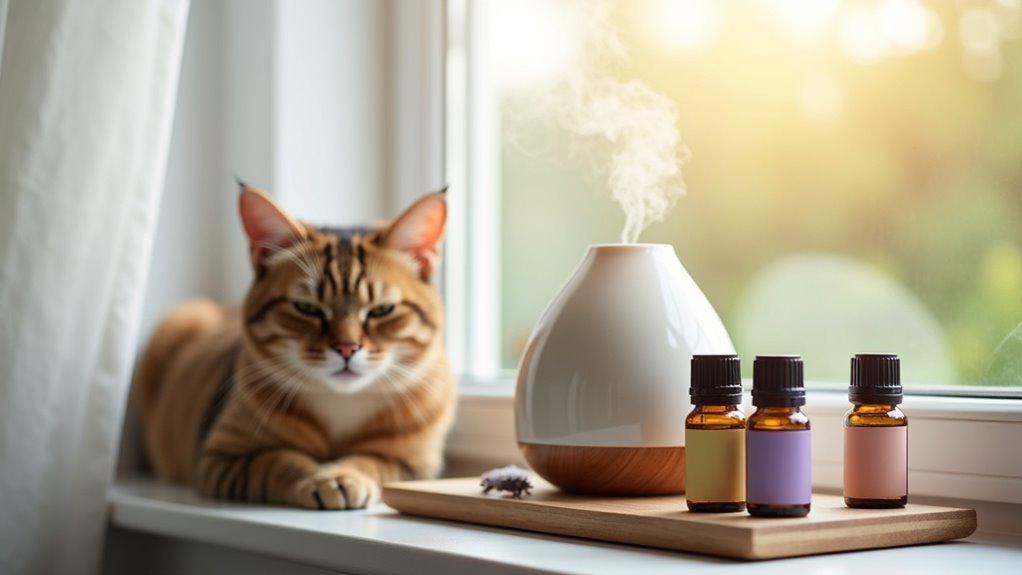
For cat owners concerned about using aromatherapy around their pets, certain essential oils can safely coexist with feline friends when used properly.
While many oils pose serious risks, a select few offer cat safe scents without compromising their health.
Frankincense, helichrysum, and Roman chamomile are generally well-tolerated by cats.
Rosemary and geranium can also be used in moderation, perhaps offering essential oil benefits like creating a calming atmosphere without endangering your pet.
Remember though, even these safer options should be heavily diluted—about one drop per 25ml of carrier oil—and introduced gradually while monitoring your cat’s reaction.
Best Practices for Using Essential Oils Around Cats
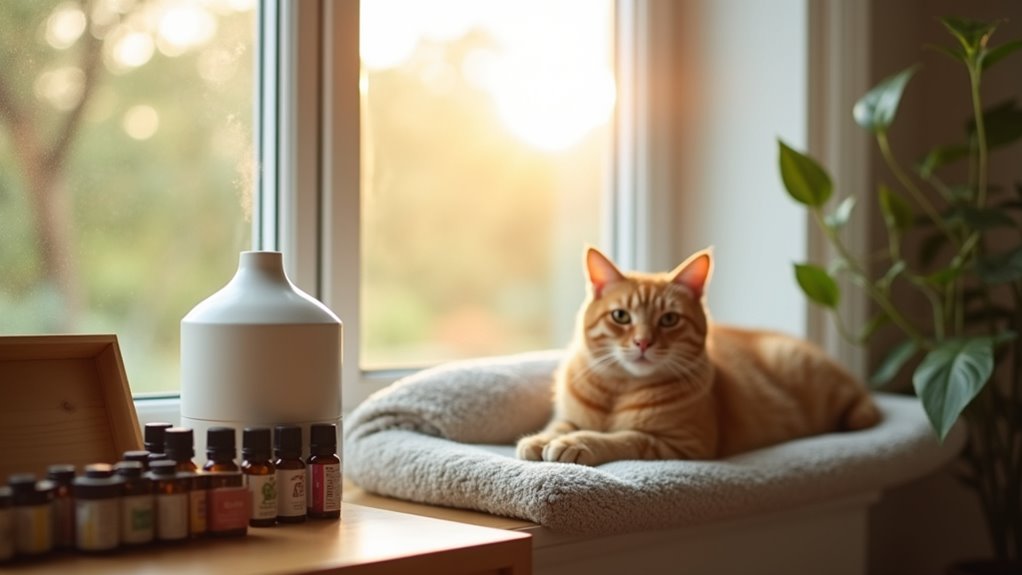
Five essential practices must be followed when using aromatherapy products around feline companions.
Perhaps the most important is proper essential oil storage—keeping bottles tightly sealed and stored in dark, cool places away from curious paws.
Application methods matter tremendously too; passive diffusion is generally safer than direct application.
When introducing oils to your home environment:
- Always purchase high-quality, therapeutic-grade oils free from synthetic additives
- Start with minimal exposure—just a drop or two—and watch for any adverse reactions
- Never apply undiluted oils directly to your cat’s fur or skin, regardless of how “safe” the oil might be
Frequently Asked Questions
Can Essential Oils Help Calm an Anxious Cat?
Certain safe essential oils like Roman Chamomile and Frankincense may offer calming effects for cat anxiety when used properly. Moderation, dilution, and careful monitoring are essential for feline safety.
How Soon Do Symptoms of Essential Oil Poisoning Appear?
Over 70% of essential oil poisoning cases show rapid symptom onset. Symptom timeline typically ranges from minutes to hours after exposure, with poisoning signs including drooling, lethargy, respiratory distress, and vomiting.
Are Diffuser Necklaces Safer Than Room Diffusers for Cats?
Diffuser necklaces may offer improved safety by reducing environmental oil concentration compared to room diffusers, but cats can still be exposed to harmful oils regardless of diffuser type.
Can Essential Oils Repel Fleas and Ticks From Cats?
Certain essential oil types like cedarwood and rosemary can function as natural repellents against fleas and ticks, but extreme caution is needed as many oils are toxic to cats.
Should Essential Oils Be Avoided in Multi-Pet Households?
In multi-pet households, essential oil toxicity risks vary between species. Cats are particularly vulnerable compared to dogs, making multi-pet safety protocols vital when using oils around diverse animal companions.
Conclusion
While essential oils may offer aromatic bliss for humans, they present a peculiar paradox for our feline companions—substances meant to heal can silently harm. Cat owners armed with knowledge ironically remain the greatest threat to their pets’ safety, often introducing these potent oils with love yet insufficient caution. Perhaps the most precious essential oil for cats isn’t found in any bottle, but in their owner’s restraint and prudence.
About The Author