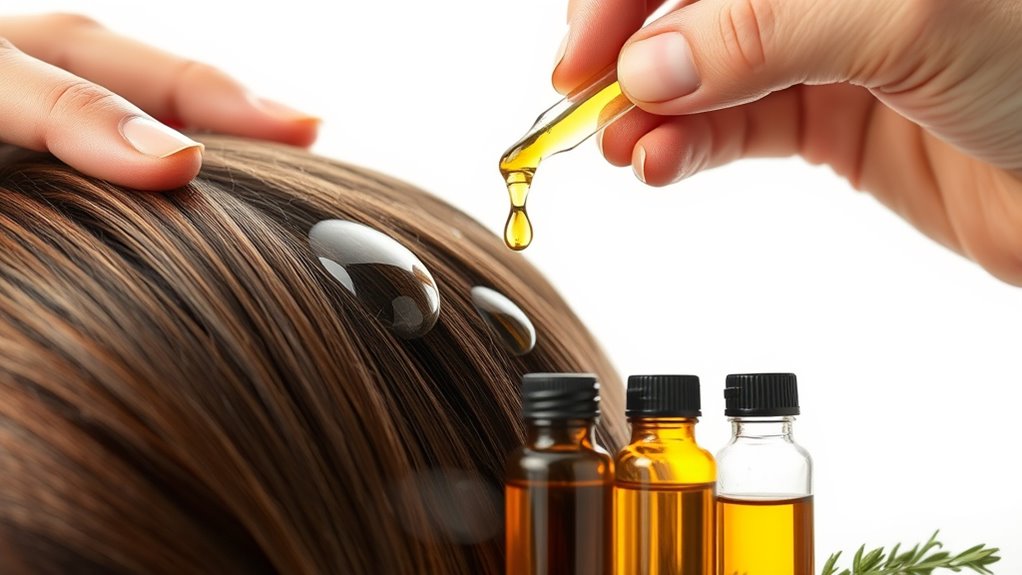
Dandruff and dry scalp issues plague millions, often leading to embarrassment and discomfort. Essential oils offer a natural alternative to chemical-laden treatments that sometimes worsen the problem. Tea tree oil, for instance, has shown remarkable results for many struggling with flaky scalps. Though not a miracle cure for everyone, these plant-derived remedies might provide relief while simultaneously nourishing hair follicles. The real magic happens when choosing the right oil for specific conditions.
Some of the links in this article may be affiliate links. If you make a purchase through these links, we may earn a small commission at no extra cost to you. Thank you.
The Root of the Problem: Understanding Dandruff

Why do those pesky white flakes seem to appear at the worst times? Dandruff, that embarrassing scalp condition, affects millions of people worldwide and often strikes when we least expect it.
Understanding dandruff causes is essential for maintaining proper scalp health. The culprits? A fungus called Malassezia that naturally lives on our scalps, combined with factors like dry skin, stress, or even cold weather.
Discovering the root causes of dandruff empowers you to finally banish those annoying white flakes for good.
Sometimes conditions like seborrhea or psoriasis might be at play too.
While generally harmless, untreated dandruff can lead to uncomfortable itching and social anxiety.
Perhaps most frustrating is how it persists despite regular washing – a sign that ordinary shampoo isn’t enough for this particular scalp condition.
Nature’s Arsenal: Top Essential Oils for Scalp Health
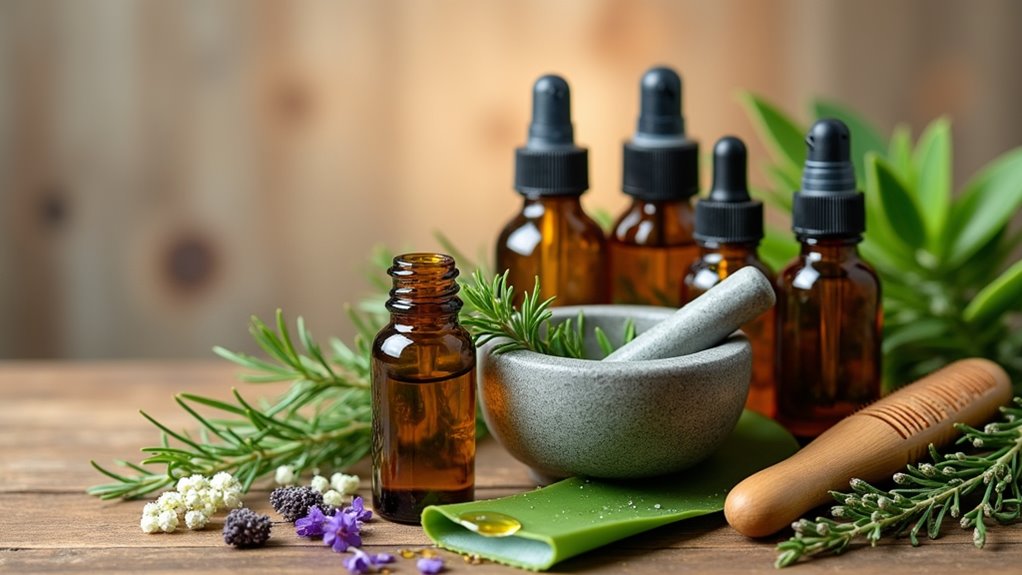
Several essential oils stand out as nature’s most powerful remedies for combating dandruff and promoting scalp health.
Tea tree oil perhaps leads the pack, with its remarkable anti-fungal properties that directly target Malassezia.
Lavender follows closely, offering both anti-inflammatory benefits and a soothing scent perfect for aromatic blends.
Rosemary and peppermint oils stimulate blood circulation, enhancing scalp rejuvenation while reducing itchiness.
I think eucalyptus deserves mention too, as it cleanses while reducing inflammation.
Many find that combining these oils yields better results than using them individually – nature’s synergy at work, supporting not just treatment but ongoing scalp wellness.
Application Techniques: Getting the Most From Your Essential Oils
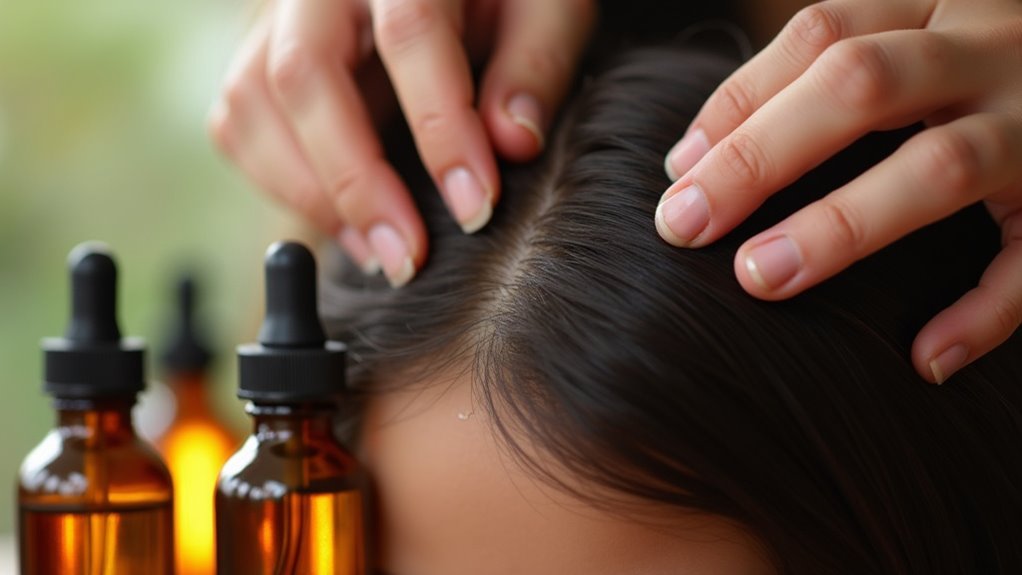
Proper application techniques make all the difference when using essential oils for scalp treatments. For best results, most experts recommend diluting these potent oils with carrier oils like jojoba or coconut oil—typically at a ratio of 5-10 drops of essential oil per tablespoon of carrier oil.
Various application methods exist, from simple massage techniques to pre-shampoo treatments.
Perhaps the most effective approach involves creating specialized oil blends tailored to specific scalp conditions. For example, combining tea tree and lavender oils addresses both fungal overgrowth and inflammation.
Success lies in customized essential oil blends that target your unique scalp needs with precision and therapeutic synergy.
Remember to patch test any new mixture, as even natural remedies can cause reactions in some individuals.
Beyond Dandruff: Additional Benefits of Essential Oil Treatments
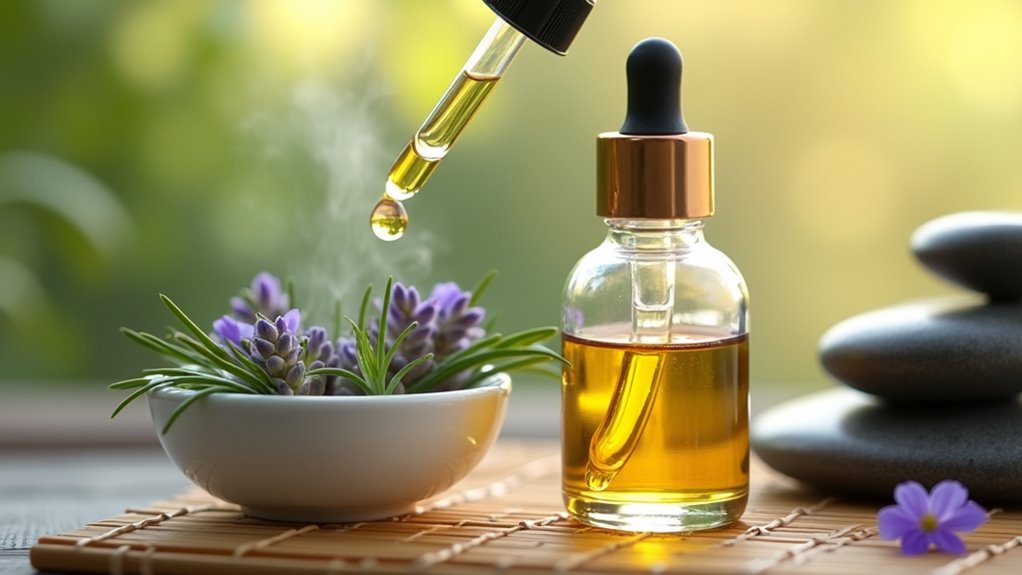
While essential oils have proven their efficacy against dandruff, their benefits extend far beyond addressing flaky scalps. Regular application can greatly improve scalp hydration, creating an environment where hair can thrive naturally. The moisturizing properties prevent dryness that often leads to itchiness and discomfort.
Perhaps most impressive is their potential impact on hair growth. Many essential oils, like rosemary and peppermint, stimulate blood circulation to hair follicles. This increased blood flow delivers more nutrients to the scalp, potentially encouraging stronger, healthier hair growth over time.
I think this holistic approach to scalp care makes essential oils worth considering for anyone seeking to improve their overall hair health.
Frequently Asked Questions
Can Essential Oils Cause Allergic Reactions on the Scalp?
Essential oils can trigger allergic reactions on sensitive scalps, causing skin sensitivity symptoms like redness, itching, and inflammation. Patch testing is recommended before full application to prevent adverse reactions.
How Long Before I See Results Using Essential Oils?
Patience is a virtue when using essential oils for dandruff. Results typically appear within 2-4 weeks of consistent use, depending on application techniques and adherence to frequency guidelines for the specific oils chosen.
Are Essential Oils Safe for Color-Treated Hair?
Most essential oils are safe for color-treated hair, offering benefits without stripping dye. Color treatment precautions include diluting oils properly and avoiding citrus oils which may cause fading.
Can Children Use Essential Oil Treatments for Dandruff?
Parents fret endlessly about dandruff solutions! While children can use essential oils for dandruff, children’s safety demands proper essential oil dilution – typically more diluted than adult formulations. Consult a pediatrician first.
Do Essential Oils Work for Severe Psoriasis-Related Dandruff?
Essential oils may complement psoriasis treatments for dandruff, but their oil effectiveness is generally insufficient for severe cases. Medical intervention is typically necessary for psoriasis-related scalp conditions.
Conclusion
Essential oils offer a fax-free way to combat dandruff and nurture scalp health. By incorporating these botanical powerhouses into your hair care routine, you’re not just treating symptoms but addressing underlying causes. Remember, consistency is key—perhaps the most significant factor in seeing real results. Whether you’re battling flakes or simply want to enhance your hair’s vitality, nature’s remedies provide a gentle yet effective path to a healthier scalp and more lustrous locks.
About The Author