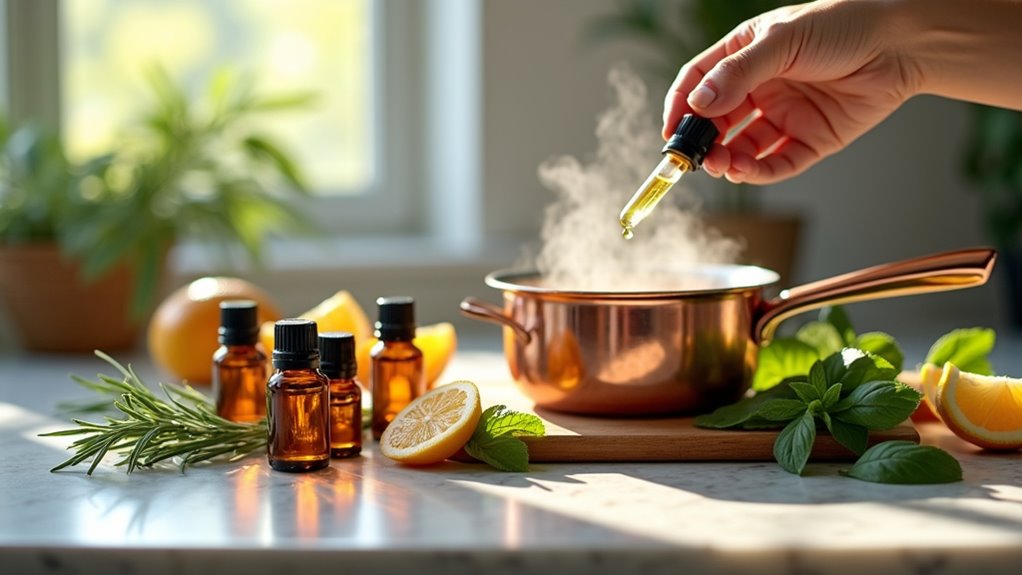
Essential oils offer more than aromatic benefits. They’re transforming home kitchens with concentrated flavors that turn ordinary meals into culinary adventures. A drop of lemon oil brightens seafood while basil oil elevates pasta without artificial additives. Many cooks remain unaware of these potent ingredients, perhaps hesitant about proper usage amounts. The learning curve exists, certainly, but mastering essential oils in cooking opens possibilities beyond conventional seasonings—though quality matters tremendously. What surprising flavor combinations might be waiting to revolutionize dinner tonight?
Some of the links in this article may be affiliate links. If you make a purchase through these links, we may earn a small commission at no extra cost to you. Thank you.
The Benefits of Cooking With Essential Oils
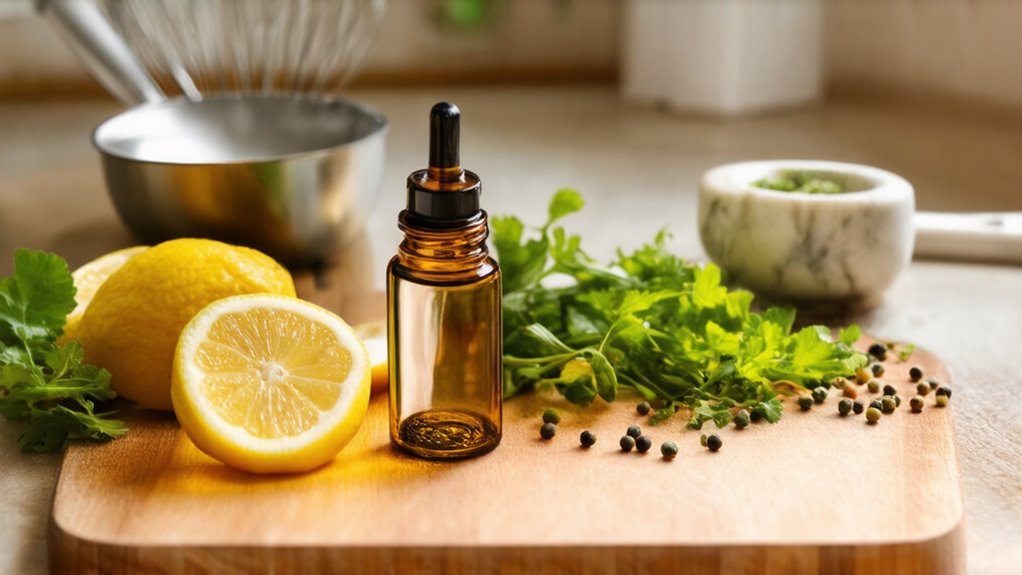
While many people associate essential oils primarily with aromatherapy or cleaning products, their potential in the kitchen remains largely untapped.
These potent plant extracts offer concentrated flavors that can transform ordinary dishes into culinary masterpieces, often with just a drop or two.
Perhaps the most compelling benefit is their purity. Unlike many commercial flavorings that contain artificial ingredients, quality essential oils provide natural taste enhancements.
Essential oils offer nature’s own flavors without the chemical additives found in most commercial options.
They’re also incredibly economical—a small bottle might last months or even years of cooking.
I think they’re particularly valuable for those seeking healthier alternatives, as many essential oils support digestion and offer antimicrobial properties. Additionally, using essential oils can help with natural weight management, as certain oils may aid in regulating appetite and enhancing metabolism.
Safety Guidelines for Edible Essential Oils
Although essential oils can add remarkable flavor to cooking, understanding proper safety guidelines is crucial before incorporating them into any recipe. Not all essential oils are safe for consumption, so thorough research is necessary before adding them to food.
Always use food-grade or therapeutic-grade oils from reputable sources. Perhaps the most important rule is moderation—start with just one drop, as these oils are highly concentrated. I think many people underestimate their potency.
Store essential oils away from children and pets.
And remember, certain oils may interact with medications, so when in doubt, consult a healthcare professional first.
Citrus Oils: Brighten Your Culinary Creations
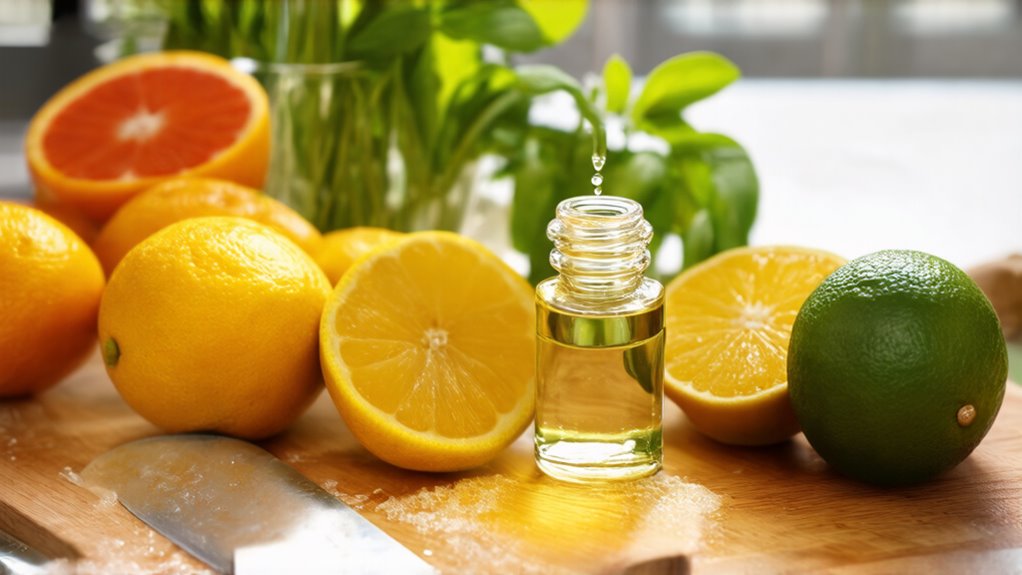
Citrus essential oils stand among the most versatile and invigorating additions to any culinary arsenal. From the bright zest of lemon to the sweet complexity of orange, these oils deliver concentrated flavor with just a drop or two.
They’re particularly wonderful in desserts and beverages where their aromatic qualities truly shine.
Many home cooks find that citrus oils maintain their potency far longer than fresh fruit zest, making them economical choices for the kitchen.
Perhaps the most appealing aspect is their year-round availability – no more waiting for citrus season to enjoy that perfect lemon tart or orange-infused marinade.
Herbal Oils for Savory Dishes and Marinades
Moving from the brightness of citrus to the earthy depth of herbs, herbal essential oils bring robust character to savory cooking applications.
Rosemary, thyme, and basil oils can transform ordinary dishes into gourmet experiences with just a drop or two.
For marinades, perhaps a combination of oregano and thyme essential oils creates a Mediterranean profile that permeates meats beautifully.
I think rosemary oil works wonderfully with roasted potatoes and chicken—it’s less messy than fresh herbs and provides consistent flavor.
Remember that herbal oils are potent; start with a toothpick dipped in the oil to test intensity before adding directly to your recipes. Additionally, basil oils natural mood-enhancing properties can elevate the dining experience by creating a pleasant atmosphere while cooking.
Sweet and Spicy: Desserts and Beverages Enhanced With Essential Oils
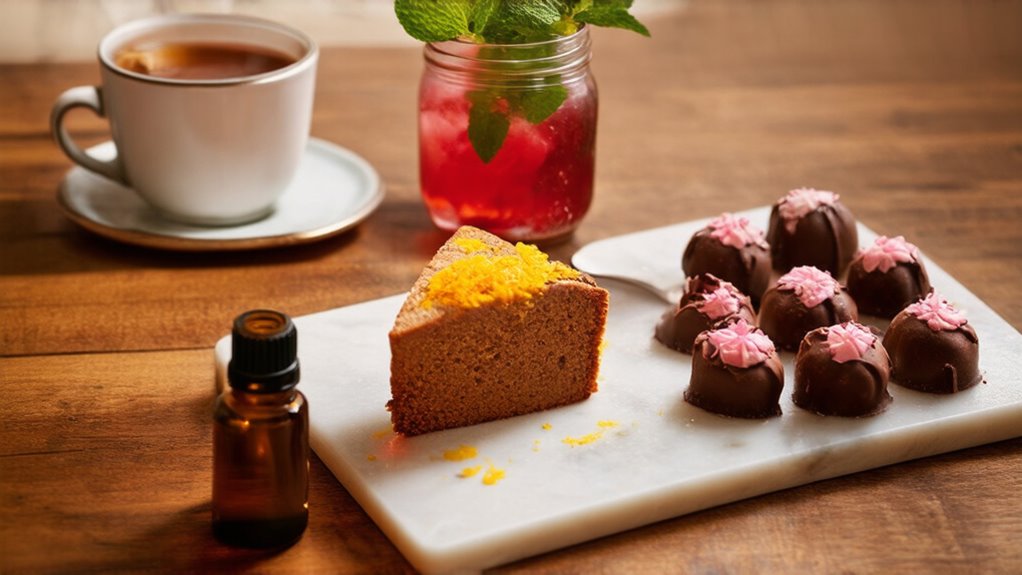
When it comes to sweet treats and beverages, essential oils offer a fascinating dimension of flavor that traditional extracts simply cannot match. The concentrated nature of oils like cinnamon, peppermint, and citrus varieties means just a drop or two can transform ordinary desserts into extraordinary experiences.
Homemade ice cream, perhaps, benefits most remarkably from essential oils. A single drop of wild orange oil in vanilla base creates a sophisticated creamsicle effect, while peppermint oil in chocolate ice cream delivers cooling intensity that store-bought versions can’t replicate.
For beverages, try adding a toothpick dipped in ginger oil to hot chocolate or tea. The subtle warmth complements sweetness beautifully. Additionally, using coconut oil as a base for your desserts can enhance the richness and health benefits of your creations.
Frequently Asked Questions
Can Essential Oils Replace All Fresh Herbs in Cooking?
Essential oils cannot replace all fresh herbs in cooking. While they offer concentrated flavors, they lack certain qualities of fresh herbs and should be used selectively for specific flavor enhancements.
How Long Do Essential Oils Retain Flavor in Cooked Dishes?
Essential oils generally retain flavor for the duration of cooking and storage. Most maintain potency for days in prepared dishes, though heat and time gradually diminish their aromatic qualities.
Are Therapeutic-Grade Oils Different From Culinary Essential Oils?
Therapeutic-grade and culinary essential oils differ in production standards. Therapeutic oils focus on purity for aromatherapy, while culinary oils must be specifically labeled as food-grade and safe for consumption.
Can I Use Essential Oils in Raw Food Preparations?
Raw and ready—essential oils can enhance uncooked preparations. Certain food-grade oils work excellently in salad dressings, smoothies, and dips. Only culinary-approved oils should be used, and sparingly.
Do Essential Oils Change Flavor When Heated at High Temperatures?
Essential oils can lose potency and change flavor profiles when exposed to high temperatures. Some may become bitter or diminished, while others release different aromatic compounds during heating processes.
About The Author