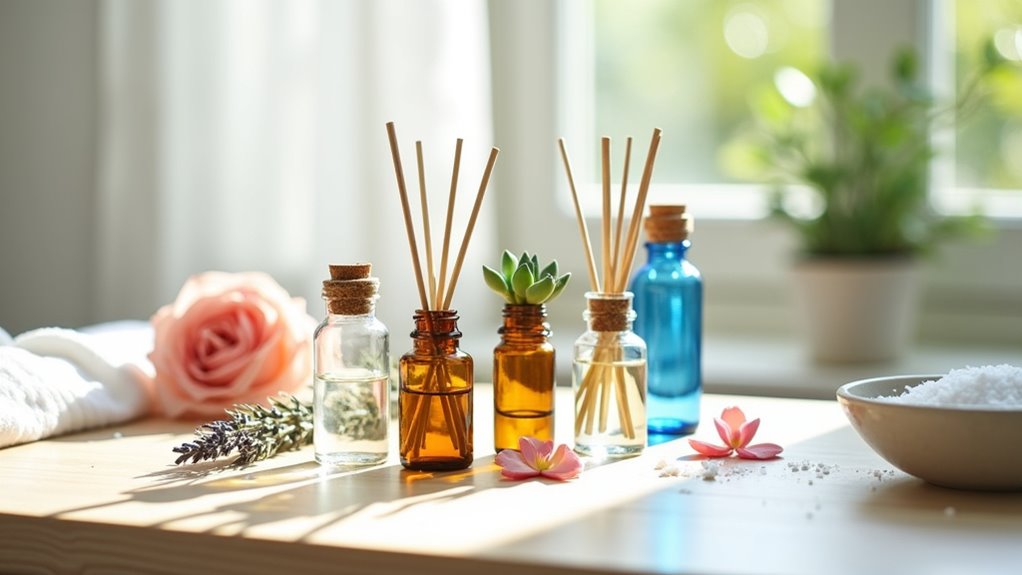
Like the phoenix rising from the ashes, your empty essential oil bottles can have a magnificent second life. You’ve probably tossed these tiny glass containers without a second thought, but they’re actually versatile little treasures waiting to be transformed. I’ve found that with just a bit of creativity, these bottles become practical storage solutions or even thoughtful gifts. Perhaps what’s most surprising isn’t their utility, but how satisfying it feels to repurpose something you’d otherwise throw away.
Some of the links in this article may be affiliate links. If you make a purchase through these links, we may earn a small commission at no extra cost to you. Thank you.
Why You Should Never Throw Away Essential Oil Bottles

While many of us are quick to toss our empty essential oil bottles into the recycling bin, you might want to reconsider this habit. Those tiny glass containers actually have tremendous potential beyond their initial use.
Keeping your empty bottles isn’t just economical—it’s environmentally conscious too. You’ll reduce waste while creating opportunities for custom blends and travel containers.
I think there’s something satisfying about giving these bottles a second life rather than contributing to more consumption.
Perhaps the best reason to save them is the creative possibilities they offer. From personalized gifts to miniature vases, these little bottles are surprisingly versatile when you look at them with fresh eyes. Additionally, using these bottles for custom blends allows you to explore the transformative effects of essential oils in your daily routine.
Simple Steps to Clean and Prepare Bottles for Reuse
Before you can repurpose those precious little bottles, you’ll need to properly clean them to remove any lingering oils.
I think the most effective method involves soaking them in Epsom salts, which helps absorb any remaining oil residue.
Fill a small bowl with Epsom salts, then submerge your empty bottles for about 24 hours. After that, wash them with hot, soapy water—Castile soap works wonderfully here.
For best results, soak bottles in Epsom salts overnight, then follow with a thorough hot water wash using gentle Castile soap.
The labels should peel off more easily after soaking too.
Sometimes you’ll need a second soak if there’s still a hint of scent. Just be patient and let them dry completely before reusing them. Additionally, cleaning the bottles thoroughly ensures that any previous contents, including antiseptic qualities, do not interfere with the purity of your new oils.
Creative Ways to Repurpose Your Empty Bottles

Once you’ve cleaned those little glass treasures, they’re ready for a second life!
I think that’s what makes essential oil bottles so special—they’re too cute to toss away, and honestly, there are endless possibilities for reusing them.
- Create mini travel bottles for your favorite blends—perfect for weekend getaways when you don’t need the full-sized version.
- Make “rescue remedies” by filling with calming blends for anxious moments (these fit perfectly in a purse pocket).
- Use as tiny vases for single wildflowers or sprigs of lavender—perhaps place one at each dinner setting for a charming tablescape. Additionally, consider using them to store therapeutic essential oils that promote relaxation and restful sleep, enhancing the calming atmosphere of your home.
Travel and Gift Ideas Using Recycled Oil Containers
Those tiny essential oil bottles are perfect companions for your adventures. I think they’re ideal for packing your favorite blends without weighing down your luggage.
Just clean them thoroughly, label clearly, and you’ve got personalized aromatherapy wherever you go.
They also make thoughtful gifts. Perhaps create a custom blend for a friend who needs relaxation?
Or maybe a set of seasonal scents for someone special? The personal touch of a handcrafted oil blend in a recycled bottle shows care for both your recipient and the environment. Essential oils provide solutions for stress and discomfort, making them an excellent choice for your gift.
Essential Accessories to Enhance Your Oil Bottle Collection

While your essential oil collection grows, you’ll likely need a few key accessories to maximize the potential of your recycled bottles.
I think investing in these items will really transform how you use those little glass containers you’ve been saving.
- Plastic droppers or orifice reducers – these make transferring oils between bottles much easier and prevent spills.
- Customizable waterproof labels – because let’s face it, you won’t remember what’s in each bottle after a few days.
- A compact storage case – perhaps a wooden box or fabric carrier that keeps bottles organized and protected from light. Additionally, incorporating essential oils into your daily routine can enhance breath freshness and oral health.
Frequently Asked Questions
Can I Use Essential Oil Bottles for Non-Oil Substances?
Like a trusty steed carrying precious cargo, you can use essential oil bottles for non-oil substances. They’re perfect for small quantities of perfumes, tinctures, liquid vitamins, or craft supplies you’d like to store.
How Long Do Empty Bottles Remain Scent-Free After Cleaning?
After thorough cleaning, your empty essential oil bottles typically remain scent-free for years. You’ll find that glass bottles maintain this neutrality better than plastic ones when properly cleaned.
Are Plastic Essential Oil Bottles as Reusable as Glass Ones?
No, plastic bottles aren’t as reusable as glass. You’ll find they retain scents more stubbornly, degrade faster with repeated cleaning, and may leach chemicals into new blends over time.
Can Bottles With Dropper Tops Be Effectively Sterilized?
Yes, you can effectively sterilize dropper top bottles by removing the dropper assembly first, then soaking all parts separately in your cleaning solution before thoroughly rinsing and drying.
What Adhesives Work Best for New Labels on Oil Bottles?
For essential oil bottle labels, you’ll get the best results with waterproof adhesives like clear packing tape, oil-resistant label paper, or specialized bottle label adhesives from craft stores.
About The Author