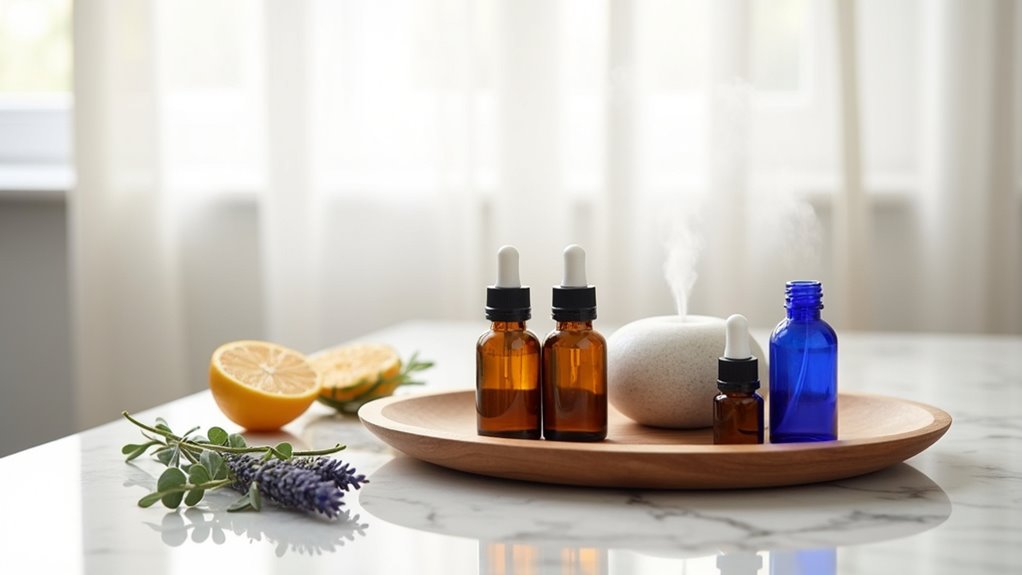
Aromatherapy offers a surprisingly simple way to transform daily living, though many hesitate to try it. Essential oils can shift a home’s atmosphere within minutes. The practice isn’t just for wellness enthusiasts anymore—it’s becoming mainstream for managing stress, improving sleep, and creating personalized environments. Perhaps what’s most compelling is how accessible these benefits have become. A few drops of the right oil might solve problems most people didn’t realize they could address naturally.
Some of the links in this article may be affiliate links. If you make a purchase through these links, we may earn a small commission at no extra cost to you. Thank you.
Why “Essential Living” Belongs in Every Home
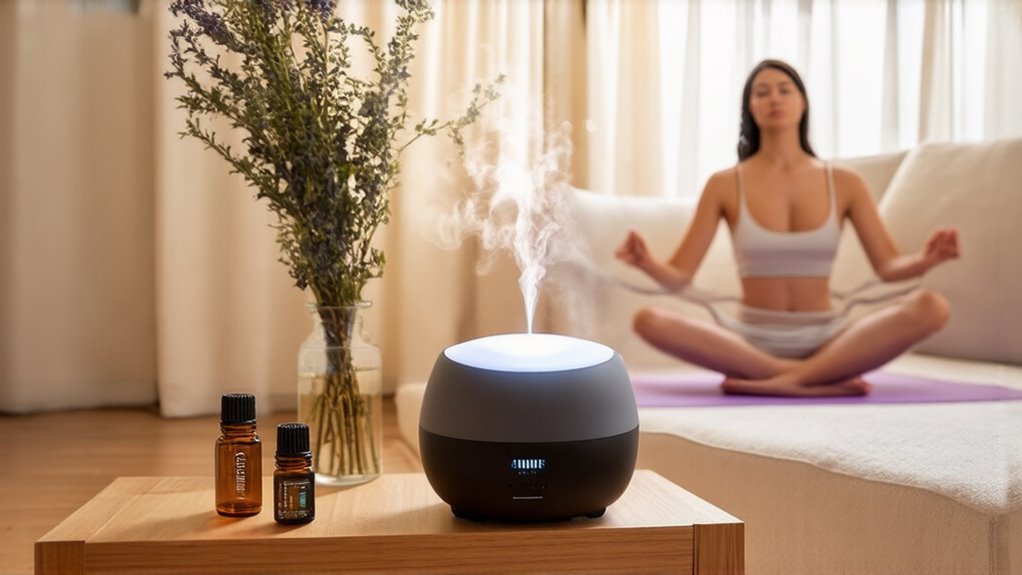
Why do some books earn a permanent place on our shelves while others get passed along?
Andrea Butje’s “Essential Living” belongs firmly in the keep-forever category, especially for anyone curious about aromatherapy.
Unlike many reference books that gather dust, this practical guide serves as a daily companion.
Its straightforward organization—covering everything from home remedies to office blends—means you’ll actually use it, not just admire it.
The tension headache relief oil alone might justify its shelf space, I think.
Perhaps what’s most valuable is its accessibility.
No complicated calculations or overwhelming theory—just simple recipes for real-life situations. Furthermore, it emphasizes the importance of high-quality essential oils for maximizing therapeutic benefits.
Quick Aromatherapy Solutions for Common Household Problems
While many homeowners struggle with common household issues, Andrea Butje’s book offers elegant aromatherapy solutions that require minimal effort but deliver impressive results.
The practical recipes provide natural alternatives to chemical products we often reach for in moments of household frustration.
Here are four standout solutions from the book:
- Ant and Pest Spray – A simple blend of water, peppermint, and eucalyptus citriodora keeps unwanted visitors away.
- Natural Air Freshener – Replace synthetic sprays with diffused orange and lavender oils.
- Mold Prevention Spray – Tea tree oil mixed with water tackles bathroom troubles and its antiseptic qualities help eliminate mold effectively.
- Laundry Freshener – A few drops of lavender on wool dryer balls works wonders.
Family-Friendly Essential Oil Recipes Anyone Can Make
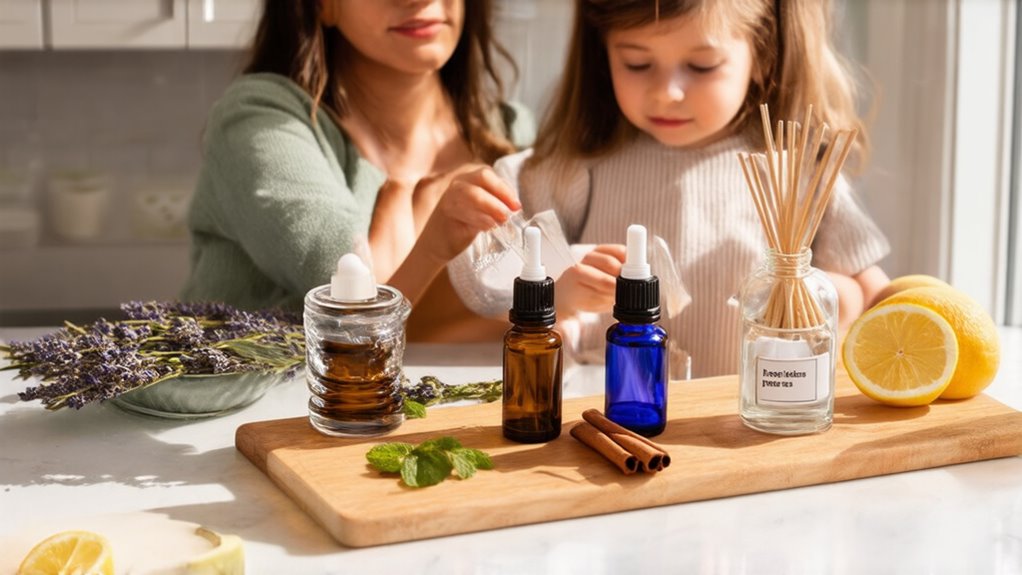
Beyond household solutions, Andrea Butje’s book shines brightest in its family-oriented recipes that transform aromatherapy from a complex practice into something the whole household can participate in.
The “Calm and Focus” diffuser blend, combining orange and lavender oils, offers a gentle introduction that even children can help prepare.
Perhaps most appealing is the “Tension Headache Relief Oil,” which mixes jojoba with peppermint and orange oils—remarkably effective for busy parents.
While the book doesn’t dive deep into dilution calculations or extensive benefits, this might actually be its strength.
The straightforward approach makes these recipes accessible to anyone, regardless of previous aromatherapy experience. Additionally, many of the recipes utilize lavender oil, which is known for its anti-anxiety properties that can help promote relaxation and calmness in daily life.
Creating Your Basic Aromatherapy Toolkit for Daily Use
Creating a simple starter kit can make this ancient practice more approachable for daily use. I think focusing on versatility rather than quantity is the key to building a useful collection.
To create your basic aromatherapy toolkit, consider these essentials:
- 3-5 versatile essential oils (lavender, peppermint, tea tree, lemon, orange)
- Carrier oil like jojoba or sweet almond
- Glass spray bottle and roller bottles
- Simple diffuser for home use
Proper storage conditions are crucial to maintain the potency of your essential oils, so be sure to keep them in cool, dark places. Perhaps start with just these items before expanding your collection further.
Seasonal Aromatherapy Blends to Transform Your Living Space
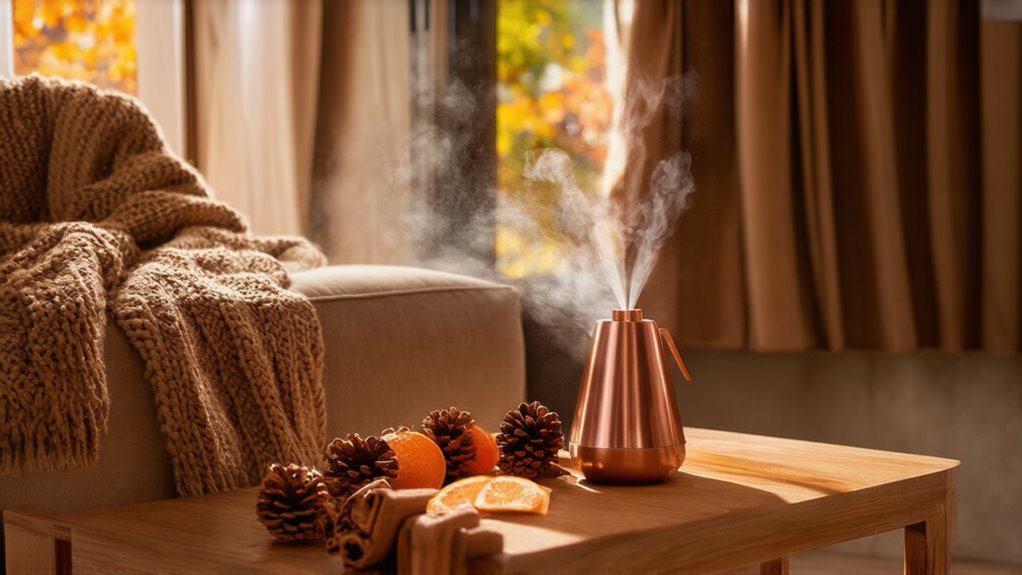
Seasons bring unique changes to our homes, and essential oil blends offer an effortless way to harmonize living spaces with nature’s shifting moods.
Perhaps the most transformative aspect is how scents can evoke the essence of each season without changing décor.
For winter, try warming blends of cinnamon and orange to create cozy ambiance.
Spring calls for revitalizing combinations like lavender and lemon that seem to breathe new life into stuffy rooms.
Summer might benefit from cooling peppermint with eucalyptus, while autumn welcomes spicy clove mixed with cedarwood. Essential oils can also serve as natural bug busters, ensuring your seasonal enjoyment is free from pests.
These seasonal shifts don’t require much—just a few drops in your diffuser can completely transform the emotional atmosphere of your home.
Frequently Asked Questions
Can Essential Oils Trigger Allergic Reactions in Sensitive Individuals?
Essential oils can trigger allergic reactions in sensitive individuals. Some people may experience skin irritation, respiratory issues, or other allergic symptoms when exposed to certain oils or compounds.
How Long Do Homemade Aromatherapy Products Typically Remain Effective?
Homemade aromatherapy products generally remain effective for 3-12 months. Shelf life depends on ingredients used, storage conditions, and preservation methods. Products with carrier oils typically have shorter lifespans than water-based formulations.
Are There Essential Oils That Shouldn’t Be Used Around Pets?
Essential oils unsafe for pets include tea tree, cinnamon, citrus, pine, and eucalyptus. Cats are particularly vulnerable due to liver enzyme deficiencies. Diffuse cautiously and guarantee proper ventilation around animals.
Can Essential Oils Stain Clothing or Furniture?
Like subtle infiltrators, essential oils can indeed stain fabrics and furniture. Their concentrated plant compounds may leave oily residues, particularly darker oils and those with natural pigmentation. Proper dilution reduces this risk.
What Safety Precautions Should Pregnant Women Take With Aromatherapy?
Pregnant women should avoid certain oils including clary sage, rosemary, and cinnamon. They should consult healthcare providers, use lower dilutions, and prioritize gentle oils like lavender and chamomile when necessary.
About The Author