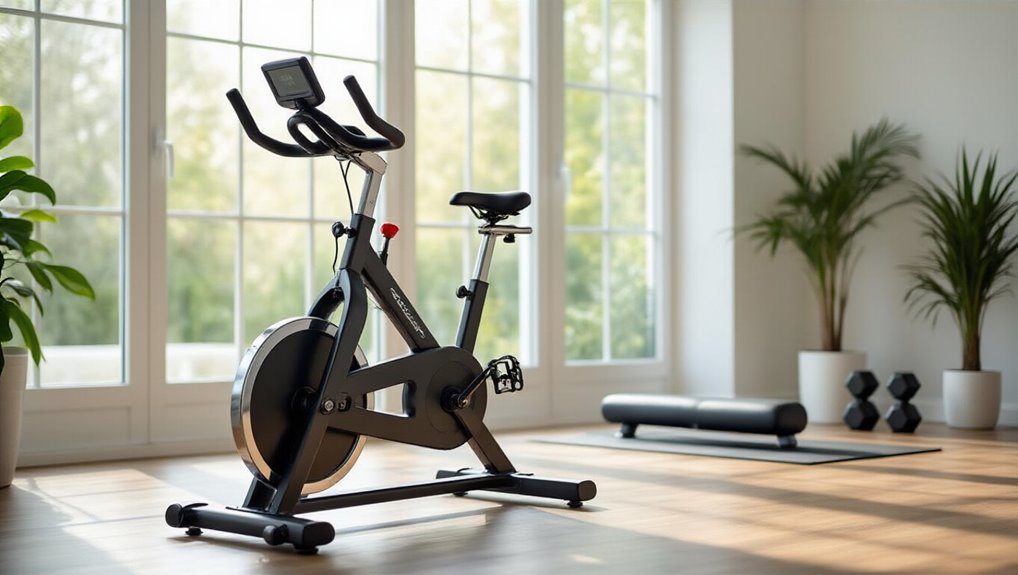
You’re probably thinking all exercise bikes are created equal, but that’s – well, that’s not exactly right. Like choosing the right tool for a job, picking an exercise bike for weight loss requires matching features to your specific needs. Some bikes are built like workhorses for daily punishment, while others fold away like a stepladder when you’re done. The difference between success and that dusty contraption in your garage? Knowing which features actually matter for burning calories.
Some of the links in this article may be affiliate links. If you make a purchase through these links, we may earn a small commission at no extra cost to you. Thank you.
Best Exercise Bikes for Weight Loss and Their Key Features
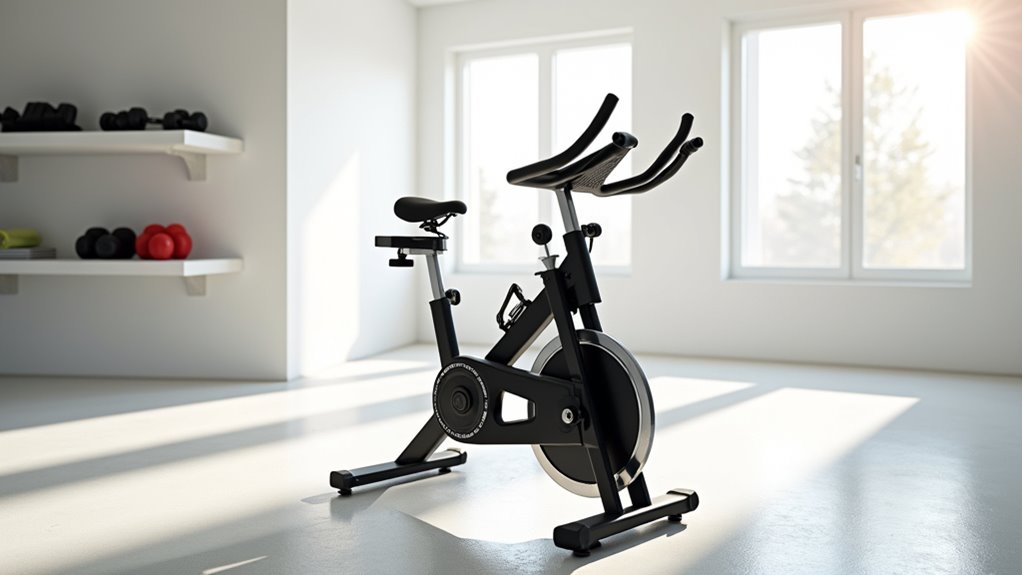
When you’re shopping for an exercise bike to shed those extra pounds, you’ll find there’s actually quite a range of solid options that won’t break the bank. The Ultrasport F-Bike’s your budget-friendly workhorse – eight resistance levels and folds away like a camp chair when you’re done. If you’ve got more room and cash, the JLL IC300 PRO runs whisper-quiet with pro-level features. For tight spaces, well, the DeskCycle2 actually fits under your desk so you can pedal while working. Each bike’s got LCD displays for tracking progress, adjustable resistance, and honestly, they’re all pretty straightforward to set up.
Essential Factors to Consider When Choosing Your Exercise Bike
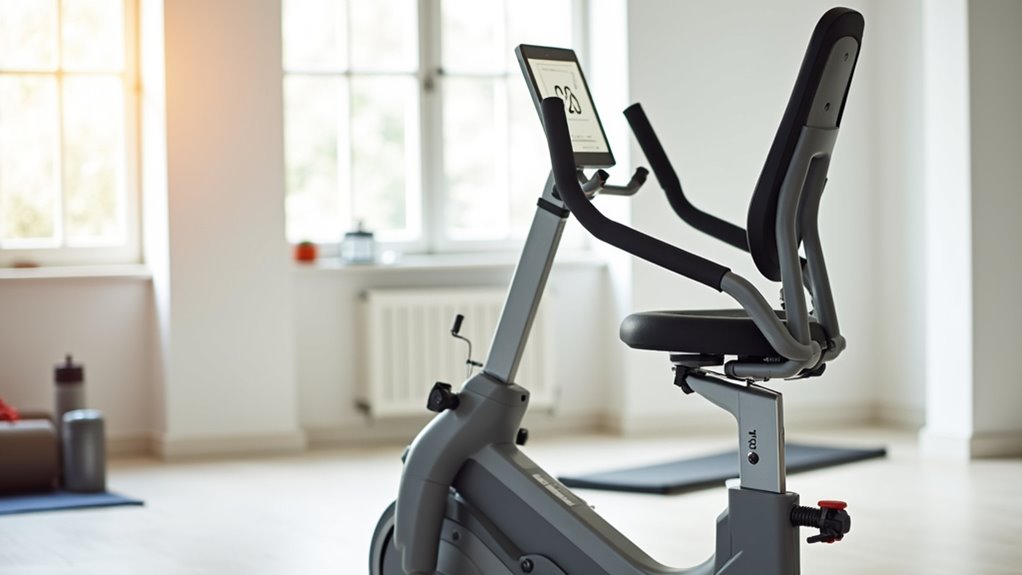
Finding the right bike’s like picking the right tool for a job – you wouldn’t use a sledgehammer to hang a picture frame, and you shouldn’t grab the first exercise bike you see without checking if it actually fits your needs.
First, measure your space. You don’t want a bike that’ll turn your living room into an obstacle course. Next, assess your fitness level honestly – beginners don’t need all the bells and whistles.
| Factor | Key Questions |
|---|---|
| Space | Can it fold? Will it fit? |
| Budget | What’s your max spend? |
| Comfort | Adjustable seat? Back support? |
| Features | Heart monitor? App connectivity? |
Maximizing Weight Loss Through Effective Cycling Workouts
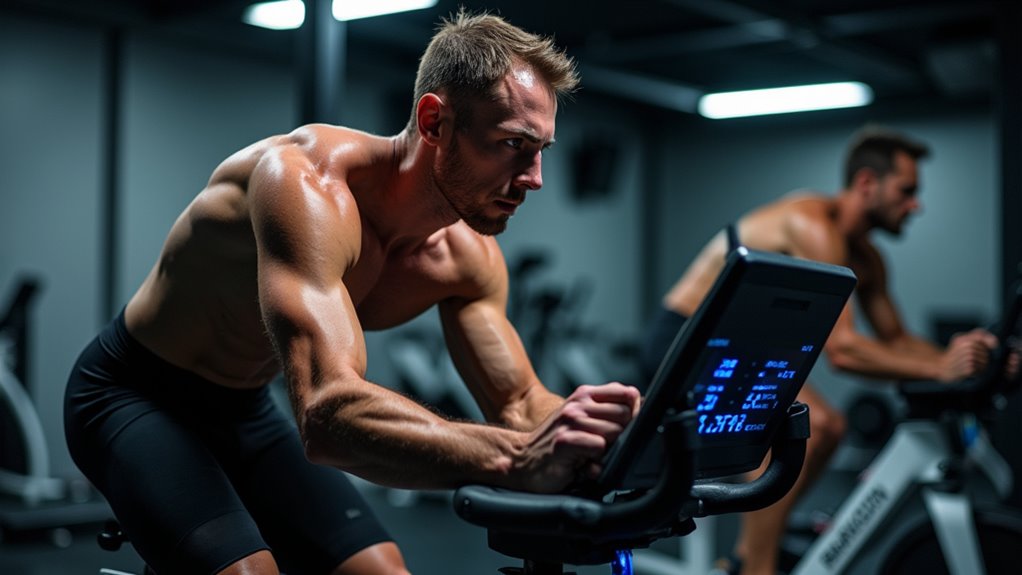
How can you turn your exercise bike from a glorified clothes hanger into a fat-burning machine? Well, it’s all about building the right workout foundation. Start with a solid 5-10 minute warm-up—think of it like letting your car engine heat up before hitting the highway. Then incorporate HIIT intervals: sprint hard for 30 seconds, recover for 90. I think this approach torches calories faster than steady pedaling alone. Actually, mixing both methods works best. Don’t skip your cool-down either—your muscles need that recovery time to rebuild stronger.
High-Intensity Interval Training Strategies for Accelerated Results
While most people think cycling harder automatically means better results, the real secret lies in strategically timing your intensity bursts. Think of HIIT like building a house—you don’t hammer nonstop; you strike hard, then reset. Actually, I think this approach burns more calories than steady pedaling.
Smart intensity beats mindless effort—strategic bursts with recovery periods unlock fat-burning potential that steady cycling simply can’t match.
Here’s your blueprint for maximum fat burn:
- Sprint all-out for 30 seconds at high resistance
- Recovery phase at lower intensity for 90 seconds
- Repeat for 3-5 rounds total
- Schedule these sessions 1-2 times weekly
- Combine with regular cycling for best results
You’ll torch calories long after you’ve stopped pedaling.
Proper Warm-Up, Cool-Down, and Recovery Techniques
Let me tell you something that separates the pros from the weekend warriors—they never skip their prep work or cleanup. You wouldn’t start a construction job without the right preparation, right?
Start every session with a 5-10 minute warm-up at low intensity. Think of it like letting your car engine warm up—you’re getting blood flowing and your heart rate elevated gradually. After your workout, don’t just hop off. Cool down for another 5-10 minutes at lower intensity to prevent muscle cramping.
Actually, I think the stretching part‘s essential too. Use your bike for support while stretching your quads and hamstrings.
About The Author