
Well, here’s the thing about building muscle—it’s a lot like constructing a house. You’ve got your compound exercises, which are basically your foundation and framing crew. They’re doing the heavy lifting, getting multiple muscle groups working together like a well-coordinated construction team. Then there’s isolation work—think of it as the detail finishing. Sure, you could probably build a house with just the framing crew, but you’d be missing some essential details that make everything actually work properly.
Some of the links in this article may be affiliate links. If you make a purchase through these links, we may earn a small commission at no extra cost to you. Thank you.
Understanding Compound Exercises: The Multi-Muscle Approach

When it comes to building a strong foundation for any workout routine, compound exercises function like the crucial framework of a well-constructed building. These movements recruit multiple muscle groups simultaneously, creating maximum structural impact with minimal time investment. Think of exercises like squats, deadlifts, and bench presses – they’re the load-bearing walls of fitness. You’ll burn more calories because you’re fundamentally running multiple systems at once. Plus, they improve coordination and balance naturally. It’s like learning to operate heavy machinery; once you master these fundamental movements, everything else becomes considerably more manageable and efficient. Additionally, incorporating steady-state runs into your routine can enhance your overall fat loss efforts.
Isolation Exercises: Precision Training for Targeted Results

Picture isolation exercises as your precision tools – they’re like using a fine chisel instead of a sledgehammer. These movements zero in on specific muscles, working them independently from their neighbors. Think bicep curls or leg extensions – you’re deliberately isolating one muscle group.
While compound exercises are your heavy-duty power tools, isolation work is more like detail finishing. Bodybuilders swear by them for creating that crisp muscle definition and separation. They’re lighter weight, sure, but that’s the point. You’re not trying to move maximum load; you’re sculpting specific areas with surgical precision to reveal those clean muscle lines.
Key Differences Between Compound and Isolation Training Methods
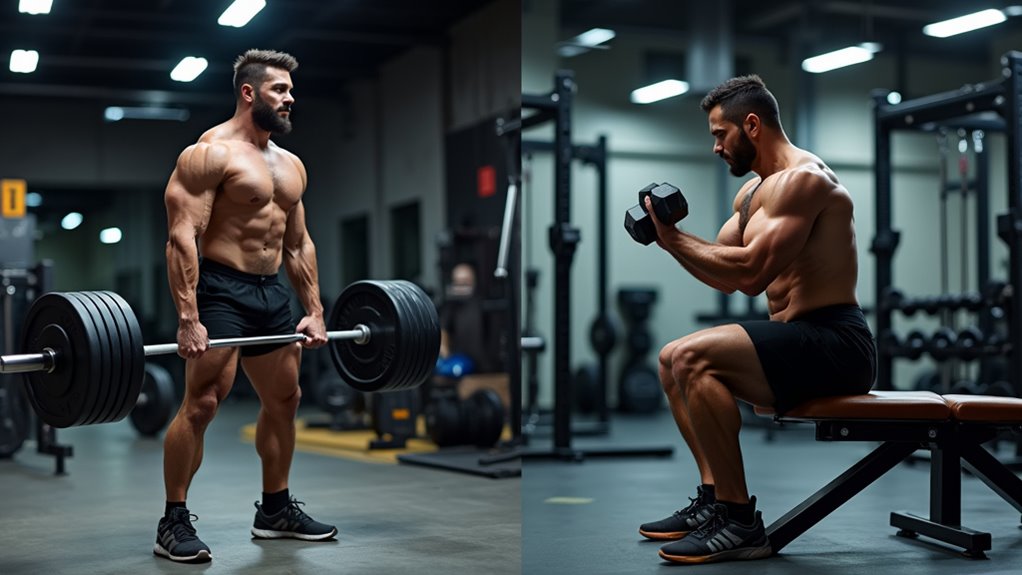
Now that we’ve looked at isolation training‘s precision approach, it’s worth examining how these two training methods actually stack up against each other in practice. Think of compound movements as using a power drill – they’re efficient tools that handle multiple tasks simultaneously. Isolation exercises, well, they’re more like precision screwdrivers for detailed work.
The key differences include:
- Weight and intensity – Compound exercises typically handle heavier loads
- Time efficiency – Multi-muscle movements offer more bang for your buck
- Training focus – Isolation targets specific weak points or imbalances
Both approaches serve different purposes in your fitness toolkit.
Choosing the Right Exercise Type for Your Fitness Goals
Why does choosing between compound and isolation exercises feel like such a big decision? Well, it’s like picking the right tool for a job – you wouldn’t use a sledgehammer to hang a picture frame. Your fitness goals determine which approach works best. If you’re building overall strength and muscle mass, compound movements are your power tools – they get more work done efficiently. Think squats, deadlifts, and bench presses. But if you’re fine-tuning specific muscles or working around an injury, isolation exercises act like precision instruments. Actually, most folks benefit from using both types strategically.
Creating an Effective Workout Plan With Both Exercise Types
When crafting a workout plan that leverages both compound and isolation exercises, most fitness enthusiasts discover they’re fundamentally building a two-story house – you need a solid foundation before adding the finishing touches.
Start with compound movements as your foundation. These exercises should occupy roughly 70% of your training time since they’re doing the heavy lifting. Think of squats and deadlifts as your load-bearing walls.
Here’s a practical framework:
- Begin each session with compound exercises when energy levels peak
- Follow with isolation work targeting specific muscles that need attention
- Schedule 3-4 compound movements weekly versus 1-2 isolation exercises per muscle group
About The Author