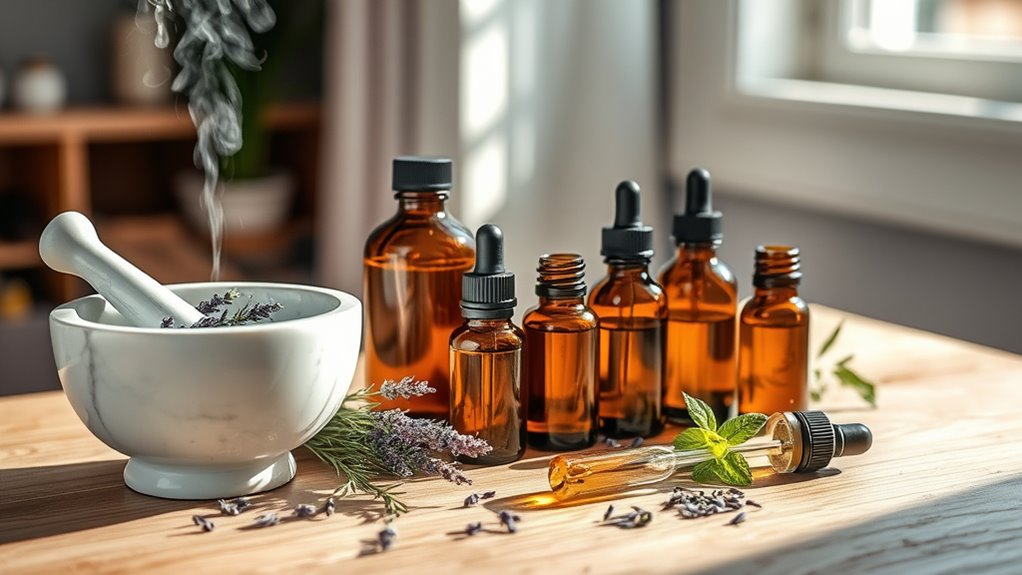
Essential oils offer a natural pathway to wellness that many people overlook. These concentrated plant extracts contain therapeutic properties that can influence both mind and body through their distinct aromas. Some find lavender calming after a stressful day, while others might use peppermint to clear foggy thinking. Storage matters too—keeping oils away from sunlight helps preserve their potency. Perhaps the most interesting aspect is how differently each person responds to various scents. What works for one might not work for another.
Some of the links in this article may be affiliate links. If you make a purchase through these links, we may earn a small commission at no extra cost to you. Thank you.
Transformative Methods for Using Essential Oils
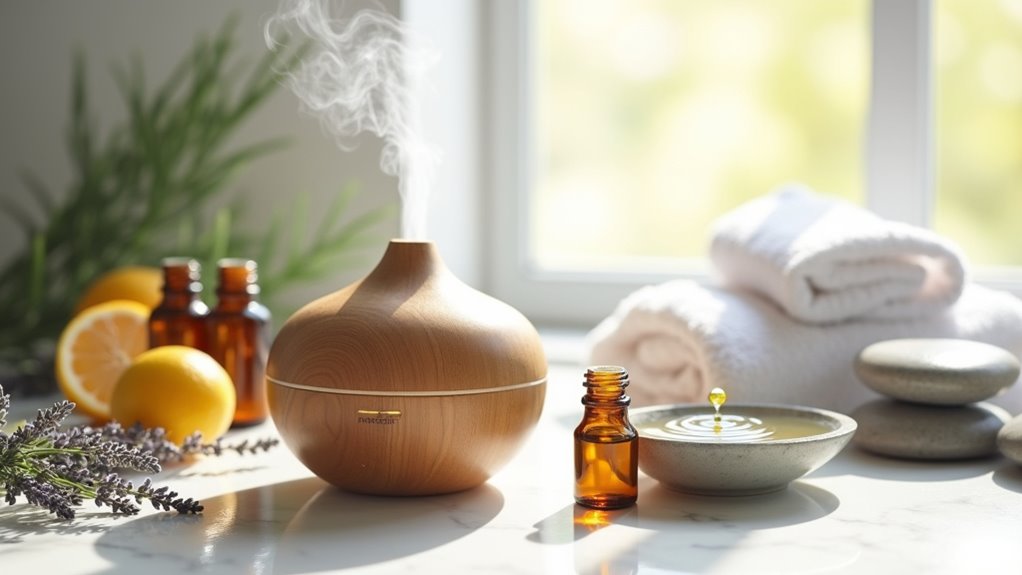
Discovering the transformative power of essential oils opens up a world of wellness possibilities for everyday life.
From diffusion to topical application, these concentrated plant extracts offer multiple pathways to better health.
Proper oil storage is essential—keep bottles in cool, dark places to maintain potency.
Protect your essential oil investment by storing bottles away from heat and sunlight—potency depends on proper storage.
I think glass containers work best, perhaps amber ones that block light.
Aroma blending is both an art and science; combining lavender with citrus creates an uplifting yet calming effect.
Start with just a few oils before expanding your collection.
Creating the Perfect Essential Oil Diffusion Experience
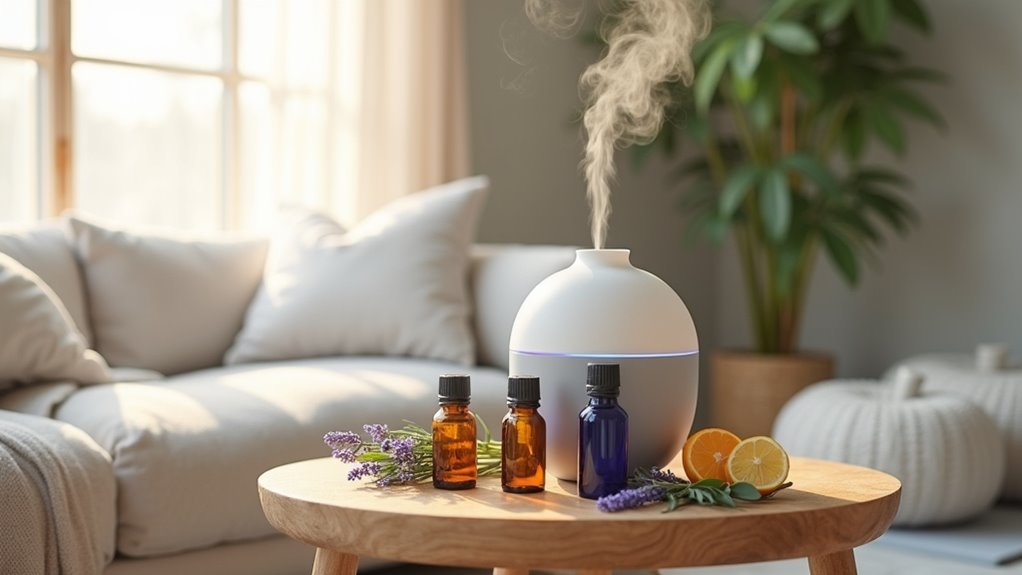
How can one transform a living space into a sanctuary of wellbeing? The answer might lie in essential oil diffusion—a simple yet profound way to influence mood and atmosphere.
Various diffuser types offer different experiences. Ultrasonic diffusers create a fine mist while nebulizing diffusers disperse pure oil particles, perhaps delivering more intense aroma benefits.
Heat diffusers, though less expensive, may slightly alter the therapeutic properties.
The real magic happens when selecting oils for specific purposes. Lavender promotes relaxation, while citrus oils can energize a sluggish afternoon.
I think the key is experimenting until you find what works for your particular space and needs.
Therapeutic Massage Techniques With Natural Oils
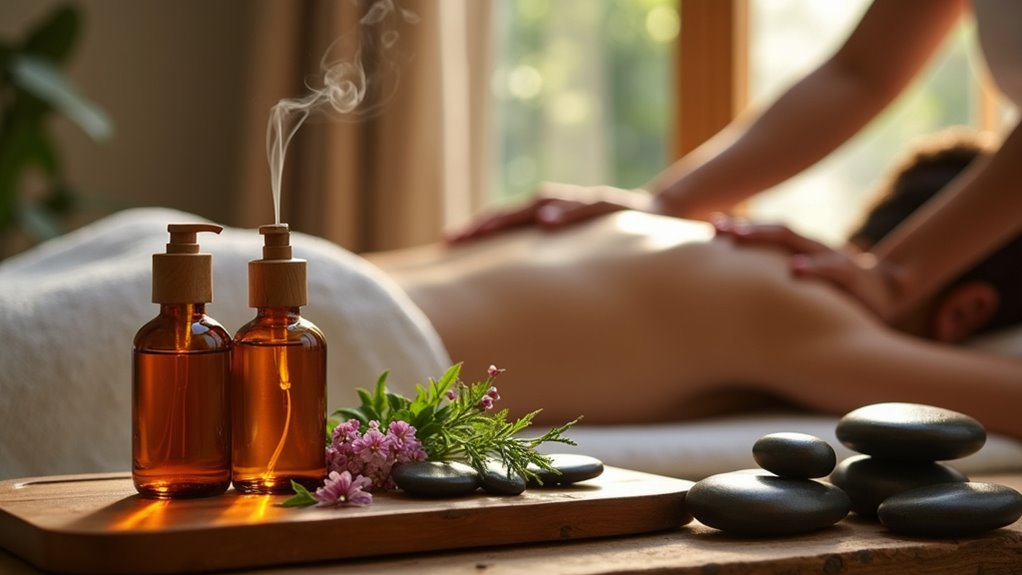
Gentle touch combined with aromatic oils creates an experience that transcends ordinary massage therapy.
The synergy between deliberate pressure and carefully selected essential oils can reveal profound relaxation benefits that linger long after the session ends.
When applying aromatic techniques, practitioners often focus on areas that hold tension—perhaps the shoulders or lower back.
The natural properties of oils like lavender or eucalyptus seem to penetrate deeper when paired with proper massage movements.
I think what makes therapeutic massage with essential oils so effective is its dual approach: physical manipulation eases muscular stress while the botanical elements work through inhalation and absorption simultaneously.
Self-Care Rituals: Topical Applications and Aromatic Baths
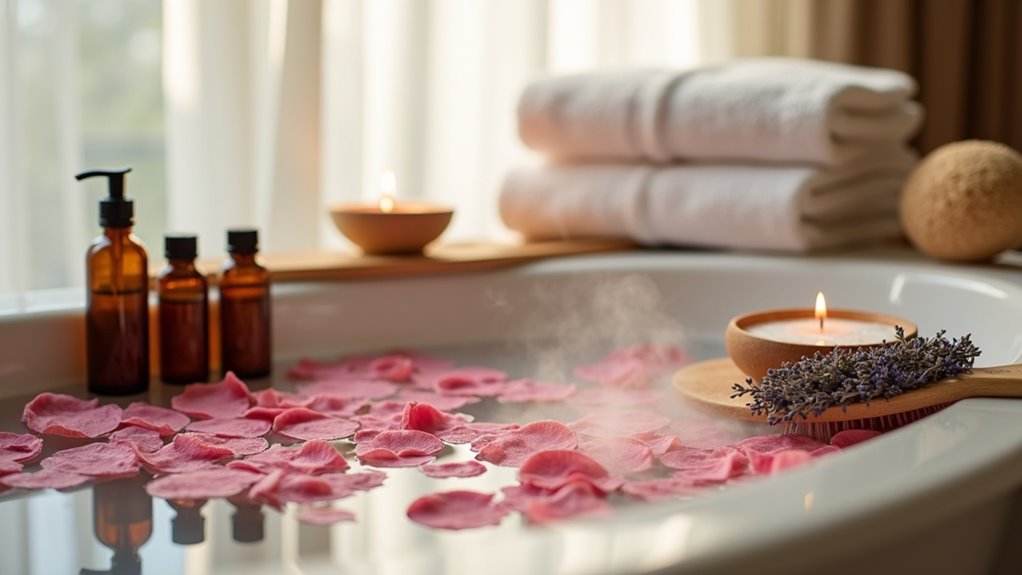
Many dedicated self-care rituals revolve around the direct application of essential oils to the body, whether through targeted topical treatments or immersive aromatic baths.
These practices offer dual benefits—the physical relief from topical application and the mental clarity from aromatic properties.
When applying oils topically, dilution with carrier oils is essential to prevent skin sensitivity. Common application points include temples, wrists and feet, where the oils can effectively target discomfort or promote relaxation.
For a truly immersive experience, perhaps nothing quite compares to an aromatic bath.
Adding essential oils to Epsom salt mixtures creates a soothing ritual that can, I think, transform an ordinary evening into a rejuvenating escape.
Frequently Asked Questions
How Long Do Essential Oils Last Before They Expire?
Essential oils typically have a shelf life of 1-5 years depending on type. Proper storage tips include keeping them in dark glass bottles away from heat and light to maximize longevity.
Can Essential Oils Interact With Medications or Health Conditions?
While medication brings healing, essential oils can bring complications. Essential oils may cause serious drug interactions and health risks for people with certain conditions, requiring consultation with healthcare providers.
Are Essential Oils Safe for Use During Pregnancy?
Essential oils require careful consideration during pregnancy. Some oils may be unsafe, while others can be used with proper dilution. Pregnant women should consult healthcare providers before using essential oils.
Which Oils Should Never Be Used Around Pets?
Several toxic essential oils should be avoided around pets, including tea tree, cinnamon, citrus, pine, eucalyptus, and peppermint. These can cause serious health issues for household animals due to their sensitive systems.
How Can I Test for Personal Sensitivity to an Essential Oil?
Like a traveler testing waters before crossing, one should perform a sensitivity patch test by applying diluted oil to a small skin area, monitoring for allergic reactions over 24 hours.
Conclusion
As the old saying goes, “Nature provides remedies for those who seek them.” Essential oils offer this natural wisdom through countless applications—from diffusion to massage to self-care rituals. Whether you’re seeking emotional balance, physical relief, or simply a moment of aromatic pleasure, these concentrated plant essences can transform daily routines into opportunities for healing. Perhaps the true power lies not in any single method, but in discovering which practices resonate with your unique wellness journey.
About The Author