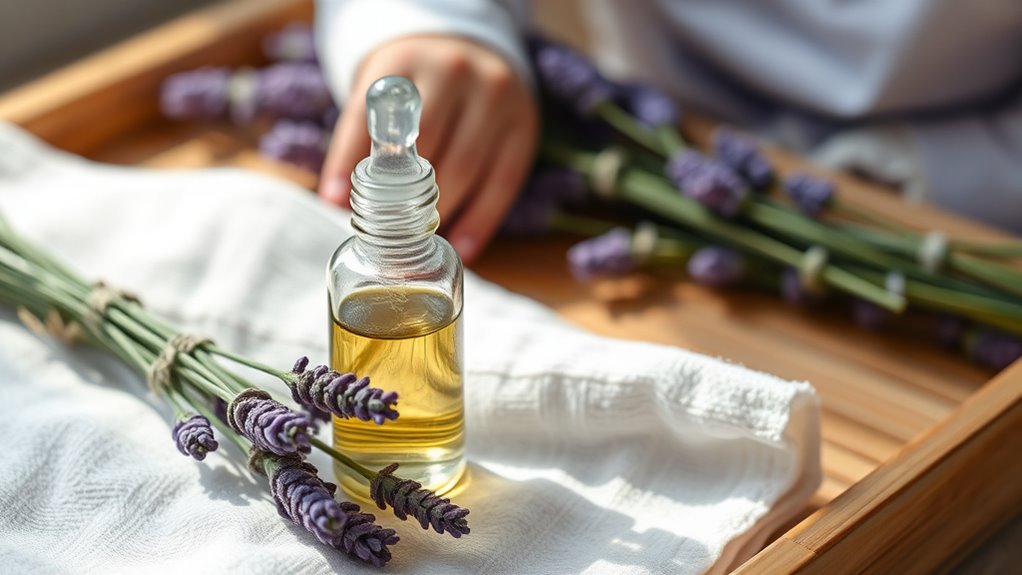
Many parents are turning to lavender oil as a natural solution for their children’s everyday discomforts. Its gentle properties make it suitable for young ones when used correctly. Pediatricians sometimes recommend it for minor skin irritations and sleep difficulties, though proper dilution remains essential for safety. A mother once mentioned how her toddler’s bedtime struggles diminished after incorporating lavender into their evening routine. But is this ancient remedy truly effective for all children, or are there limitations parents should consider?
Some of the links in this article may be affiliate links. If you make a purchase through these links, we may earn a small commission at no extra cost to you. Thank you.
Safety Guidelines for Using Lavender Oil With Children
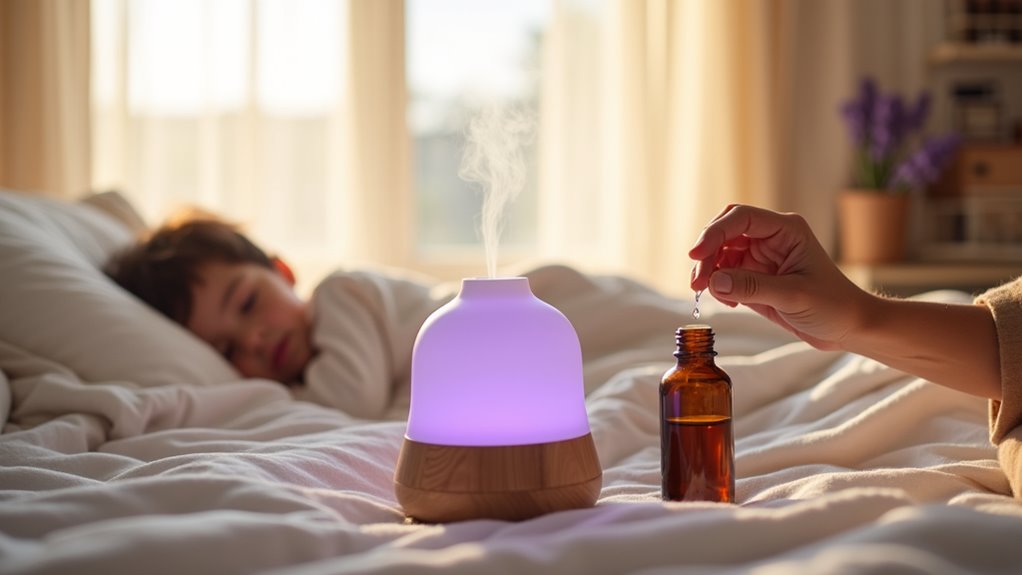
Three essential safety guidelines should be observed when using lavender oil with children.
First, proper dilution ratios must be followed meticulously—for babies over three months, use only 1 drop per 4 teaspoons of carrier oil, while children aged 2-10 can tolerate 2 drops in the same amount.
Remember that precision matters: dilute lavender oil correctly for little ones or risk skin irritation instead of soothing benefits.
Second, essential oil storage matters tremendously. Keep bottles tightly sealed, away from curious hands and direct sunlight. I think many parents underestimate how quickly children can access improperly stored oils.
Finally, remember that not all essential oils are safe for children. Lavender is generally gentle, but perhaps consult a healthcare provider before use, especially with infants.
Soothing Skin Irritations and Rashes Naturally
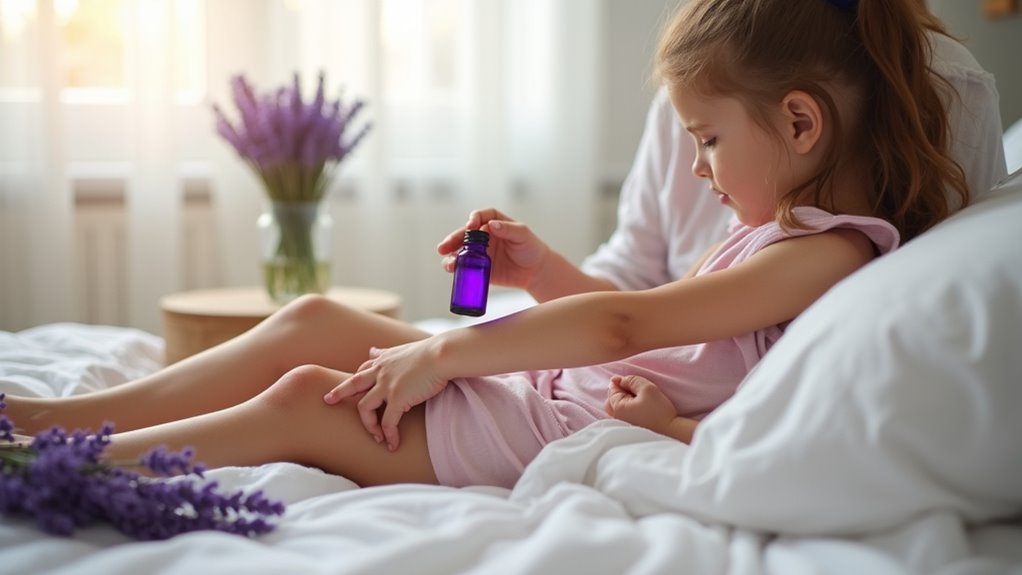
Lavender oil offers remarkable benefits for children’s skin problems—perhaps one of its most valuable applications in the family medicine cabinet. When diluted properly with sweet almond oil, it can soothe irritations that cause discomfort and distress in little ones.
For natural skin care remedies using lavender, consider these approaches:
- Apply a 1:4 ratio blend (1 drop lavender to 4 teaspoons carrier oil) directly to diaper rash areas.
- For children 2-10 with eczema, combine lavender and Roman chamomile with almond oil.
- Use the same gentle mixture to provide relief for mild sunburn.
These applications make lavender an essential tool for parents seeking natural solutions to common childhood skin complaints.
Creating a Calm Sleep Environment for Little Ones

When bedtime battles become a nightly struggle, parents often search desperately for gentle solutions to help their children drift into peaceful slumber. Lavender essential oil offers a natural approach to establishing effective sleep routines that can transform chaotic evenings into calming rituals.
Adding a few drops of lavender oil to a diffuser or humidifier can fill a child’s bedroom with its soothing aroma. Perhaps start with just one or two drops, adjusting based on your child’s preference.
For older children, this aromatic addition works wonderfully alongside other bedtime practices like reading or gentle music.
I think consistency matters most—using the same calming scent signals to little bodies that rest time has arrived.
DIY Lavender Blends for Everyday Childhood Concerns
Beyond establishing sleep routines, parents often face various childhood discomforts that require gentle intervention.
Addressing childhood discomforts with gentle, thoughtful approaches helps parents nurture both wellness and emotional security.
Lavender essential oil offers versatile solutions for everyday challenges when properly diluted. Perhaps the most comforting applications involve incorporating this gentle herb into daily care routines.
- Calming Bath Blend: Add 2 drops of lavender oil to 1 tablespoon of milk or carrier oil, then pour into warm bathwater for an evening wind-down.
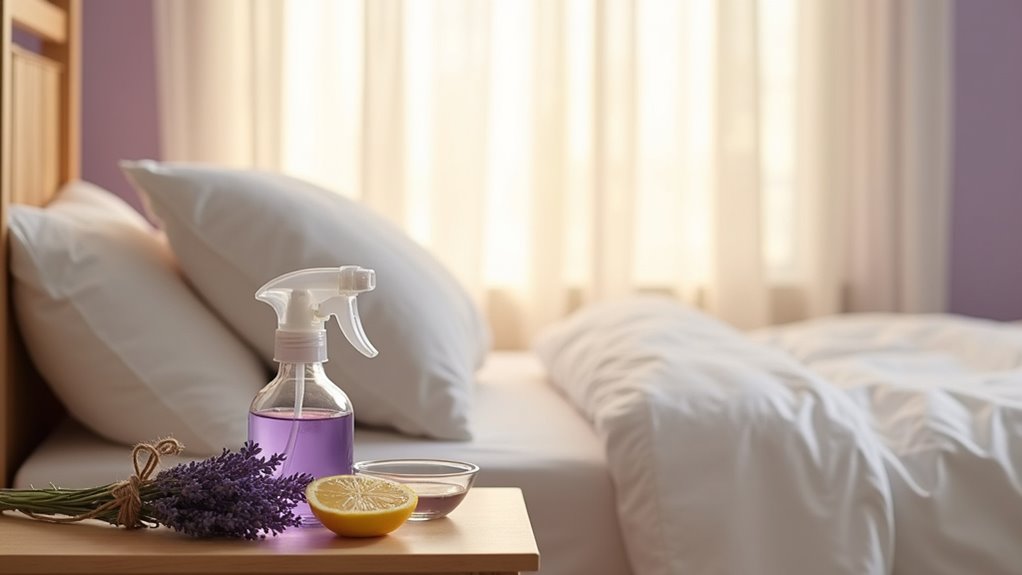
- Bedtime Calming Sprays: Mix 5 drops lavender with 4 oz distilled water in a spray bottle for pillow mists.
- Minor Skin Irritation Relief: Combine 1 drop lavender with 4 teaspoons sweet almond oil for gentle application.
Frequently Asked Questions
Can Lavender Oil Be Used Alongside Medication for Childhood Eczema?
Lavender oil benefits can complement prescribed eczema treatment in children. The diluted essential oil may help soothe irritated skin when used alongside medication, following proper safety guidelines for children’s sensitive skin.
How Long Should Children Avoid Sunlight After Lavender Oil Application?
Although lavender itself isn’t photosensitizing, children should wait 30-60 minutes after application to allow for complete oil absorption before sun exposure. General sun protection measures remain advisable regardless.
Can Lavender Oil Help With Childhood Growing Pains?
Evidence supporting lavender oil for growing pains is limited. However, some parents report this natural remedy may provide comfort when diluted and massaged into affected areas during childhood discomfort episodes.
Is Lavender Oil Safe for Children With Asthma or Respiratory Conditions?
While tremendously popular in general aromatherapy, lavender oil requires caution for asthma patients. It may trigger asthma symptoms in sensitive individuals despite potential respiratory benefits. Consultation with healthcare providers is essential before use.
Can Lavender Oil Reduce Anxiety During School Exams or Performances?
Lavender essential oil may provide anxiety relief during exams or performances through its calming effects. When properly diluted and used in diffusers or personal inhalers, it can help reduce stress responses.
Conclusion
While conventional products flood store shelves with chemicals and synthetic fragrances, lavender oil stands apart—a gentle guardian of childhood wellness. In homes where sleepless nights once reigned, now peaceful slumber takes hold. Parents who perhaps once hesitated to try natural remedies discover that this simple purple flower offers what complicated solutions couldn’t. The journey from irritation to comfort, from restlessness to calm, begins with just a few drops.
About The Author