Lavender oil stands as nature’s answer to our anxiety-filled modern lives. The gentle purple plant offers more than just a pleasant scent; it delivers genuine relief when tension mounts. People have turned to this botanical remedy for centuries, perhaps because its effects are both subtle and profound. Research suggests it works directly on brain chemistry, though the experience feels more like a gradual unwinding than a dramatic intervention. Most users report feeling its calming effects within minutes. What makes lavender particularly valuable is how it soothes without sedating.
Some of the links in this article may be affiliate links. If you make a purchase through these links, we may earn a small commission at no extra cost to you. Thank you.
Understanding Lavender Oil’s Anti-Anxiety Properties
While many people view lavender oil as simply a pleasant-smelling substance, it actually possesses remarkable anti-anxiety properties that have been validated through both scientific research and centuries of traditional use. The oil works by affecting the limbic system, the brain region responsible for emotional regulation.
Perhaps the most impressive lavender oil benefits come from its versatility. It can be inhaled directly, diffused in a room, or applied topically when properly diluted.
These aromatherapy techniques make it accessible for daily use, unlike some anxiety interventions that require special equipment or settings. I think this accessibility explains why it remains so popular despite newer alternatives.
Top 5 Methods to Apply Lavender Oil for Stress Relief
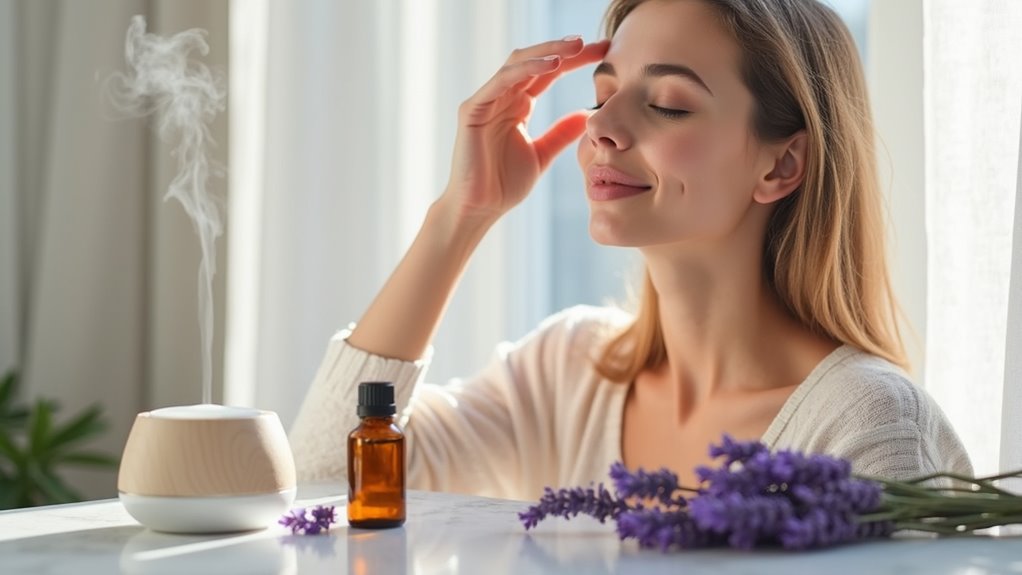
The five most effective methods for applying lavender oil offer versatility for anyone seeking relief from daily stress.
Direct inhalation from a vial provides immediate calming effects, perhaps the simplest aromatherapy technique.
The simplest gateway to tranquility lies in breathing directly from the vial, offering instant aromatherapy benefits wherever you are.
Adding drops to a warm bath creates a fully immersive experience that soothes both mind and body.
Diffusion spreads the benefits throughout your space, affecting everyone present.
For physical tension, diluted lavender makes an effective massage oil. I think it’s particularly helpful for neck stiffness.
Finally, creating a personal perfume blend offers on-the-go anxiety management.
Always prioritize lavender safety by properly diluting before skin application.
Creating Your Own Anti-Anxiety Lavender Oil Blends
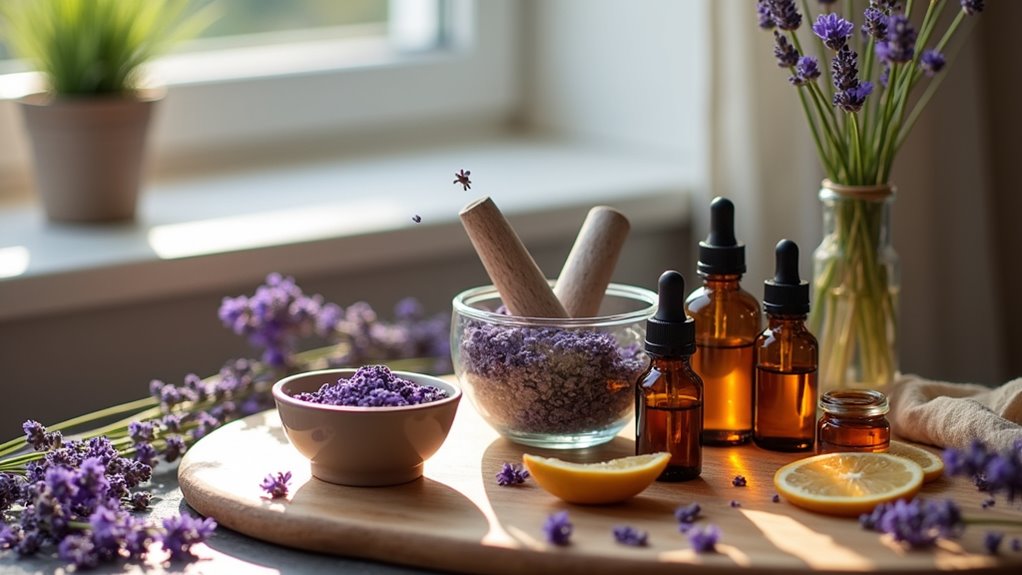
Moving beyond application methods, personalized essential oil blends offer a tailored approach to anxiety management. By combining lavender with complementary oils, individuals can create signature scent combinations that address their specific stress triggers.
Perhaps the most effective blending techniques involve starting with lavender as a base and experimenting with proportions.
- Calming Blend: 4 drops lavender + 3 drops neroli + 2 drops geranium
- Soothing Sleep Aid: 5 drops lavender + 4 drops rose
- Tension Relief: 3 drops lavender + 1 drop basil + 2 drops petitgrain
- Mood Lifter: Try adding bergamot or ylang-ylang to lavender
These combinations work wonderfully in diffusers, baths, or diluted for massage applications.
The Science Behind Lavender’s Calming Effects
Scientific research has consistently validated what aromatherapy practitioners have known for centuries about lavender oil’s remarkable anti-anxiety properties.
The oil contains specific lavender compounds, particularly linalool and linalyl acetate, which interact with neurotransmitters in the brain to promote relaxation.
Recent aromatherapy research suggests these compounds may bind to GABA receptors—the same receptors targeted by anti-anxiety medications.
Perhaps this explains why inhaling lavender oil often produces such immediate calming effects.
Studies have measured significant reductions in cortisol levels (our primary stress hormone) after lavender exposure.
I think this scientific validation helps explain why lavender remains one of the most trusted natural remedies for anxiety.
Frequently Asked Questions
How Long Does Lavender Oil’s Anxiety-Relieving Effect Typically Last?
Lavender oil’s calming effects typically last 2-3 hours after application or inhalation. The duration varies by individual, method used, and concentration. Regular application maintains lavender duration throughout stressful periods.
Can Lavender Oil Interact With Anxiety Medications?
While patients desperately seek natural remedies alongside pharmaceuticals, lavender oil interactions with anxiety medications warrant caution. Consult healthcare providers before combining, as potential interactions may occur, altering medication effectiveness or causing side effects.
Is Lavender Oil Safe for Children and Pregnant Women?
Lavender oil requires careful dosage for children and pregnant women. While its benefits include anxiety relief, consult healthcare providers before use as safety varies by individual circumstance and application method.
Does Lavender Oil Cause Drowsiness While Driving?
Drowsy drivers deserve caution with lavender oil. Its calming properties may potentially reduce alertness while operating vehicles. For driving safety, individuals should avoid direct inhalation of lavender oil immediately before driving.
Can Lavender Oil Trigger Allergic Reactions in Sensitive Individuals?
Lavender oil can trigger allergic reactions in sensitive individuals. Symptoms may include skin irritation, rashes, or respiratory issues. Those with known plant allergies should perform a patch test before use.
Conclusion
Lavender oil stands as nature’s remedy for our anxiety-filled world. It soothes the mind, calms the body, and perhaps most importantly, offers a moment of peace in chaotic lives. Through diffusion, direct application, or blending with other oils, its versatility matches its potency. The science confirms what tradition has long known: in lavender’s gentle fragrance lies the power to transform stress into serenity, one breath at a time.
About The Author
