
Lavender essential oil offers more than just a pleasant scent for those struggling with sleep issues. Its natural compounds work directly on the nervous system, creating a calming effect that many find superior to synthetic alternatives. While scientific studies continue to validate what herbalists have known for centuries, the practical applications remain invigoratingly simple. Perhaps most appealing is how easily lavender integrates into existing bedtime routines without the side effects commonly associated with sleep medications. The quiet power of this purple flower awaits.
Some of the links in this article may be affiliate links. If you make a purchase through these links, we may earn a small commission at no extra cost to you. Thank you.
The Science of Lavender Oil for Sleep Enhancement
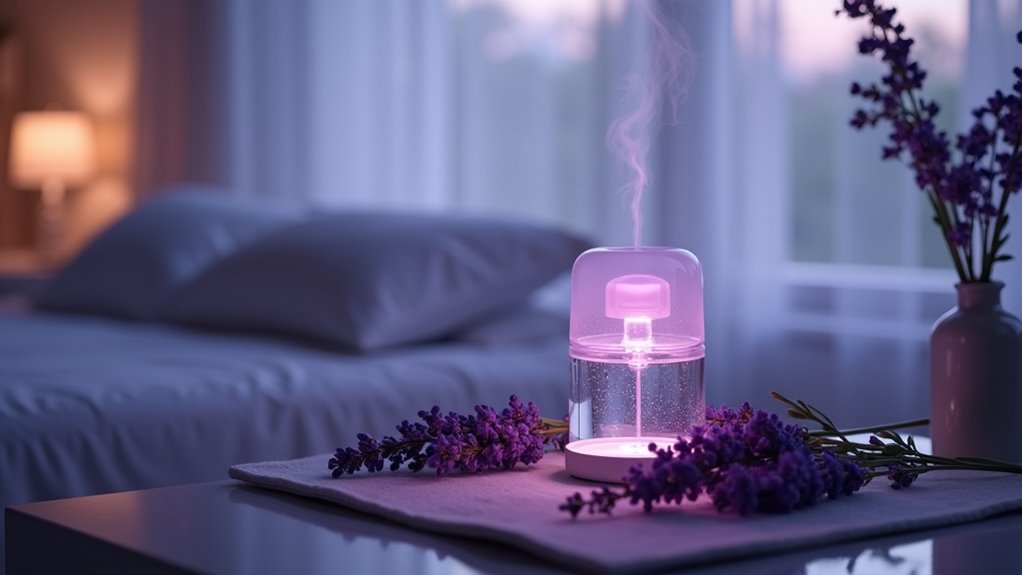
Research into the science of lavender oil reveals some fascinating mechanisms behind its well-known sleep-enhancing properties.
Studies suggest that linalool, a key compound in lavender, interacts with neurotransmitters to produce calming effects on the nervous system. This interaction may explain why many people experience notable sleep quality improvement after exposure to the aromatic compound.
Perhaps most interesting is how quickly lavender oil properties take effect. Unlike some sleep aids that require building up in the system, lavender seems to work almost immediately upon inhalation, helping to quiet the mind and relax the body in preparation for rest.
Five Simple DIY Recipes Using Lavender for Bedtime
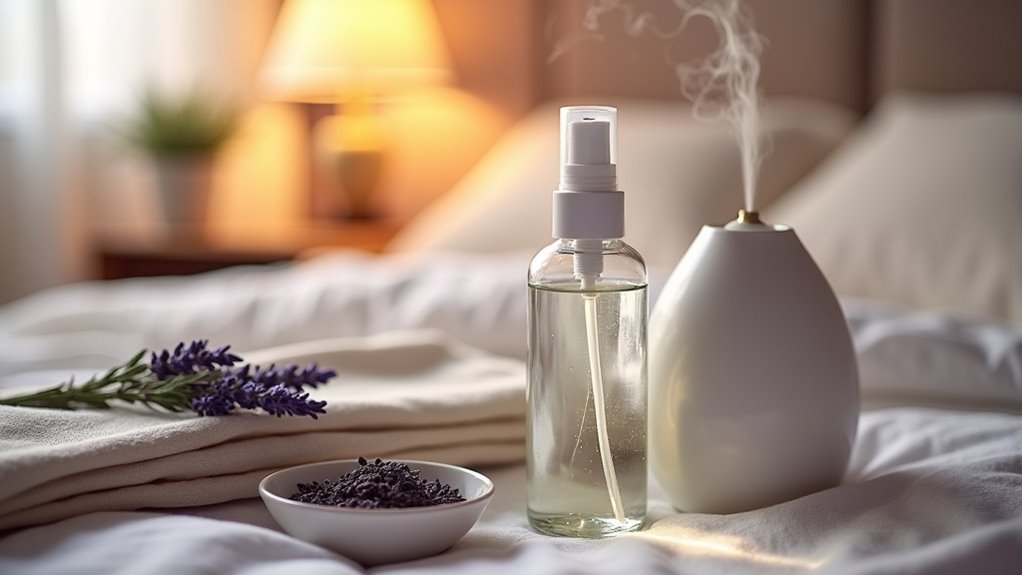
Now that we comprehend the science behind lavender’s effectiveness, putting this knowledge into practice becomes the natural next step.
Creating DIY sleep aids with lavender essential oil provides accessible, personalized solutions for insomnia. Perhaps the most rewarding aspect is how simple these recipes truly are to make at home.
Transform your sleepless nights into peaceful slumber with homemade lavender remedies that are surprisingly simple to create.
- Handcrafted lavender soap bars combine sleep benefits with everyday cleansing rituals
- Homemade lavender candles create a dual sensory experience through both scent and soft light
- Roll-on applicators offer targeted application for immediate relaxation
- Bath salts with lavender transform ordinary soaking into therapeutic unwinding
These DIY options make incorporating lavender into bedtime routines both effective and enjoyable.
Creating a Sleep-Inducing Nighttime Ritual With Lavender
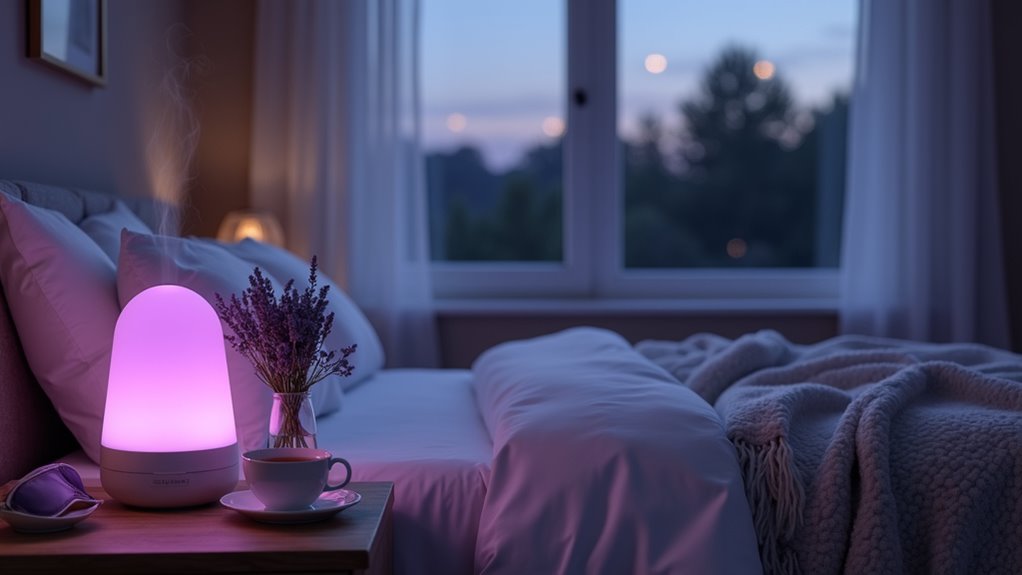
While establishing DIY lavender products creates a wonderful foundation for better sleep, integrating these items into a consistent nighttime ritual greatly amplifies their effectiveness.
The key is developing a sequence that signals to your body it’s time to wind down.
Perhaps begin by diffusing lavender oil an hour before bed, creating a calming nighttime ambiance throughout your sleeping space.
Follow with a warm bath using your lavender salts, then apply the roll-on to pulse points.
Various relaxation techniques like deep breathing or gentle stretching can complement these lavender applications.
I think consistency matters most – your brain eventually associates these scents and actions with sleep, strengthening their effectiveness over time.
Combining Lavender With Other Essential Oils for Optimal Rest
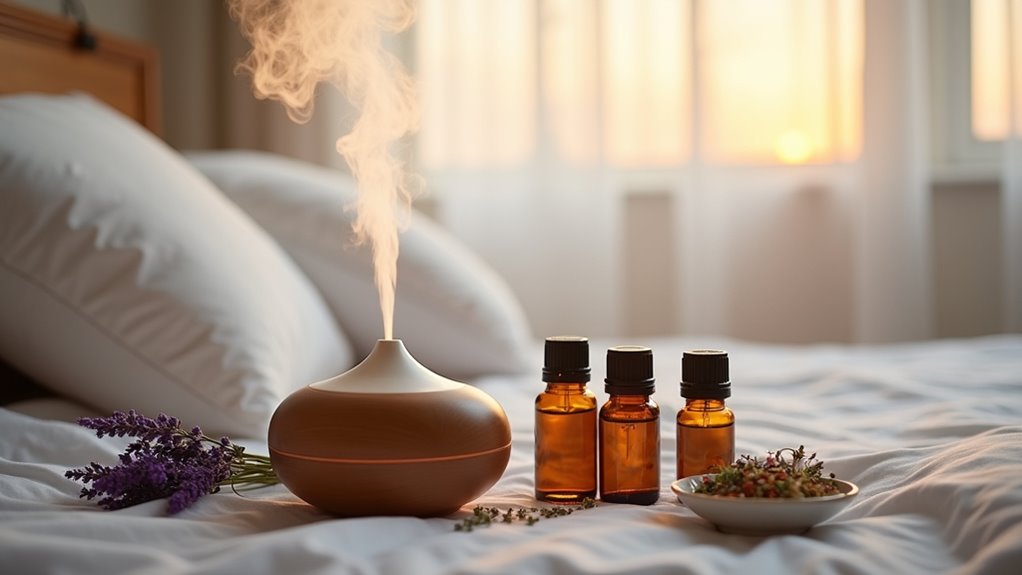
Though lavender oil works wonders on its own, combining it with complementary essential oils can create synergistic blends that enhance sleep quality dramatically.
Many aromatherapy experts recommend aromatic blends that pair lavender with deeper, woodier notes for a more complex sleep-inducing experience. Perhaps the most effective approach involves scent rotation, preventing the body from becoming desensitized to any single fragrance.
- Cedarwood and lavender create a grounding blend ideal for restless minds
- Vetiver adds earthy depth that extends lavender’s calming properties
- Wild orange brings a subtle brightness that balances lavender’s floral notes
- Ylang-ylang intensifies the relaxation effects while adding complexity
Frequently Asked Questions
Is Lavender Oil Safe for Pets in a Diffuser?
Lavender oil in diffusers can pose risks for pets. Different animals show varying sensitivities, with cats being particularly vulnerable. Pet owners should exercise caution and monitor for adverse diffuser safety reactions.
Can Children Use Lavender Essential Oil Products Safely?
When it comes to children, it’s best to walk on eggshells with lavender dosage guidelines. Dilution is essential, with reduced amounts and gentle lavender application methods like diffusion or highly diluted roll-ons.
How Long Does Lavender Oil’s Calming Effect Typically Last?
Lavender oil’s calming effects typically last 2-4 hours after application. Individual responses vary based on application method, concentration, and personal physiology. The lavender benefits may diminish gradually as the scent evaporates.
Will Lavender Oil Stain Bedding or Clothing?
While colorless and ephemeral in scent, lavender oil may leave persistent marks. When properly diluted, it rarely stains fabrics. For stain prevention, avoid direct contact with bedding or apply sparingly.
Can Lavender Oil Cause Allergic Reactions or Skin Sensitivities?
Lavender oil allergies can occur in some individuals. Contact dermatitis or skin irritation may develop, particularly with undiluted application. Patch testing is recommended before widespread use on skin or bedding.
Conclusion
As the gentle whispers of lavender drift through the bedroom, sleep becomes not just a necessity but a pleasure. The age-old adage “a good night’s sleep is the best medicine” rings especially true for those who’ve discovered lavender’s natural magic. By weaving this purple herb into nightly routines, perhaps we’ve found what our ancestors always knew—sometimes nature’s simplest gifts offer the most profound healing for our modern sleep struggles.
About The Author
