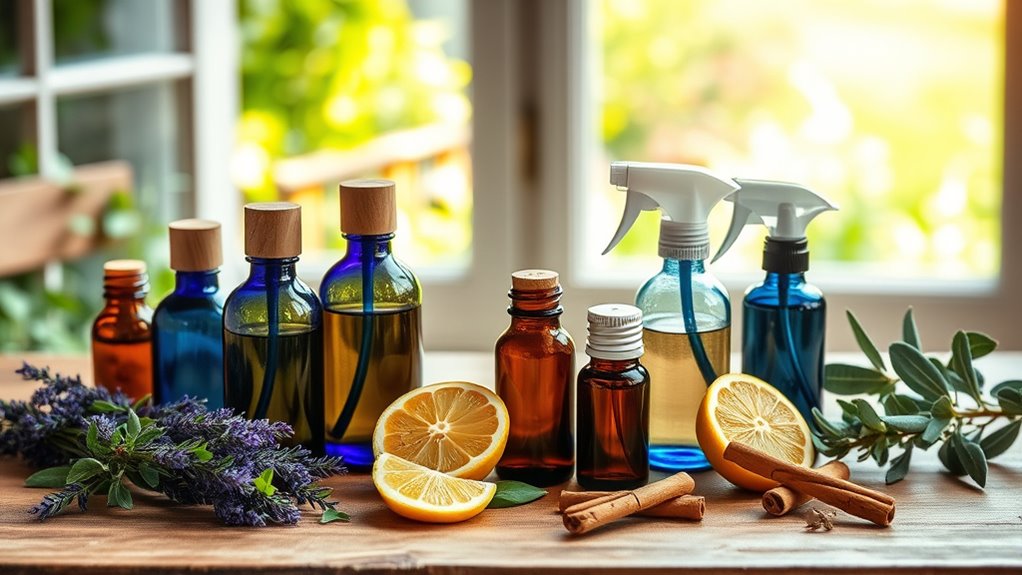
Essential oils present a fascinating alternative to chemical pesticides. Many homeowners are turning to these natural extracts for pest control, particularly in households with children or pets. The compounds in certain oils disrupt insects’ sensory receptors or even kill them outright. Though research remains somewhat limited, anecdotal evidence suggests oils like lavender and peppermint effectively repel common household pests. Perhaps the most appealing aspect isn’t just their effectiveness, but the pleasant aromas they leave behind—unlike the harsh chemical smell of conventional products.
Some of the links in this article may be affiliate links. If you make a purchase through these links, we may earn a small commission at no extra cost to you. Thank you.
Why Essential Oils Are Safer Than Chemical Pesticides

While commercial pesticides often contain harsh chemicals that can harm both humans and the environment, essential oils provide a gentler yet effective alternative for pest control.
These natural solutions minimize chemical exposure for families, particularly important in homes with children and pets who are more vulnerable to toxins.
Perhaps even more significant is how essential oils help combat pest resistance.
Unlike synthetic pesticides that bugs eventually adapt to, essential oils work through multiple mechanisms that pests struggle to develop immunity against.
This means they remain effective over time, without requiring ever-stronger chemicals to achieve the same results.
Top Essential Oils for Common Household Pests
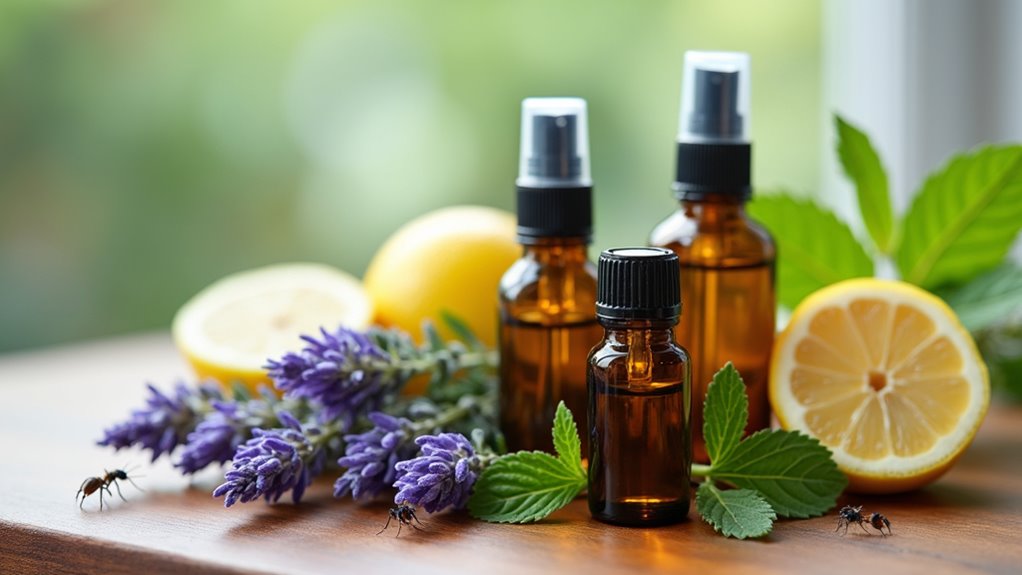
Selecting the right essential oils can make all the difference when battling common household pests. Lavender benefits extend beyond its calming properties—it’s particularly effective against bed bugs, emitting a potent scent that both repels and kills these unwanted guests.
For mosquitoes and ants, peppermint properties are truly remarkable. Its strong, minty aroma creates an inhospitable environment for these critters.
Perhaps most impressive is how peppermint oil can be applied around windows and doorframes to create a natural barrier.
Peppermint oil acts as an invisible shield when applied strategically around home entry points, keeping unwanted pests at bay naturally.
Other standouts include orange oil, which dissolves insect exoskeletons, and rosemary, which I think works wonderfully for flies and fleas.
Creating Your Own Essential Oil Bug Repellents

Many homeowners find that creating their own essential oil bug repellents is not only cost-effective but also allows for customized solutions tailored to specific pest problems.
The process is straightforward, requiring just a few basic accessories and ingredients.
Custom blends might combine peppermint with lavender for a dual-action mosquito repellent, perhaps more effective than single-oil solutions.
The beauty lies in experimenting with different scent combinations until finding what works best for your situation.
The basic DIY recipe—essential oils, warm water, and a touch of dish soap—serves as a foundation that homeowners can adjust based on the specific pests troubling their homes.
Application Methods for Maximum Effectiveness

Proper application of essential oils can dramatically increase their effectiveness as natural bug repellents.
When using these potent plant extracts, understanding the right application techniques for each situation guarantees you get the best results while maintaining safety.
Oil dilution is perhaps the most vital aspect to master before applying any essential oil solution around your home.
- Direct spray application – Apply diluted solutions to problem areas like windowsills and door frames.
- Diffusion method – Use an essential oil diffuser in enclosed spaces for airborne pests.
- Barrier treatment – Create protective boundaries around entry points with cotton balls soaked in diluted oils.
- Topical application – Apply properly diluted formulas to skin (after patch testing) for personal protection.
Frequently Asked Questions
How Long Do Essential Oil Bug Repellents Typically Last?
Essential oil bug repellents typically last 2-4 hours depending on environmental conditions. Effectiveness duration varies based on oil concentration and application methods—sprays dissipate faster than diffused oils or infused materials.
Can Essential Oils Cause Allergic Reactions in Sensitive Individuals?
Imagining a “natural” solution burning on contact reveals the truth: essential oils can trigger allergy symptoms in sensitive individuals. Reactions typically manifest as sensitive skin irritation, respiratory issues, or headaches.
Which Essential Oils Are Safe to Use Around Food Preparation Areas?
Lemon, orange, and peppermint oils are safe for food preparation areas when properly diluted. Cooking safety improves with minimal oil concentrations, ensuring effective bug control without contaminating food surfaces.
Do Essential Oils Lose Effectiveness in Humid or Rainy Conditions?
Essential oils may experience diminished potency in high humidity or rainy conditions as moisture can dilute their concentration and accelerate evaporation, reducing their overall effectiveness as repellents.
Can Essential Oils Damage Furniture or Fabrics When Used Regularly?
Essential oils can stain fabrics and damage furniture finishes if used undiluted. For furniture protection and fabric safety, always dilute oils and test on inconspicuous areas before regular application.
Conclusion
Just as a garden flourishes when free from invasive weeds, our homes thrive when protected naturally. Essential oils stand as quiet sentinels, guarding our spaces without the harsh environmental toll of chemicals. Maybe they’re not perfect for every situation, but these plant-derived defenders offer a healthier path forward. So perhaps it’s time we all listen to nature’s wisdom and let these aromatic allies help us reclaim our pest-free sanctuaries.
About The Author