
Bad breath can be a persistent problem that conventional solutions don’t always address effectively. Essential oils offer a natural alternative worth exploring. These plant-derived compounds contain potent antimicrobial properties that target the bacteria causing halitosis at its source. Many people have found that incorporating certain oils—like peppermint, tea tree, or clove—into their oral hygiene routine provides lasting freshness beyond what commercial products deliver. Perhaps it’s time to contemplate what nature has already perfected.
Some of the links in this article may be affiliate links. If you make a purchase through these links, we may earn a small commission at no extra cost to you. Thank you.
The Science Behind Essential Oils and Oral Health

While many people simply enjoy the pleasant aromas of essential oils, there’s actually fascinating science behind why these natural extracts can be so effective for oral health.
Most essential oils contain compounds with antimicrobial properties that target the bacteria responsible for bad breath.
These natural extracts work in multiple ways – some, like clove oil, directly kill bacteria, while others like peppermint might mask odors while simultaneously reducing bacterial counts.
Essential oils tackle bad breath from multiple angles, combining bacteria-fighting properties with pleasant scent profiles.
I think what’s particularly interesting is how these oils interact with saliva production, perhaps even stimulating it to help naturally cleanse the mouth.
Their molecular structure allows them to penetrate biofilms where bacteria hide. Additionally, some essential oils, like tea tree oil, offer antiseptic qualities that can further enhance oral hygiene by neutralizing harmful bacteria.
Top 5 Essential Oils That Combat Bad Breath Effectively
Despite the abundance of oral hygiene products on the market, essential oils remain a powerful natural alternative for combating bad breath. Among these, peppermint and spearmint oils stand out for their invigorating properties and common presence in commercial dental products.
Clove oil might be the most effective, offering strong antibacterial properties that tackle the root cause of halitosis. In addition to this, clove oil is renowned for its effectiveness in fighting harmful bacteria that cause cavities and bad breath.
Eucalyptus, rich in menthol, not only fights bacteria but provides that clean, cooling sensation we associate with vitality.
Lemon oil, perhaps less obvious, deserves mention too. Its citrus profile masks odors while its natural acidity creates an environment where bacteria struggle to thrive.
How to Incorporate Essential Oils Into Your Daily Dental Routine
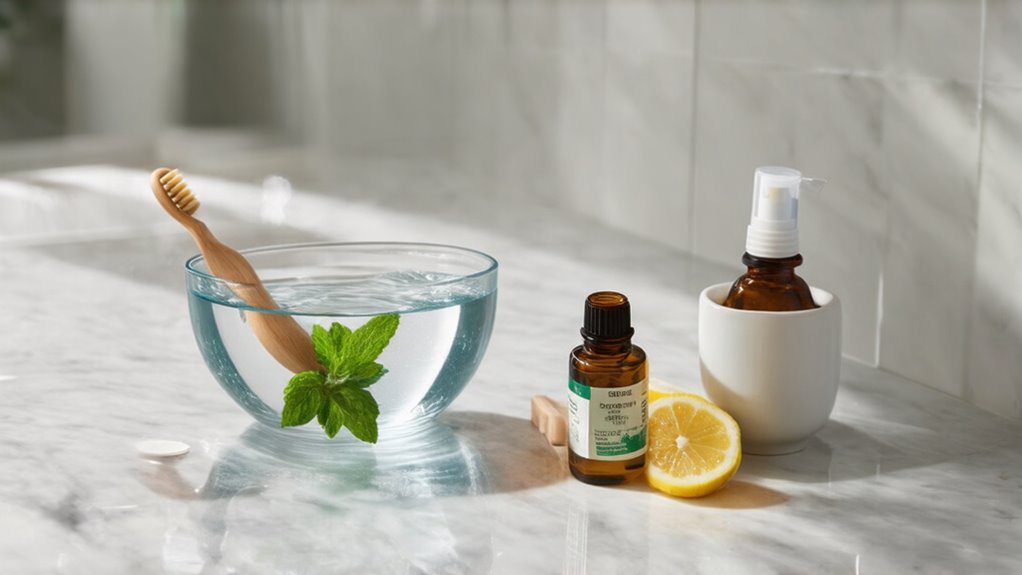
Discovering effective essential oils is just the first step – now it’s time to put them to work in your everyday oral care routine.
Perhaps the simplest approach is adding a few drops to your toothbrush before applying toothpaste, or mixing oils with water for a homemade mouthwash.
Elevate your daily brushing routine by incorporating a few drops of essential oil—nature’s way to freshen breath and support oral health.
For those who prefer convenience, try placing one drop of peppermint or clove oil on your tongue after meals.
Some people find oil pulling with coconut oil, enhanced with a drop of lemon or spearmint, particularly effective. Additionally, lemon essential oil’s natural disinfectant properties can further enhance your oral hygiene routine.
Frequently Asked Questions
Can Essential Oils Replace Traditional Mouthwash Completely?
Essential oils can complement but not fully replace traditional mouthwash. They offer natural antibacterial properties, but lack certain benefits that commercially formulated products provide for complete oral care.
Are These Oils Safe for Children to Use?
Like a guardian’s caution, essential oils require adult supervision for children. Most are not recommended for young children due to potency, concentration, and potential sensitivity risks.
How Long Do Breath-Freshening Effects Typically Last?
Breath-freshening effects from essential oils typically last 2-4 hours. Duration varies based on oil type, concentration, application method, and individual factors like eating, drinking, or oral hygiene practices.
Can Essential Oils Help With Tonsil Stones?
Why suffer with tonsil stones? Essential oils like clove and eucalyptus offer antibacterial properties that may help reduce these calcifications, addressing both the stones themselves and associated bad breath issues.
Do Essential Oils Interact With Dental Work or Braces?
Essential oils may interact with dental work or braces. Some oils could potentially affect adhesives or materials. Patients should consult dental professionals before using oils near orthodontic appliances or restorations.
About The Author