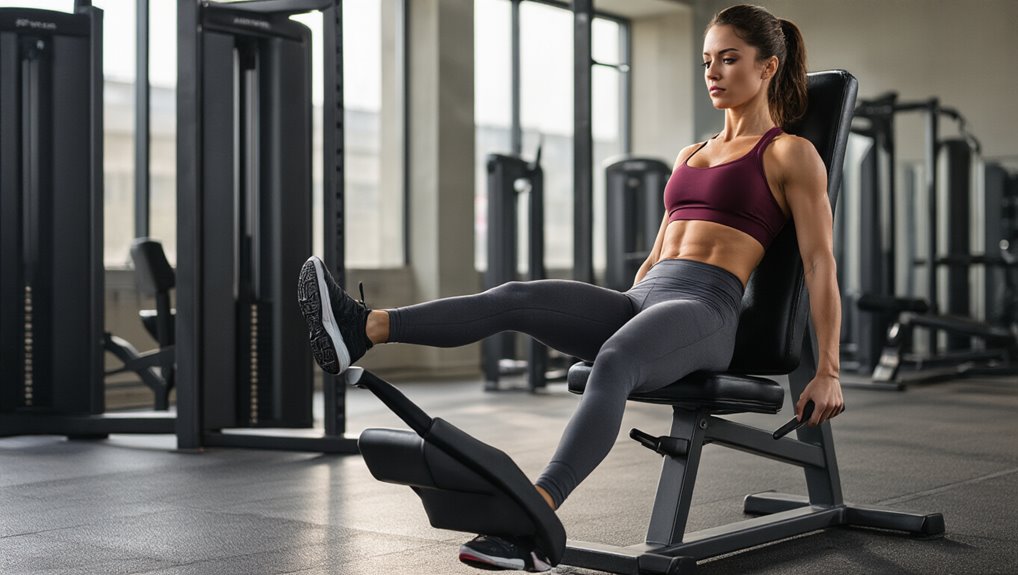
Most people don’t realize the leg press can be their secret weapon for glute development. While squats and deadlifts get all the glory, the leg press machine offers something unique – it’s like having a controlled environment where you can really dial in your glute activation. The key is positioning, and honestly, most folks get this completely wrong at first. When you place your feet wider and higher on that footplate, you’re basically creating the perfect angle to target those glutes while taking some stress off your lower back.
Some of the links in this article may be affiliate links. If you make a purchase through these links, we may earn a small commission at no extra cost to you. Thank you.
Why Leg Press Is Essential for Glute Development
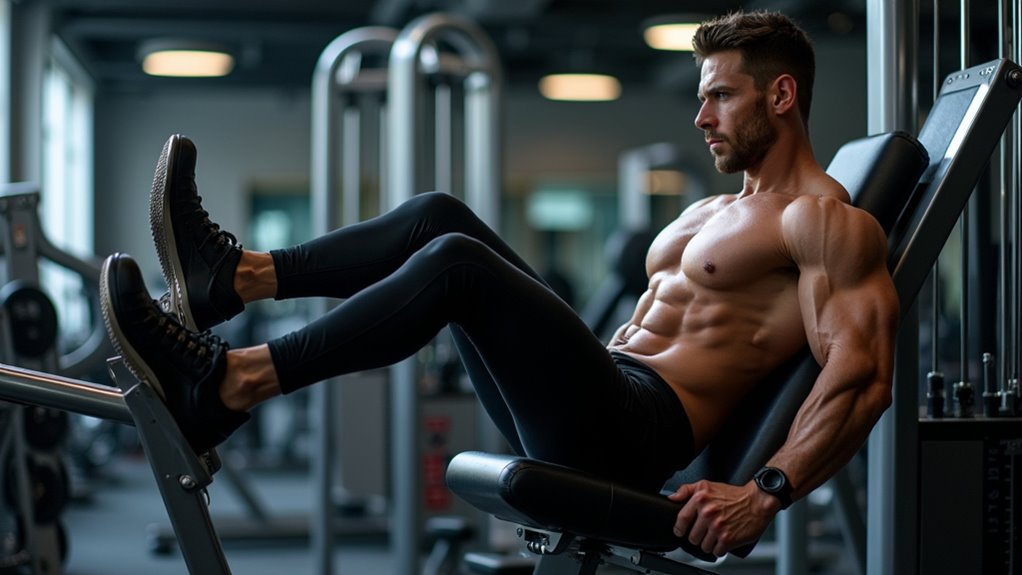
While many lifters gravitate toward squats and deadlifts for glute development, the leg press machine offers unique advantages that make it an essential tool for building powerful posterior muscles. Think of it like having a specialized hammer for a specific job—sometimes you need the right tool for the best results. The leg press allows you to isolate your glutes more effectively by maintaining constant tension throughout the movement. You can’t really cheat the motion like you might with free weights. Plus, it’s safer for beginners who haven’t mastered complex movement patterns yet.
Proper Leg Press Form to Maximize Glute Activation
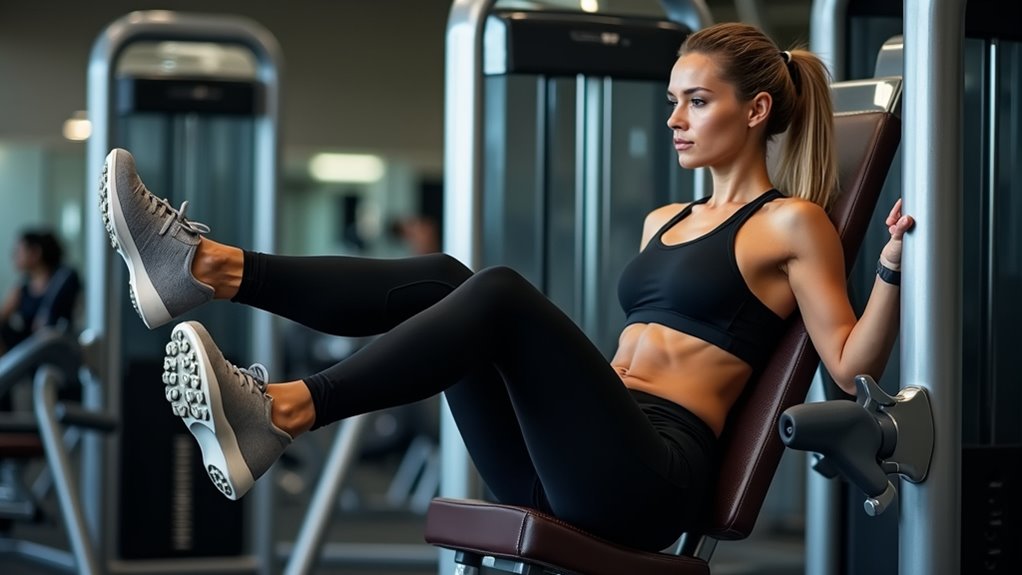
Position yourself correctly on the leg press machine and you’ll release the glutes’ full potential—but get it wrong, and you’re basically just doing an expensive knee extension. Place feet wider than shoulder-width, positioning them higher on the footplate. Think of it like building a foundation—your foot placement determines everything that follows. Keep your core tight and hips pressed firmly against the backrest. Don’t let your knees cave inward; they should track over your toes. Lower the weight until your knees hit about 90 degrees, then drive through your heels while squeezing those glutes hard.
The Science Behind Glute Engagement During Leg Press
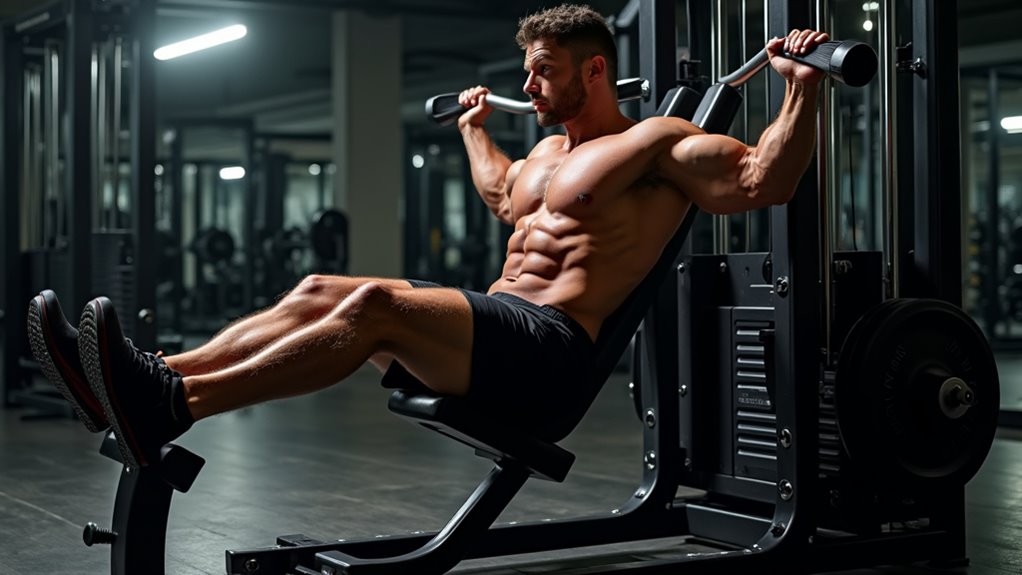
When you press that footplate away, your glutes don’t just magically fire up—there’s actually some pretty specific biomechanics happening under the hood. Think of your hip joint like a construction hinge—as you extend your legs, the glutes contract to drive that hip extension movement. The deeper you go into the press, the more your glutes have to stretch, which creates what we call “length-tension relationship.” It’s basically your muscle’s sweet spot for generating force. Your glutes work hardest at the bottom position, fighting gravity to push that weight back up.
Key Muscles Working Together in the Leg Press Movement
The leg press operates like a well-oiled machine where multiple muscle groups form a coordinated work crew, each handling their specific job to move that weight. Think of it as your body’s construction team – everyone’s got their role.
| Muscle Group | Primary Job | Support Role |
|---|---|---|
| Glutes | Hip extension powerhouse | Stabilizes pelvis, prevents wobbling |
| Quadriceps | Knee extension workhorses | Controls descent speed |
| Hamstrings | Knee flexion assistants | Protects knee joint from hyperextension |
| Calves | Ankle stability crew | Maintains foot position on platform |
When these muscles work together properly, you’ll actually feel the difference. It’s not just about pushing weight – it’s coordinated teamwork.
Advanced Techniques for Enhanced Glute Targeting
Maximizing glute activation during leg presses requires a strategic approach that goes beyond simply loading more weight onto the machine. Think of it like fine-tuning an engine – you need the right adjustments for peak performance. First, position your feet higher on the platform and slightly wider than shoulder-width. This creates better hip flexion angles. Actually, I’d say the foot placement is probably 80% of the battle here. Pause at the bottom for two seconds, really focusing on that stretch. Drive through your heels, not your toes – that’s where most people mess up.
About The Author


