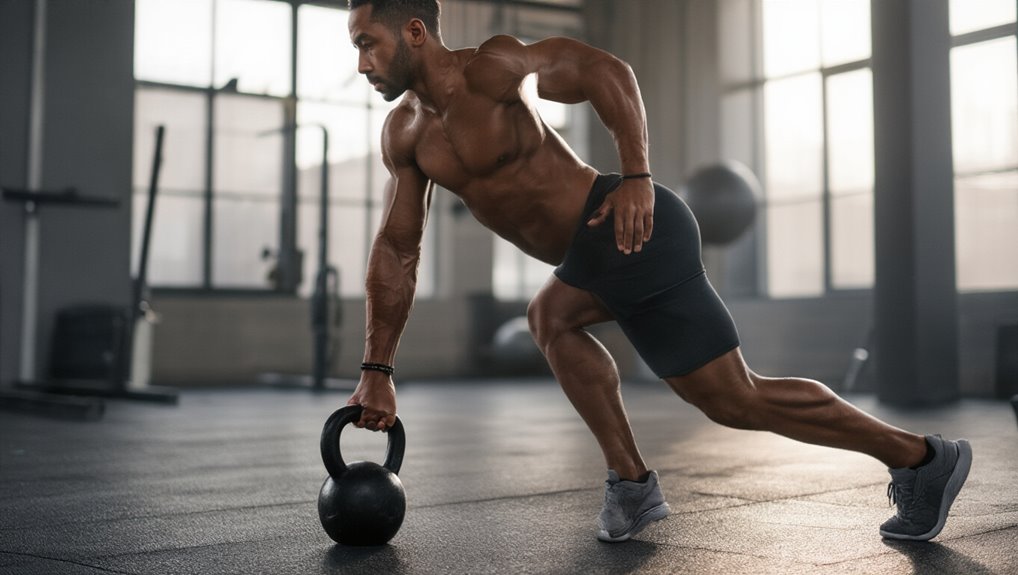
You’re probably missing out on one of the most effective tools for building serious hamstring strength – and it’s sitting right there in your garage or basement. Well, maybe it’s not there yet, but it should be. Kettlebells aren’t just trendy workout gear; they’re actually perfect for targeting your posterior chain in ways that traditional weights simply can’t match. Here’s why your hamstrings need this iron companion.
Some of the links in this article may be affiliate links. If you make a purchase through these links, we may earn a small commission at no extra cost to you. Thank you.
Why Kettlebells Are Perfect for Hamstring Development
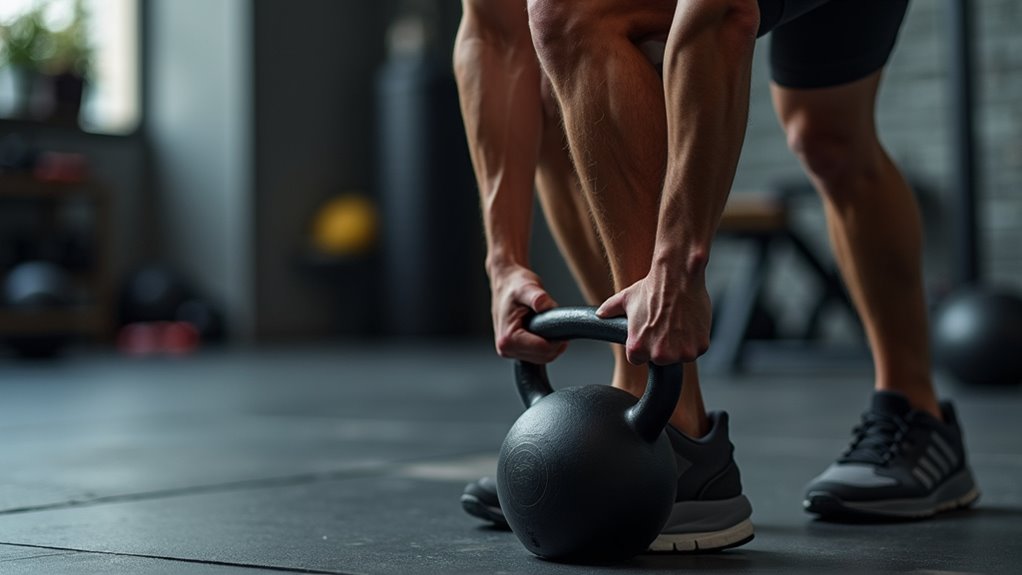
When you’re looking to build serious hamstring strength, kettlebells honestly beat out most other equipment – and I’ll tell you why. First, they’re like having a complete gym in one tool. You can swing, deadlift, and hinge at the hip naturally. The weight distribution forces your hamstrings to work harder than they would with barbells or machines. Think of it as functional training – you’re moving the way your body’s designed to move. Plus, kettlebells don’t require much space or setup time. You’ll actually engage your entire posterior chain while targeting those hamstrings specifically.
Master the Fundamental Kettlebell Swing
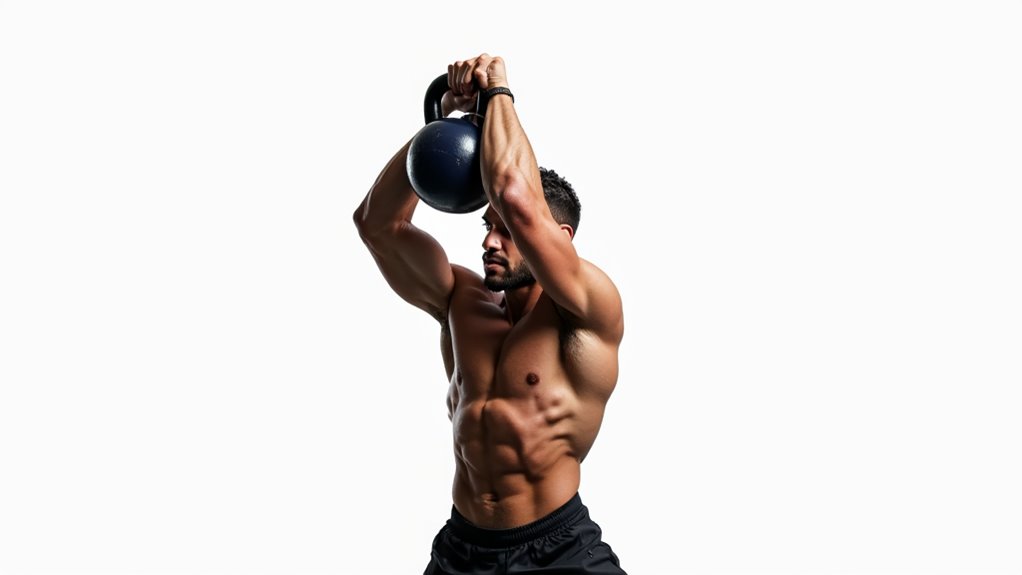
Three things separate a proper kettlebell swing from the sloppy versions you’ll see at most gyms – and honestly, getting these fundamentals right is like learning to use a hammer before you build a house.
First, you’re driving power from your hips, not your shoulders. Think of it like snapping a whip – the force starts at your core and transfers through the bell. Second, keep that back flat as a board throughout the movement. Finally, the kettlebell should float to shoulder height naturally from your hip drive, not because you’re muscling it up there.
Single-Leg Romanian Deadlift for Unilateral Strength

Now that you’ve got the bilateral hip hinge down with the kettlebell swing, it’s time to challenge each leg individually – and honestly, this is where most people discover they’re not nearly as balanced as they thought.
The single-leg Romanian deadlift is like building a house on one foundation post instead of two. Here’s what you’ll need to focus on:
Building strength on one leg reveals weaknesses you never knew existed – prepare to be humbled by this unforgiving balance challenge.
- Start light – your ego will thank you later
- Keep your standing leg slightly bent, not locked out
- Hinge at the hip while extending your free leg behind you
- Maintain a flat back throughout the movement
- Control the descent and return with purpose
Build Power With the Classic Kettlebell Deadlift
While the single-leg variation tests your balance, the classic kettlebell deadlift is where you’ll build serious power – think of it as the foundation pour for your entire posterior chain. You’re basically constructing strength from the ground up here. Start with your feet shoulder-width apart, kettlebell between them. Hinge at your hips like you’re closing a door with your backside. Keep that back straight – no rounding, ever. Drive through your heels and squeeze those glutes at the top. It’s honestly the most bang for your buck exercise you’ll find for building real, functional hamstring power.
Target Your Posterior Chain With Stiff-Legged Deadlifts
Think of the stiff-legged deadlift as fine-tuning your hamstring blueprint – you’re taking that solid foundation from the classic deadlift and really zeroing in on your posterior chain with laser precision.
This variation’s like using a specialty tool instead of your basic hammer. You’ll hinge at the hips while keeping those knees just slightly bent, not locked out completely.
- Keep your back flat as a level throughout the entire movement
- Hinge forward until you feel that good stretch in your hamstrings
- Engage your core like you’re bracing for impact
- Drive through your heels to return to starting position
- Focus on controlled movement, not speed
About The Author


