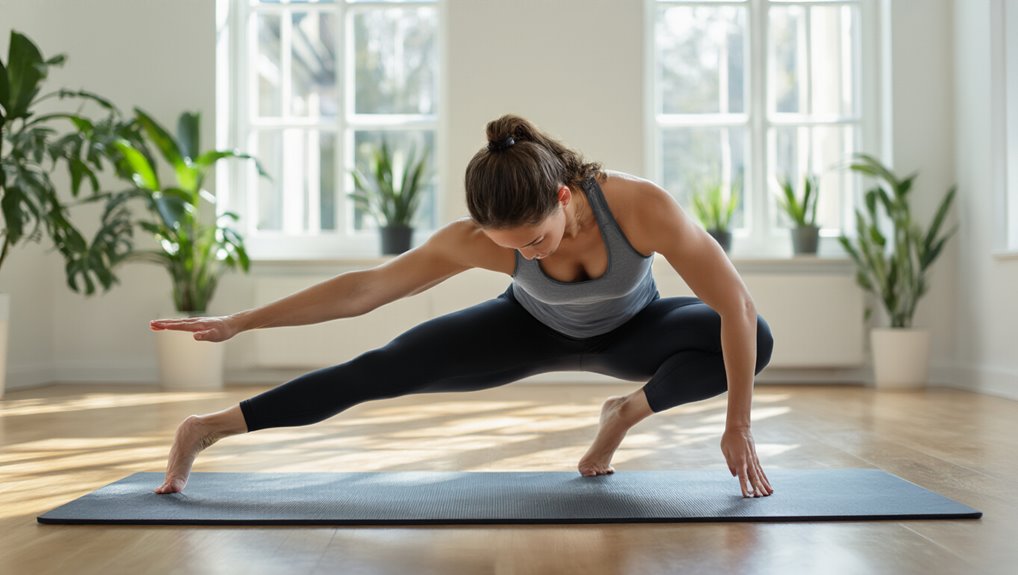
Most people don’t realize their lower back‘s actually like the foundation of a house—when it’s weak, everything else starts to crack. You know, after years of watching folks struggle with back pain, I’m pretty sure the biggest mistake is thinking you need fancy equipment or a gym membership to fix it. Well, that’s simply not true. Simple bodyweight exercises can rebuild your core stability right in your living room, but there’s a specific way to approach this that most people completely miss.
Some of the links in this article may be affiliate links. If you make a purchase through these links, we may earn a small commission at no extra cost to you. Thank you.
Why Your Lower Back Needs Attention

While most people focus on strengthening their abs or building impressive biceps, the lower back often gets overlooked—and that’s honestly a mistake that’ll catch up with you. Think of your lower back like the foundation of a house—if it’s weak, everything else starts to wobble. The erector spinae muscles act as your body’s main support beams, keeping your spine upright and stable. When these muscles are weak, you’re basically asking for trouble. Poor posture, chronic pain, and increased injury risk all become real problems that’ll impact your daily life more than you’d expect.
Essential Bodyweight Exercises for Lower Back Strength

Five core bodyweight exercises form the backbone of any solid lower back strengthening routine, and honestly, they’re more effective than most people realize. Think of them like the foundation of a house—you can’t skip this part.
The plank builds your core like a steel beam, while bird dogs teach coordination between opposing muscle groups. Back extensions target those erector spinae muscles directly, and cat camels work like a hinge, keeping your spine flexible. Push-up planks add dynamic movement that mimics real-world demands.
These aren’t fancy, but they’re proven. Start here, master the basics.
Mastering the Plank for Core Stability

When most people think about planks, they picture holding a rigid position for as long as possible—but honestly, that’s missing the point entirely. Think of your core like the foundation of a house—it’s not just about being strong, it’s about staying stable under pressure. A proper plank builds that rock-solid base your spine desperately needs. Start with thirty seconds of perfect form rather than two minutes of sloppy positioning. Keep your body straight as a board, don’t let your hips sag or pike up. Quality beats duration every single time, trust me on this one.
Building Coordination With Bird Dog and Push up Plank
Once you’ve got your plank game locked down, it’s time to add some moving parts to the mix. Think of Bird Dog and Push Up Plank as the next level – they’re like adding electrical work to a solid foundation. These exercises build coordination while strengthening your lower back.
Here’s how to nail these coordination builders:
- Bird Dog: Start on all fours, extend opposite arm and leg
- Hold steady: Keep your core tight, don’t let your hips wobble
- Push Up Plank: Shift from forearm plank to push-up position
- Control the movement: Slow, deliberate motions prevent injury
Relieving Pain Through Back Extensions and Cat Camel Stretches
Many people dealing with lower back discomfort find that targeted stretching can actually work better than rest alone – it’s like loosening a tight bolt instead of ignoring it until it breaks. Back extensions work by strengthening the erector spinae while relieving pressure on compressed vertebral discs. Think of it as creating more space between your spine’s building blocks. Cat camel stretches take a different approach, moving your spine through its full range like opening and closing a door hinge. These movements promote flexibility and reduce stiffness. Both exercises require no equipment and can provide immediate relief when performed consistently.
Key Benefits of Equipment-Free Lower Back Training
Several compelling advantages make bodyweight lower back training the go-to choice for anyone serious about spinal health – think of it as having a complete workshop that fits in your pocket.
- Zero Equipment Investment – You don’t need fancy machines or weights, just floor space and commitment to consistency.
- Immediate Pain Relief – These exercises target pressure points and muscle tension that office chairs create daily.
- Portable Solution – Whether you’re traveling for work or stuck at home, your workout travels with you everywhere.
- Injury Prevention – Regular bodyweight training builds the foundation strength that prevents costly back problems later.
Creating Your Effective Home Workout Routine
Building an effective home workout routine for your lower back isn’t rocket science, but it does require the same methodical approach you’d use when planning any solid construction project. Start with your foundation—that’s planks and bird dogs. These are your concrete and rebar, if you will. Schedule three sessions weekly, maybe every other day. Don’t overload the circuit initially; you’ll burn out the motor. Begin with two sets of each exercise, holding positions for 15-30 seconds. Actually, I’d probably start even lighter—maybe 10 seconds if you’re new. Progress gradually, like adding floors to a building.
About The Author


