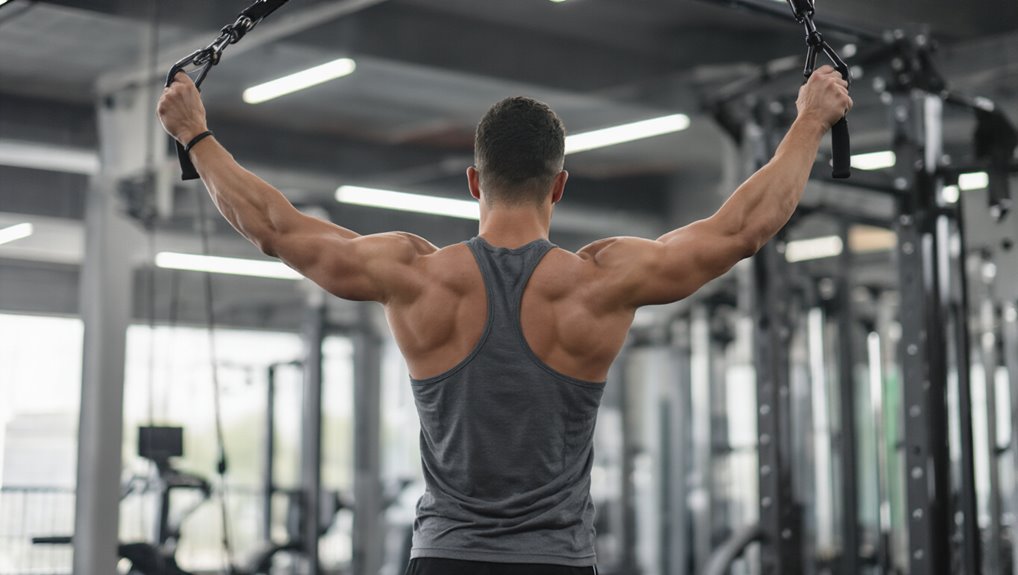
You know, I’ve seen too many people skip the Cable Y Raise thinking it’s just another shoulder exercise. Well, actually—it’s way more than that. This movement’s like the foundation work of upper body training; you can’t build solid strength without addressing those smaller stabilizing muscles first. I’m not entirely sure why more trainers don’t emphasize it, but mastering this exercise will transform how your entire upper body functions. Here’s what most people get wrong from the start.
Some of the links in this article may be affiliate links. If you make a purchase through these links, we may earn a small commission at no extra cost to you. Thank you.
Essential Equipment and Setup for Cable Y Raises
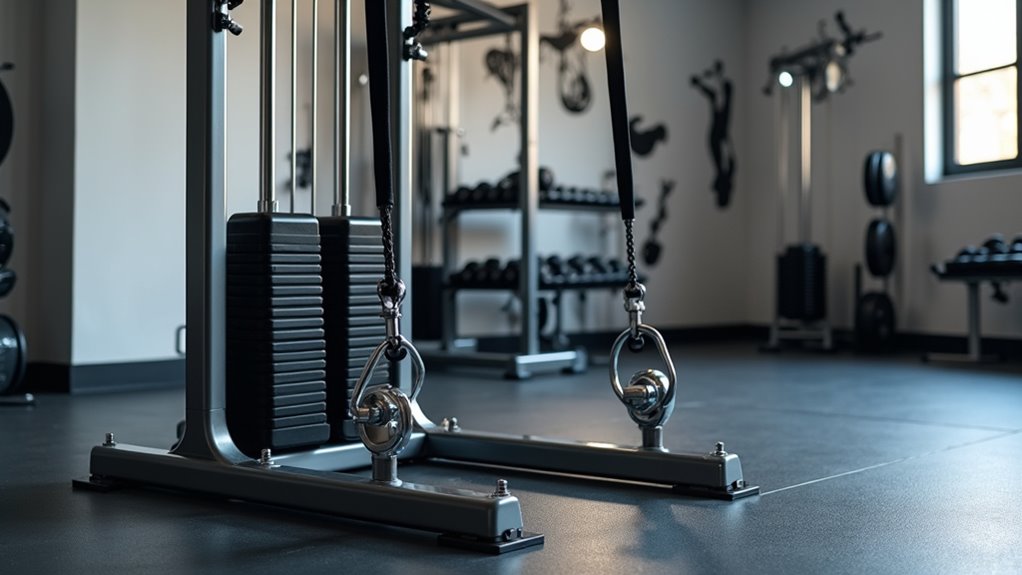
Setting up cable Y raises properly is like building a solid foundation for a house – get it wrong, and everything else crumbles. You’ll need access to both low and high pulley attachments on your cable machine. Load equal weight plates on each side – I’d start light until you’ve got the movement down pat. The setup’s actually trickier than it looks, so don’t feel frustrated if it takes a few tries. Position yourself dead center between the pulleys with feet shoulder-width apart. Trust me, nailing this setup is half the battle won.
Step-by-Step Technique and Proper Form

Now that you’ve got your cables positioned correctly, it’s time to focus on the actual movement – and honestly, this is where most people mess up. Start by standing with feet shoulder-width apart, gripping both handles. Here’s the key sequence:
- Raise your arms out to your sides until they’re parallel to the ground
- Pull both cables overhead, forming that Y shape with your body
- Hold for a moment, then slowly lower back down
Keep your shoulders pulled back throughout – think of squeezing your shoulder blades together. Don’t rush the movement; control is everything here.
Primary Muscles Targeted and Activated

The cable Y raise is like a targeted strike on your upper back and shoulders – it’s honestly one of the most efficient movements for hitting multiple muscle groups at once. Your latissimus dorsi takes the biggest hit here, and that’s the wide muscle spanning your entire upper back. You’ll also fire up those rhomboids sitting between your shoulder blades – they’re essential for good posture. Don’t forget your deltoids handling the shoulder work, and surprisingly, your triceps get activated too during the lifting phase. It’s basically a compound movement disguised as isolation work.
Key Benefits for Upper Body Development
While most exercises target one primary area, cable Y raises deliver what I’d call a triple threat for your upper body development. You’re fundamentally getting three workouts rolled into one efficient movement.
Here’s what you’ll gain from consistent practice:
Three powerful benefits in one movement – stronger posture, functional pulling power, and daily injury prevention through consistent cable Y raises.
- Posture correction – Strengthens those supportive muscles that keep your shoulders back
- Functional strength – Builds real-world pulling power you’ll actually use
- Injury prevention – Balances out all that forward hunching we do daily
Think of it like reinforcing the frame of a house – you’re building the structural support your body needs. It’s honestly one of the most bang-for-your-buck exercises.
Effective Exercise Variations and Substitutes
Sometimes you’ll hit a wall with the standard cable Y raise – maybe your gym doesn’t have the right setup, or you’re working out at home with limited gear. Don’t worry, you’ve got solid alternatives that’ll hit those same muscles.
Face pulls are probably your best bet. They’re like the cable Y raise’s cousin – targeting your rear delts and rhomboids effectively. Cable shoulder presses work great too, building serious upper body mass while being joint-friendly.
If you’re stuck with dumbbells, lateral raises will do the trick. They’ll hammer your rear delts and triceps nicely.
About The Author


