Is it possible to transform your home from an allergen trap into a respiratory haven in just a few days? The evidence suggests yes. Your current living space likely harbors millions of invisible triggers—dust mites feasting on dead skin cells, pet dander collecting in corners, and mold spores multiplying in damp areas. These microscopic invaders don’t just cause sneezing—they compromise your breathing, sleep quality, and cognitive performance. The solution requires less effort than you’d think.
Some of the links in this article may be affiliate links. If you make a purchase through these links, we may earn a small commission at no extra cost to you. Thank you.
Simple Steps to Drastically Reduce Indoor Dust and Allergens

While many allergy sufferers focus on outdoor triggers, your home harbors countless microscopic enemies. Your dusting techniques matter—use damp cloths instead of feather dusters that merely redistribute particles. Don’t forget ceiling fans and baseboards—prime allergen sources.
Vacuum with HEPA filters weekly. That carpet? It’s storing pounds of invisible irritants. Maintain 40-50% humidity—dust mites die, mold doesn’t thrive.
Declutter ruthlessly. Each knickknack collects microscopic invaders. Wash bedding weekly in hot water. Your pillowcase hosts millions of dust mites tonight unless you’re vigilant.
How to Choose and Use Allergen-Fighting Cleaning Products
Many cleaning products promising “allergy relief” actually contain harsh chemicals that trigger respiratory issues. Don’t be fooled by marketing—scrutinize allergen labels and product ingredients instead. Your lungs will thank you.
| Product Type | What to Look For | What to Avoid |
|---|---|---|
| All-Purpose Cleaners | Plant-based, fragrance-free | Ammonia, artificial fragrances |
| Laundry Detergents | Dye-free, enzyme-free | Optical brighteners, perfumes |
| Disinfectants | Alcohol-based options | Quaternary ammonium compounds |
Mix your own cleaners using vinegar, baking soda, and essential oils. They’re cheaper, effective, and won’t leave irritating residues that commercial products do.
Creating an Allergy-Free Bedroom Sanctuary
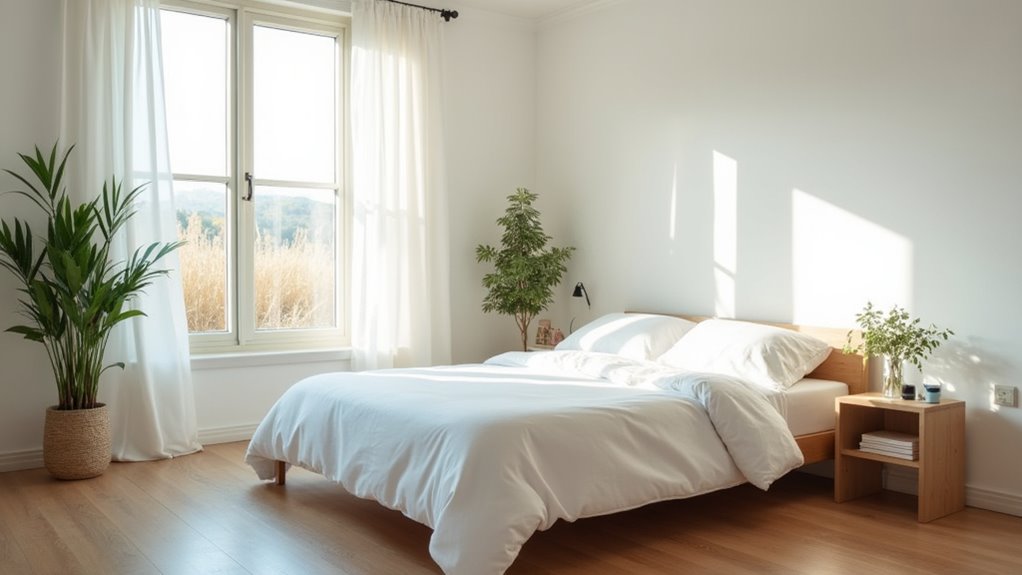
Because you spend roughly a third of your life in your bedroom, it should be the most allergen-free zone in your home. Start with dust-free bedding: encase mattresses and pillows in allergen-proof covers, then wash sheets weekly in hot water. Your bedroom organization matters—eliminate under-bed storage where dust collects unnoticed. Banish pets (yes, even Fluffy) from this space to reduce dander. Install a HEPA air purifier for nighttime breathing. Maintain humidity between 40-50% to discourage dust mites. Vacuum weekly with a HEPA-equipped machine, including curtains and blinds. Your lungs will thank you.
Maintaining Optimal Indoor Air Quality Year-Round
Since seasons change, your indoor air quality strategy must evolve with them. Monitor indoor humidity religiously—keep it between 40-50%. Too high: mold thrives. Too low: irritated airways. Install humidity gauges in multiple rooms. They’re cheap; respiratory health isn’t.
Ventilation systems aren’t optional luxuries. Clean HVAC filters monthly during peak seasons, quarterly otherwise. Your diffuser? Load it with tea tree or lavender oils—nature’s air purifiers.
When pollen counts soar, close windows. When winter stagnation hits, use air purifiers with HEPA filters. Consistent circulation prevents allergen buildup. Your lungs will thank you.
Frequently Asked Questions
Can Air-Purifying Plants Effectively Reduce Indoor Allergens?
While air purifying plants can help filter some toxins, they’re not markedly effective for indoor allergen reduction. Consider HEPA air purifiers instead for more reliable results.
How Do Electronic Devices Impact Home Allergen Levels?
Electronic devices collect dust on their surfaces. You’ll reduce allergens by regularly wiping your smart devices with microfiber cloths. Air purifiers and smart humidifiers actively support allergen reduction in your home.
Are Steam Cleaners Better Than Chemical Cleaners for Allergy Sufferers?
Yes, steam cleaners offer superior benefits for allergy relief. You’ll eliminate allergens without introducing chemical irritants. Their high-temperature steam kills dust mites and removes allergens more effectively than chemical options.
Can Basement Moisture Affect Allergies on Upper Floors?
Yes, basement moisture can rise throughout your home. Improve basement ventilation and prioritize moisture control to prevent mold spores and allergens from traveling upstairs and triggering your allergies.
How Often Should Carpets Be Professionally Cleaned to Minimize Allergens?
Professional carpet cleaning every 12-18 months is ideal. You’ll remove deeply embedded allergens that regular vacuuming can’t reach. For allergy sufferers, consider increasing frequency to 6-month intervals.
Conclusion
You’ve got the blueprint; now execute. Contrary to popular belief, most allergens aren’t invisible invaders—they’re manageable opponents hiding in plain sight. Your vigilance creates tangible results: 60% fewer symptoms when you maintain proper humidity and use HEPA filtration consistently. Don’t just accept seasonal suffering or chronic symptoms. You’ve read the solutions. Implement them today. Your lungs are already thanking you.
About The Author
