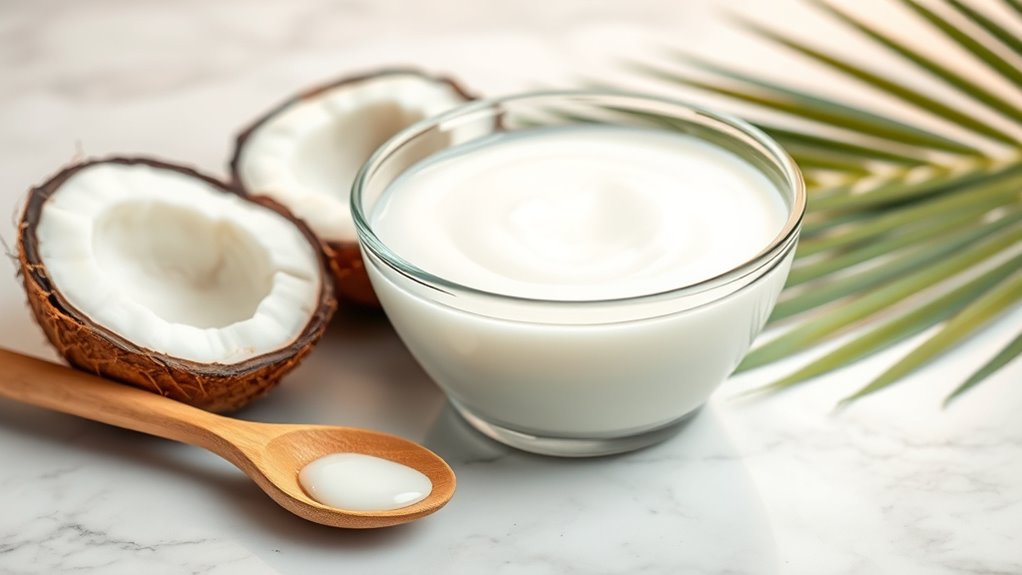
Coconut oil has quietly gained popularity in skincare routines over the past decade. Research suggests its medium-chain fatty acids penetrate skin effectively, though results vary from person to person. Many find it works well for dry patches and makeup removal, while others report occasional breakouts. Perhaps its versatility explains the continued interest despite mixed experiences. Dermatologists remain divided on its benefits, particularly for acne-prone individuals. The natural approach appeals to those seeking alternatives to chemical-laden products, but is coconut oil truly the miracle substance many claim?
Some of the links in this article may be affiliate links. If you make a purchase through these links, we may earn a small commission at no extra cost to you. Thank you.
The Science Behind Coconut Oil’s Skin Benefits
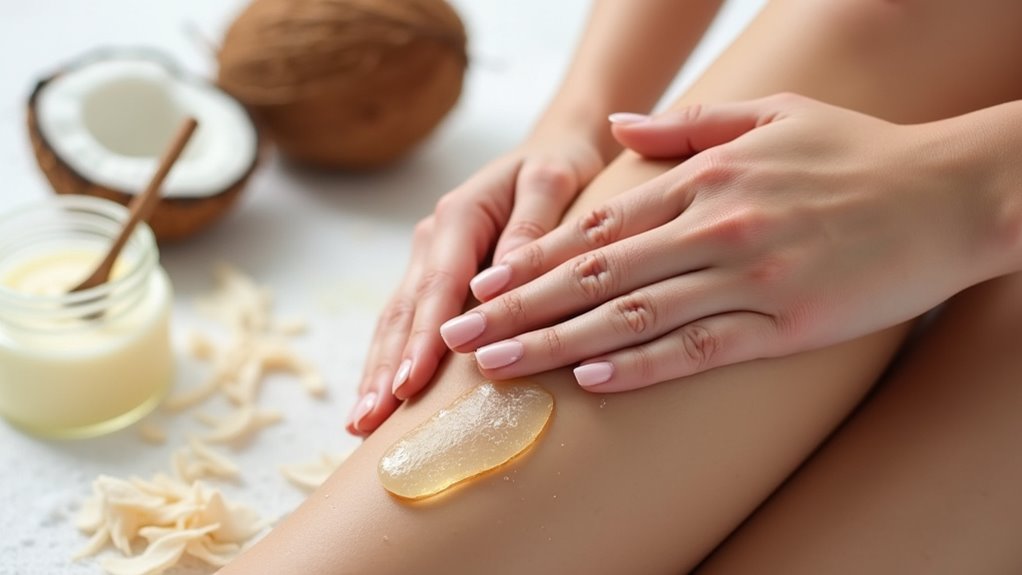
While coconut oil has gained immense popularity in skincare routines, the science behind its effectiveness is actually quite fascinating.
At its core, coconut oil contains medium-chain fatty acids like lauric acid that possess natural antibacterial and antifungal properties. These compounds help fight harmful microorganisms that might cause skin issues.
What makes coconut oil particularly effective is its molecular structure. The skin absorption process is enhanced because coconut oil’s molecules are small enough to penetrate deeper layers.
I think this explains why many people notice prolonged hydration after application. Perhaps the most impressive aspect is how it works with your skin’s natural barriers rather than against them.
How to Use Coconut Oil as a Natural Facial Moisturizer
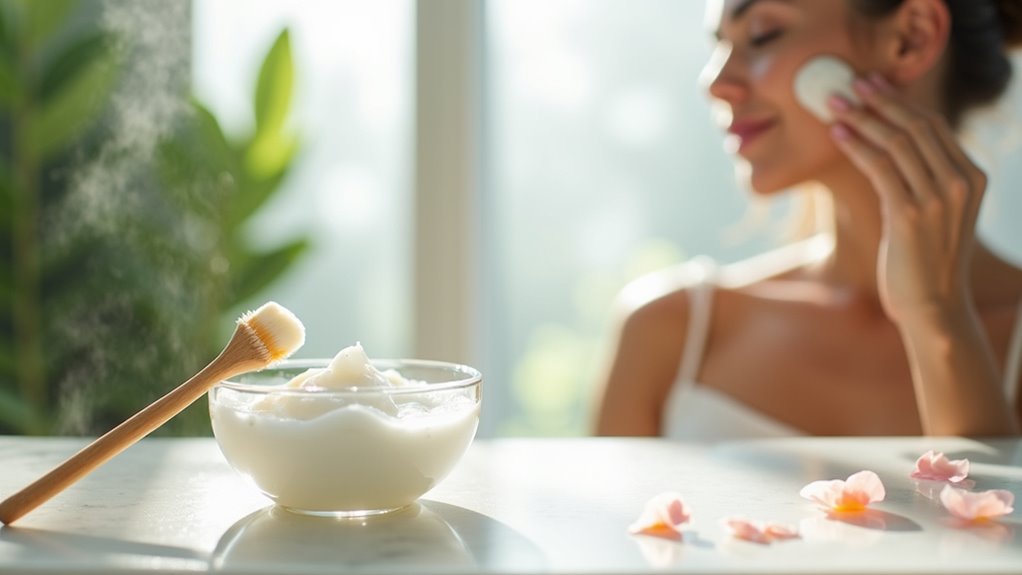
Although applying coconut oil as a facial moisturizer might seem straightforward, there are specific techniques that maximize its benefits while avoiding potential issues. The application methods vary depending on skin types, with dry skin typically requiring more product than oily complexions.
| Skin Type | Application Method | Amount |
|---|---|---|
| Dry | Gentle massage | Pea-sized |
| Oily | Pat lightly | Rice-grain sized |
| Combination | Zone-specific | Varies by area |
For best results, perhaps try applying to slightly damp skin after cleansing. Warm a small amount between fingertips until liquid, then press gently into skin rather than rubbing. Allow absorption time before applying makeup.
Fighting Aging With Coconut Oil: the Anti-Wrinkle Solution
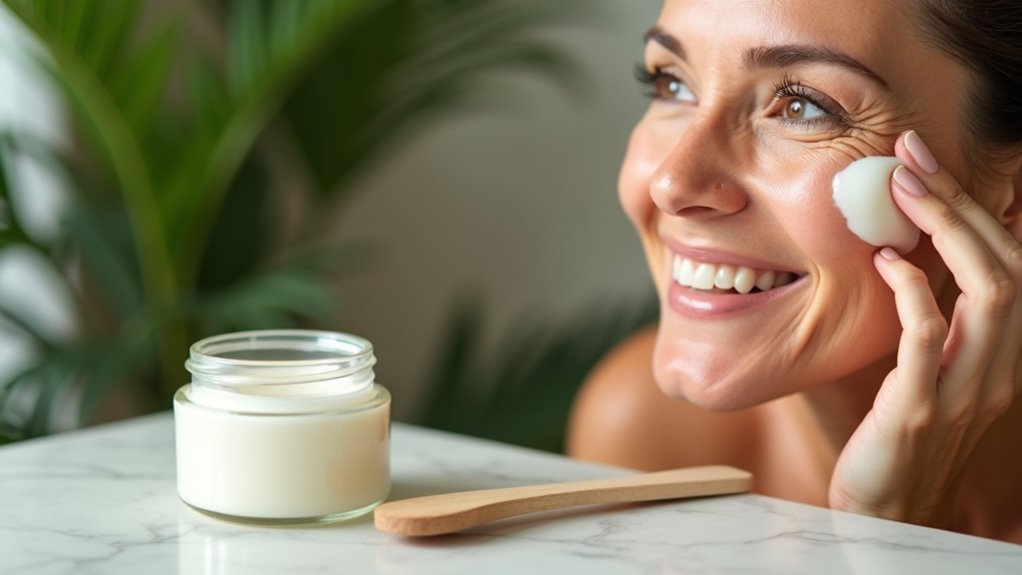
Beyond moisturizing, many skincare enthusiasts have discovered coconut oil’s potential as a natural anti-aging ally. The oil’s rich triglycerides help promote collagen production, which tends to diminish as we age.
Perhaps what makes coconut oil particularly effective is how it creates a protective barrier that locks in moisture while shielding skin from environmental factors that accelerate aging.
- Contains natural anti-aging properties that may reduce the appearance of fine lines
- Supports collagen production to maintain skin elasticity and firmness
- Creates a protective layer that preserves skin’s moisture balance, preventing premature aging
While not a miracle cure, regular application typically yields noticeable improvements in skin texture and appearance.
Beyond Moisturizing: Makeup Removal and Essential Oil Blending
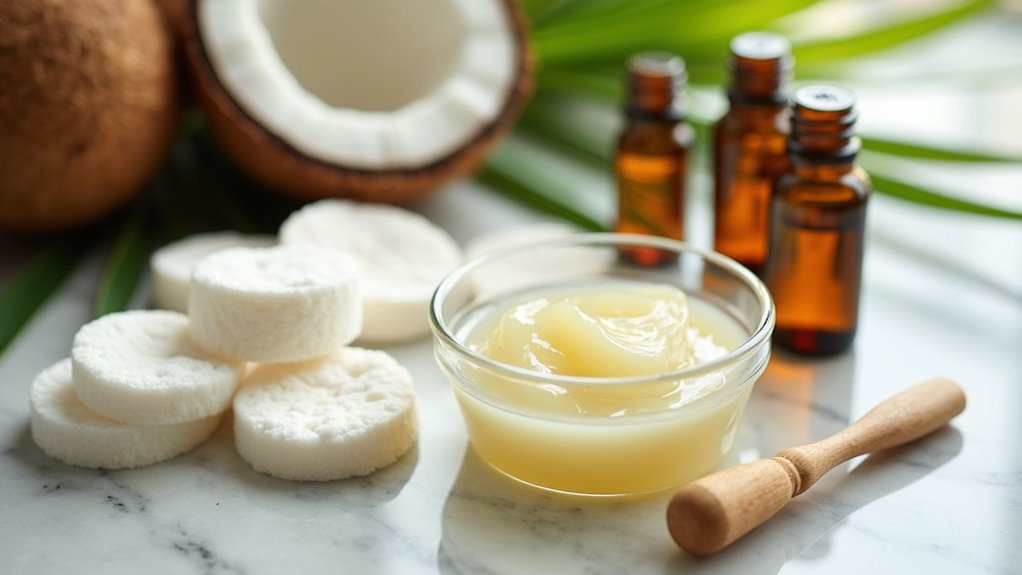
Coconut oil transforms your skincare routine when used beyond its moisturizing capabilities. It gently removes even the most stubborn makeup without harsh chemicals that might irritate sensitive skin.
Perhaps one of its most underrated qualities is how effective it is around the eyes, though you’ll want to avoid getting it directly in them.
As a carrier oil, it’s surprisingly versatile for essential oil combinations. Blending coconut oil with lavender or rose creates makeup tips worth sharing – I think the resulting mixture not only cleanses but nourishes simultaneously.
The oil’s two-year shelf life makes it practical for daily use, enhancing your natural beauty regimen.
Frequently Asked Questions
Can Coconut Oil Cause Breakouts in Acne-Prone Skin?
Yes, coconut oil’s high comedogenicity may trigger breakouts in acne-prone skin. Its occlusive properties can clog pores and exacerbate existing acne conditions for some individuals with sensitive skin.
How Often Should I Apply Coconut Oil to My Face?
Application frequency for coconut oil varies by skin type. Most benefit from applying 1-2 times daily, allowing adequate time for skin absorption between applications. Oily skin may require less frequent use.
Is Refined or Unrefined Coconut Oil Better for Facial Use?
While the superficial might choose shiny jars over results, the unrefined choice triumphs. Unrefined coconut oil preserves natural antioxidant properties and healing elements, while refined offers fewer benefits despite its neutral scent and appearance.
Can Coconut Oil Replace My Regular Sunscreen for UV Protection?
Coconut oil offers many benefits but cannot replace regular sunscreen. It provides minimal SPF (around 4-6), insufficient for adequate UV protection compared to dedicated sunscreen alternatives.
Does Coconut Oil Work for All Skin Types, Including Sensitive Skin?
Like a versatile chameleon, coconut oil adapts to various skin types, including sensitive skin. Its skin type compatibility stems from moisturizing benefits that prevent sebum overproduction while soothing dry, irritated areas.
Conclusion
Like a faithful gardener who nurtures a withering plant back to life, coconut oil tends to skin’s deepest needs. In the kingdom of natural skincare, this humble oil reigns as both protector and healer, perhaps more powerful than any laboratory creation. The journey from palm to face creates a circle of wellness that, I think, mirrors nature’s own wisdom. Our skin, recognizing an old friend, responds with a glow that speaks of renewal.
About The Author