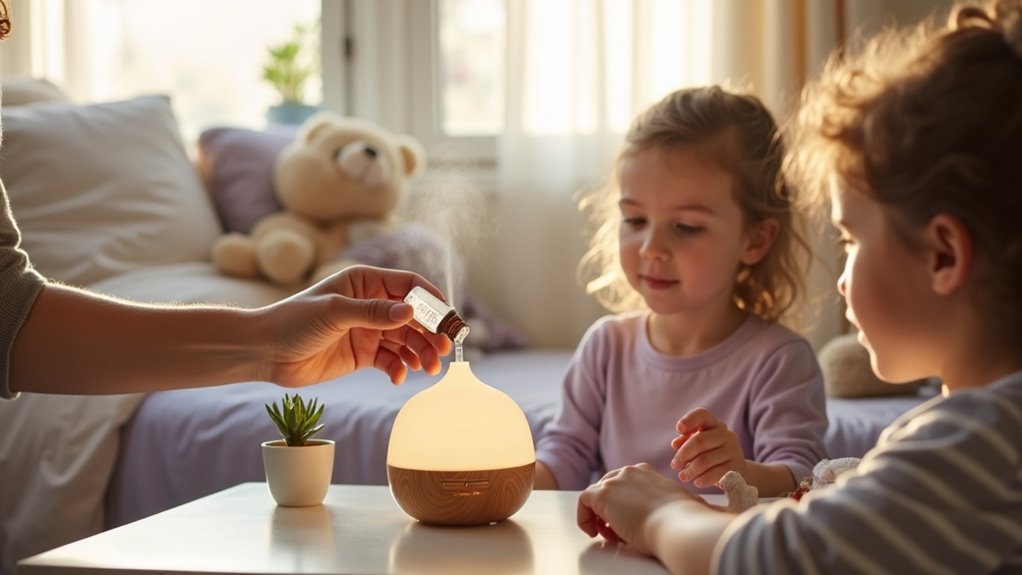
Most parents don’t realize that eucalyptus oil—commonly used in children’s cold remedies—can trigger seizures in kids under 10. You’ll find essential oils marketed everywhere for childhood ailments, from sleep troubles to stomach bugs. But here’s the reality: these concentrated plant compounds require precise knowledge and careful handling. Your child’s developing respiratory system and thin skin make them uniquely vulnerable to these potent substances. The difference between healing and harm often comes down to a single drop.
Some of the links in this article may be affiliate links. If you make a purchase through these links, we may earn a small commission at no extra cost to you. Thank you.
Understanding Age-Appropriate Essential Oils for Children
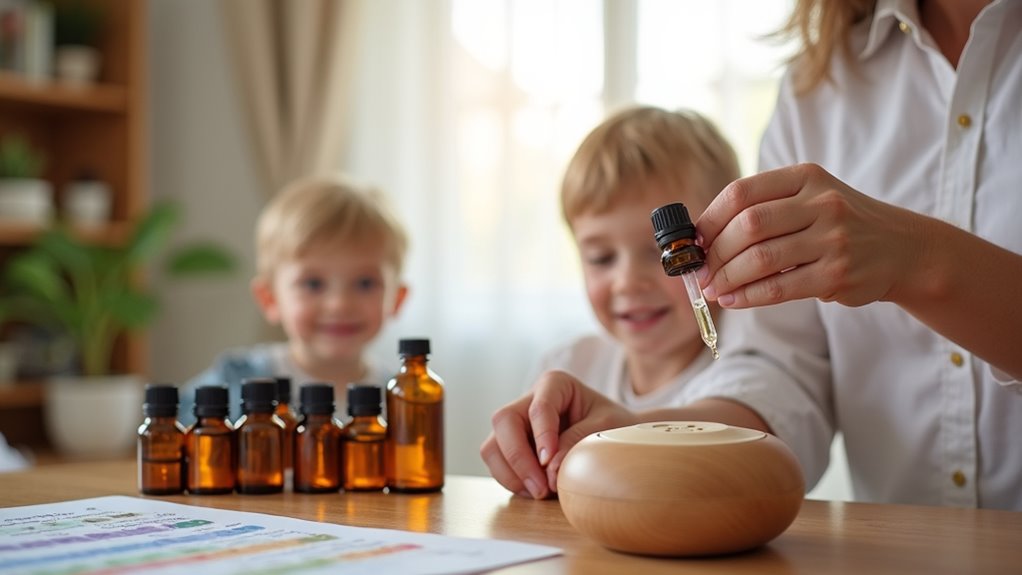
When should you introduce essential oils to your child’s wellness routine? Wait until they’re at least 3 months old. Even then, extreme caution is required.
Children’s developing systems process oils differently. Their thinner skin absorbs compounds faster, amplifying both benefits and risks. Proper age considerations prevent adverse reactions.
Never use eucalyptus or peppermint on children under 10—respiratory distress isn’t worth the risk. Watch for oil interactions with medications your child takes.
Start with gentler options: lavender, chamomile, and mandarin. Always dilute more than you would for adults. Your child’s safety isn’t negotiable.
Proper Dilution Guidelines for Young Skin
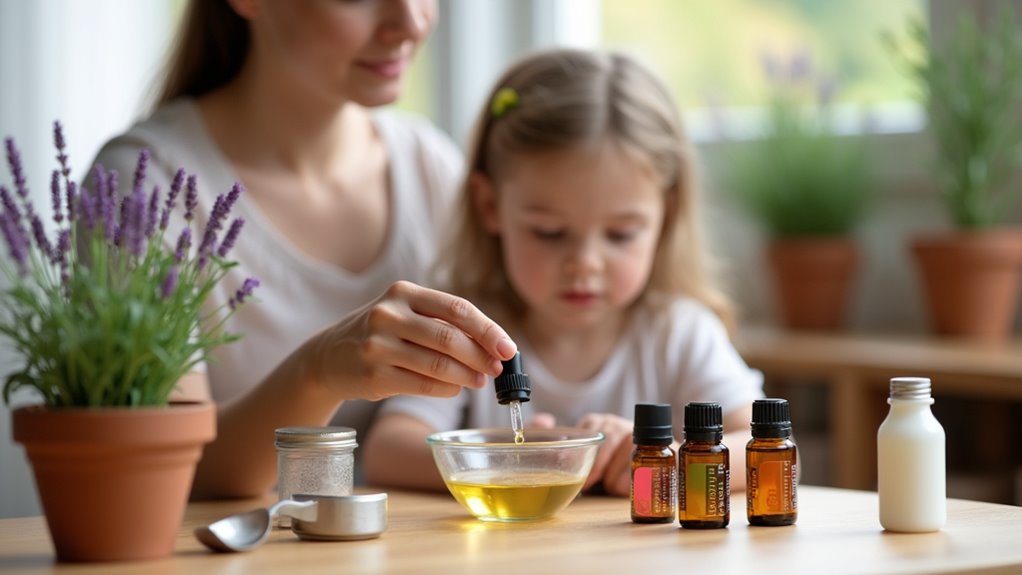
Proper dilution ranks as your first defense against skin reactions in children. Children’s skin absorbs essential oils faster than yours does—it’s thinner, more permeable. Don’t mess this up.
For infants (0-12 months): Use 0.1-0.2% dilution—that’s 1 drop per tablespoon of carrier oil. Toddlers (1-5 years): 0.25-0.5%. School-age (6-10 years): 1%.
Remember: skin sensitivity varies child to child. Always patch test first—inner arm, 24 hours. Watch for redness, irritation. Jojoba and fractionated coconut oil make excellent carriers—they’re stable, mild, and effective.
Safe Application Methods for Different Age Groups

The three primary application methods for essential oils vary dramatically by your child’s age group. For infants (0-12 months), stick to passive diffusion only—no direct skin contact. Toddlers (1-5) can benefit from properly diluted oils (0.25-0.5%) applied to feet or back. School-aged children (6-10) tolerate 1-2% dilutions.
Safe blending requires precision. Always mix oils with appropriate carrier bases before application. For tweens and teens, standard application techniques include diffusion, diluted massage, and bath additions. Remember: diffusion is safest for all ages. Direct inhalation works well for older kids only.
Recognizing Oils to Avoid in Your Child’s Routine
Some essential oils should never enter your child’s routine, regardless of dilution methods or application techniques. Essential oil toxicity poses real risks to children’s health when improper selections are made.
- Avoid eucalyptus and peppermint – These contain compounds that can trigger respiratory distress in young children, particularly under age 10
- Skip birch and wintergreen – These contain methyl salicylates that absorb quickly through skin
- Eliminate clove and oregano – Too harsh for children’s systems, even diluted
- Pass on cinnamon and thyme – Known skin irritants that can cause chemical burns
Beneficial Oils for Common Childhood Concerns
Many essential oils offer gentle yet effective relief for common childhood troubles when used properly. For restless nights, try lavender or chamomile – these calming scents trigger relaxation responses within minutes. Roman chamomile works wonders for irritability and tantrums.
Dealing with seasonal sniffles? Lemon and eucalyptus (for kids over 10) provide allergy relief by clearing congestion. Tea tree battles germs when diluted in hand soap. Mandarin and sweet orange lift mood during cranky afternoons.
Remember: always dilute properly (0.5-1% for under 5s), test patches first, and introduce one oil at a time. Your child’s sensitive system deserves this caution.
Storage and Safety Precautions for Families With Children
Four critical rules govern essential oil storage in homes with children: lock it up, label it clearly, keep it cool, and never transfer to unmarked containers. Essential oil storage isn’t just organization—it’s protection. Your diligence prevents potentially toxic exposures.
- Use childproof cabinets or boxes with secure locks for all essential oils
- Store oils away from direct sunlight in dark glass containers under 80°F
- Create a family safety protocol for oil usage, including “no touch” zones
- Teach older children safety basics without normalizing unsupervised access
Remember: proper child safety with essential oils means treating them like medicines, not candies.
Frequently Asked Questions
Can Essential Oils Help With ADHD or Autism Symptoms?
You’ll find limited evidence for essential oils’ benefits with ADHD or autism. Some oils might support focus improvement, but consult healthcare providers before using them with children’s neurological conditions.
How Soon After Application Can Children Bathe or Swim?
Wait at least 2-4 hours after applying essential oils before letting your child bathe or swim. This allows proper absorption and prevents dilution or spreading of the oils.
Are Organic Essential Oils Safer Than Regular Ones?
Organic essential oils don’t necessarily offer safety advantages for your children. While they have fewer pesticides, what matters most for safety is proper dilution, application methods, and choosing age-appropriate oils.
Can Children Develop Allergies From Long-Term Essential Oil Use?
Yes, you can develop essential oil sensitivities over time. Children may show allergy symptoms like rashes or breathing issues with prolonged exposure, even if they weren’t initially sensitive.
Should Essential Oils Be Discontinued During Illness or Medication Use?
Over 70% of medications can interact with certain plant compounds. You should discontinue essential oils during illness or medication use, as they may cause unexpected medication interactions or worsen symptoms.
Conclusion
You’ve now commenced your aromatic journey with little ones. Remember, when nature’s essences meet tender skin, less is more. Always respect the delicate balance between potency and gentleness. Store these liquid treasures where curious hands can’t explore, and you’ll avoid unwelcome adventures. By following these guidelines, you’re not just protecting your child—you’re nurturing their wellness with earth’s fragrant gifts in the safest way possible.
About The Author