Headaches strike at the worst moments, disrupting daily life without warning. Many sufferers have grown tired of reaching for medication that might bring unwanted side effects. Essential oils offer a natural alternative worth exploring. They work by interacting with pain receptors and reducing inflammation through plant-based compounds. While not a cure-all, perhaps their greatest advantage is how they can be tailored to specific headache types. The science behind their effectiveness might surprise those who’ve dismissed them as merely pleasant scents.
Some of the links in this article may be affiliate links. If you make a purchase through these links, we may earn a small commission at no extra cost to you. Thank you.
Understanding Different Types of Headaches and Their Causes
Identification serves as the essential first step in effectively treating any headache. Understanding whether you’re experiencing tension, cluster, or sinus pain helps determine the appropriate remedy and address underlying causes.
Most people recognize their headache symptoms through distinctive patterns. Tension headaches typically present as a dull, pressing discomfort, while cluster headaches cause intense, one-sided pain. Sinus headaches often accompany congestion and facial pressure.
Tracking headache triggers can reveal valuable patterns. Common culprits include stress, dehydration, certain foods, or environmental factors.
Perhaps keeping a simple journal might help identify your specific triggers – I think this approach often reveals surprising connections that traditional treatments might miss.
The Science Behind Essential Oils for Pain Management
The biochemical mechanisms behind essential oils reveal fascinating insights into natural pain relief. The complex chemistry of these plant-derived compounds allows them to interact directly with pain receptors in our nervous system, often inhibiting pain signals before they reach the brain.
Essential oil chemistry varies widely, with compounds like menthol in peppermint and linalool in lavender showing particular effectiveness. These molecules can penetrate the blood-brain barrier, perhaps explaining their rapid action against headaches.
I think the most fascinating aspect is how they simultaneously address both pain perception and underlying causes like inflammation. Their lipid-soluble nature enables pain receptor interaction that conventional medications sometimes miss, making them uniquely valuable for headache management.
Top Essential Oil Blends for Specific Headache Types
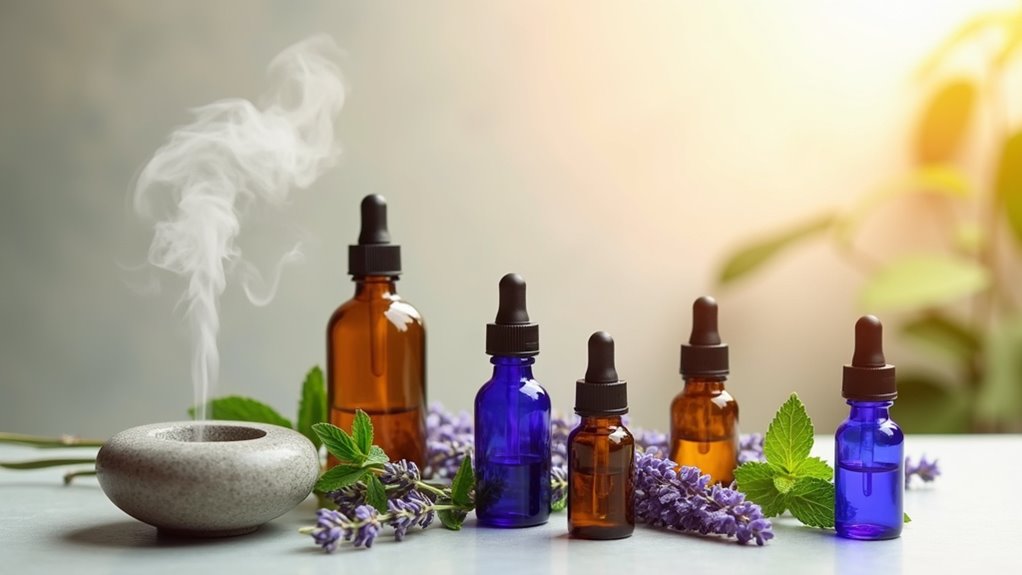
Building on our understanding of how essential oils interact with pain receptors, crafting specific blends can maximize their effectiveness for different headache types.
Strategic essential oil combinations tailored to specific headache types can enhance their therapeutic impact on pain receptors.
When combining oils, consider your specific headache triggers for better results.
For tension headaches, perhaps a blend of 3 drops lavender with 1 drop chamomile in a diffuser might work wonders.
Cluster headache sufferers could try equal parts frankincense and peppermint diluted in a carrier oil.
I think sinus headaches respond well to a steam inhalation with eucalyptus and tea tree oils—about 2 drops of each in hot water.
These blend recipes can be adjusted based on personal sensitivity and preference.
Application Methods for Maximum Headache Relief

Choosing the right application method for essential oils can dramatically increase their effectiveness when treating headache pain.
Different headache types may respond better to specific techniques, making application knowledge vital for relief.
Aromatic application, perhaps the most accessible method, works through inhalation. Simply adding oils to a diffuser or inhaling directly from the bottle can provide quick relief for tension headaches.
I think the brain’s direct connection to our olfactory system explains why this works so well.
Topical application involves applying diluted oils to temples, forehead, or neck. This method is particularly effective for cluster headaches, allowing the oils to penetrate locally where pain concentrates.
Frequently Asked Questions
Can Pregnant Women Safely Use Essential Oils for Headaches?
Pregnant women should follow specific safety guidelines when using essential oils for headaches. Certain oil types require caution, while others like lavender may be safer with proper dilution and medical consultation.
How Long Do Essential Oils Take to Relieve Headache Pain?
Most essential oils provide pain relief within 15-30 minutes when used through aroma therapy. Results vary depending on headache type, severity, application method, and individual response time.
Can Children Use Essential Oils for Headache Relief?
Children can use certain essential oils for headaches with proper safety precautions. Dilution is vital, and application methods should be age-appropriate. Supervision by adults is necessary when using these remedies.
Do Essential Oils Interact With Headache Medications?
Essential oil interactions with headache medications may occur. Some oils can enhance or diminish medication effectiveness, potentially increasing headache medication risks. Consulting healthcare providers before combining treatments is advisable.
How Long Do Essential Oil Headache Remedies Typically Last?
Essential oil headache remedies typically last 1-2 hours. Headache duration can vary based on oil type, application method, and essential oil potency. Reapplication is often necessary for sustained relief.
Conclusion
Essential oils stand as nature’s silent healers for headache sufferers. Like a key releasing relief, these botanical extracts offer personalized solutions through targeted blends and application methods. Whether facing tension, cluster, or migraine headaches, the right essential oil combination can reduce symptoms naturally. By incorporating these aromatic allies into wellness routines, people might just find themselves stepping out from under the shadow of chronic pain into clearer, more comfortable days.
About The Author