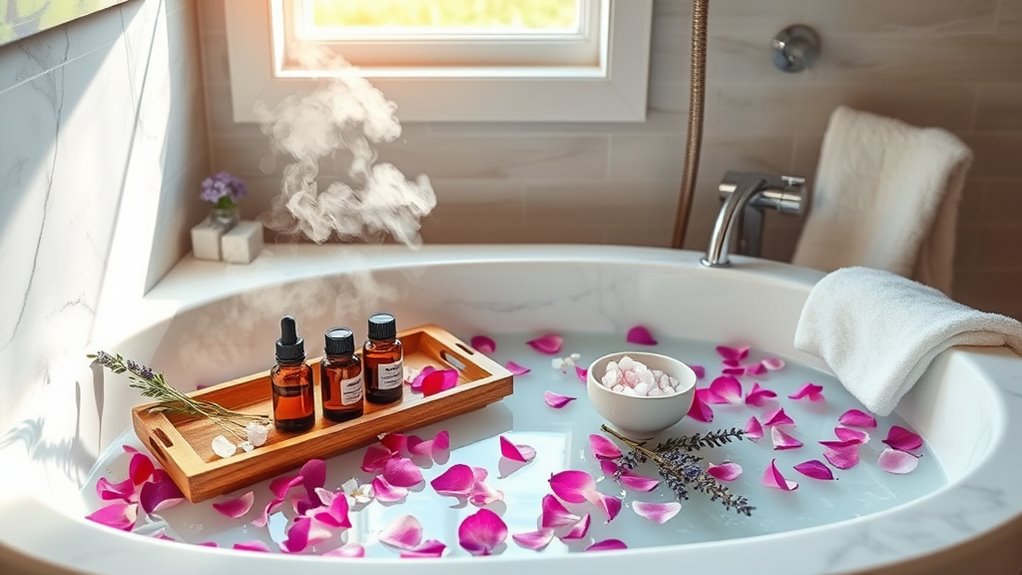
Essential oils offer a simple way to elevate an ordinary bath into something special. The aromatic compounds can influence mood, ease tension, and create a spa-like atmosphere right at home. Many people find lavender particularly calming after a stressful day, while eucalyptus might help clear congestion. Perhaps the most appealing aspect is how personal the experience becomes—each person discovers their own preferred scents and combinations. The ritual itself transforms bathing from a mere hygiene practice into a moment of genuine self-care. But which oils work best for specific needs?
Some of the links in this article may be affiliate links. If you make a purchase through these links, we may earn a small commission at no extra cost to you. Thank you.
Essential Oils That Turn Your Bath Into a Sanctuary
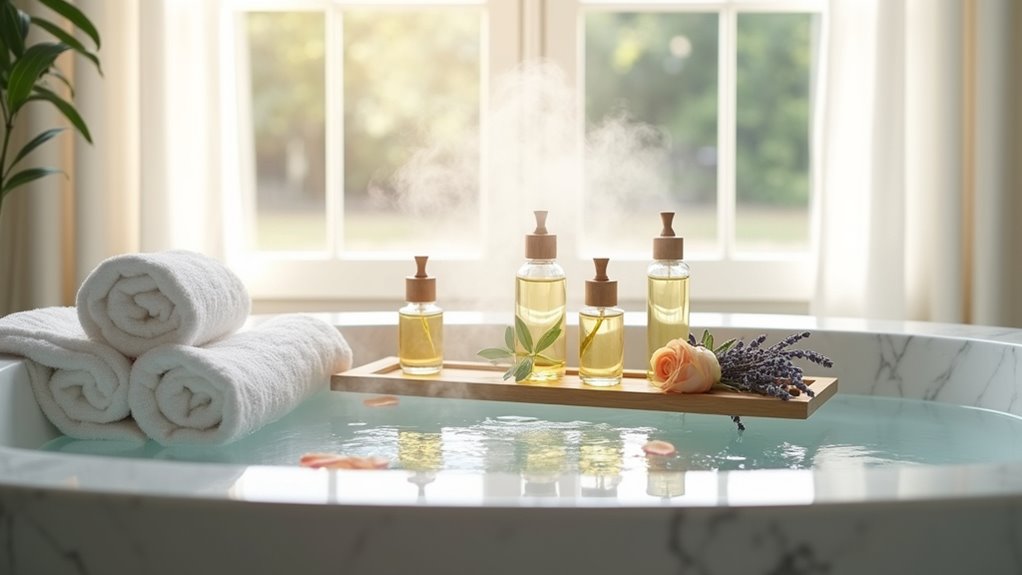
When it comes to transforming an ordinary bath into a luxurious self-care ritual, essential oils stand out as nature’s perfect remedy. These concentrated plant extracts infuse water with therapeutic properties, creating an aromatherapy experience that soothes both mind and body.
Bath rituals enhanced with essential oils like lavender, rose, and chamomile can dramatically shift your mood after a hectic day.
Transform your stressful day into peaceful moments with essential oils – nature’s mood-shifting elixirs for the bath.
Perhaps the most remarkable aspect is how versatile they are – one evening might call for invigorating lemon to clear mental fatigue, while another might benefit from vetiver’s tranquility.
The aromatherapy benefits extend beyond relaxation, offering customized healing experiences depending on what you need most.
The Perfect Amount: Dosing Essential Oils For Your Bath
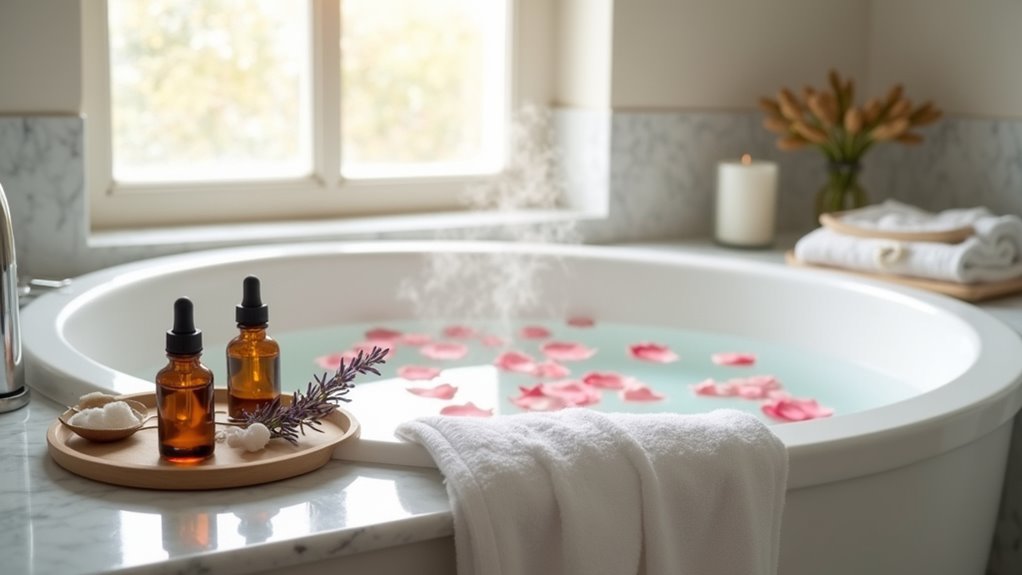
Now that you’ve chosen your favorite oils to create a sanctuary experience, figuring out the right amount to add becomes the next step in your bath ritual.
Finding the perfect dilution ratios can feel a bit like an art form, especially when working with essential oil blends that vary in potency.
Most experts suggest starting conservatively and adjusting as needed:
- Begin with 5 drops total for a standard-sized bathtub.
- Consider using fewer drops (2-3) for stronger oils like peppermint.
- For sensitive skin, perhaps dilute with a tablespoon of carrier oil first.
- Increase gradually to 8-10 drops as you learn your preferences.
Creating Mood-Specific Bath Blends With Essential Oils
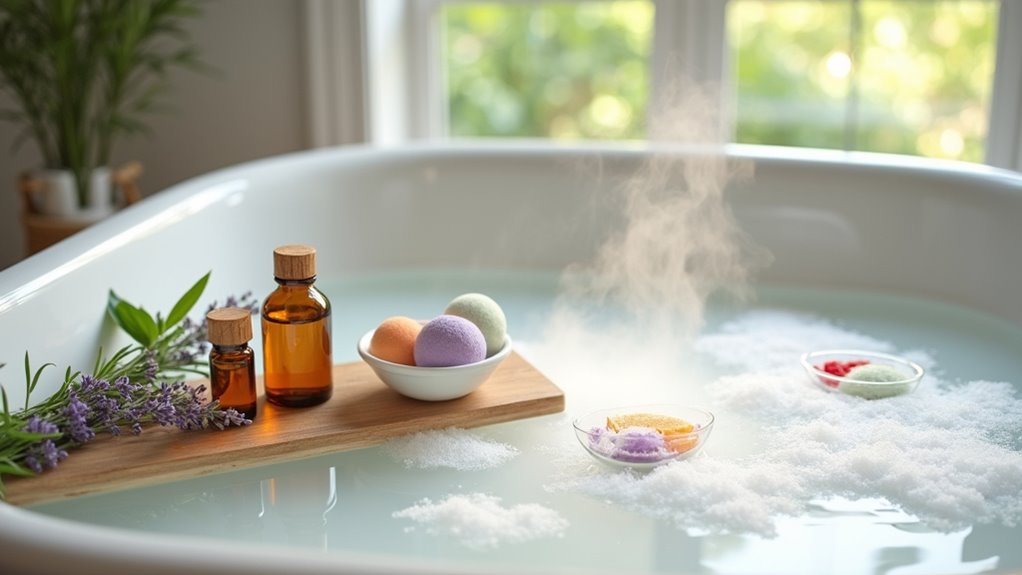
The beauty of essential oil bath blends lies in their ability to be customized for virtually any emotional state or need. By combining different oils, bathers can create experiences tailored to specific moods or therapeutic goals.
For mood enhancement, consider combinations like lavender and chamomile for deep relaxation, or lemon and ylang ylang for an uplifting effect.
Perhaps the most effective scent combinations balance top, middle, and base notes—such as neroli (top), rose (middle), and cedarwood (base).
Experimenting with different ratios is part of the journey. Start with tried formulas, but don’t hesitate to adjust proportions to suit your personal preferences.
Safety Tips For Using Essential Oils In Your Bathing Ritual

While creating beautiful bath blends adds joy to the bathing experience, understanding proper safety measures helps prevent potential issues with these powerful plant extracts.
Essential oils are concentrated substances that require careful handling, especially when incorporated into warm water that opens pores and increases absorption.
Bath oil potency multiplies in warm water as heat opens pores, allowing deeper absorption of these concentrated plant extracts.
- Always perform a patch test before trying a new oil to verify allergy awareness
- Practice proper oil dilution by mixing with carrier oils or bath salts first
- Keep oils away from eyes, ears, and sensitive areas
- Pregnant women and those with chronic conditions should consult healthcare providers
Frequently Asked Questions
Can I Use Essential Oils in Baths for Children?
Essential oils for children’s baths require careful safety precautions. Generally not recommended for infants under 2 years. Dilution is necessary, with age-appropriate concentrations and only child-safe oils should be used.
How Long Should I Soak in an Essential Oil Bath?
Like a flower soaking in morning dew, ideal essential oil bath duration ranges from 15-30 minutes. This timeframe maximizes relaxation benefits while preventing skin sensitivity or dehydration from prolonged exposure.
Can Essential Oils Clog Drains or Damage Bathtubs?
Essential oils can potentially clog drains over time if used excessively. Regular drain maintenance prevents buildup, while diluting oils properly guarantees tub safety by preventing damage to surfaces or residue accumulation.
Do Essential Oils Expire or Lose Effectiveness Over Time?
Like delicate desert blooms, essential oils do expire. Their shelf life typically ranges from 1-3 years, with citrus oils deteriorating faster. Proper storage conditions—dark bottles, cool temperatures, and tight seals—extend their effectiveness.
Can I Combine Essential Oils With Bath Bombs or Salts?
Essential oils can be combined with bath bombs or salts. When doing so, pay attention to combination ratios to avoid skin sensitivities. Pre-diluted oils in carrier oils work best for these applications.
Conclusion
Studies show that 78% of people who incorporate essential oils into their bath ritual report decreased stress levels within just 20 minutes. The ancient practice of aromatic bathing isn’t just luxurious—it’s effective. By mindfully selecting oils that resonate with your needs and properly diluting them, you can transform an ordinary bath into a powerful self-care practice that supports both emotional and physical wellbeing. Perhaps it’s time to draw that bath tonight.
About The Author