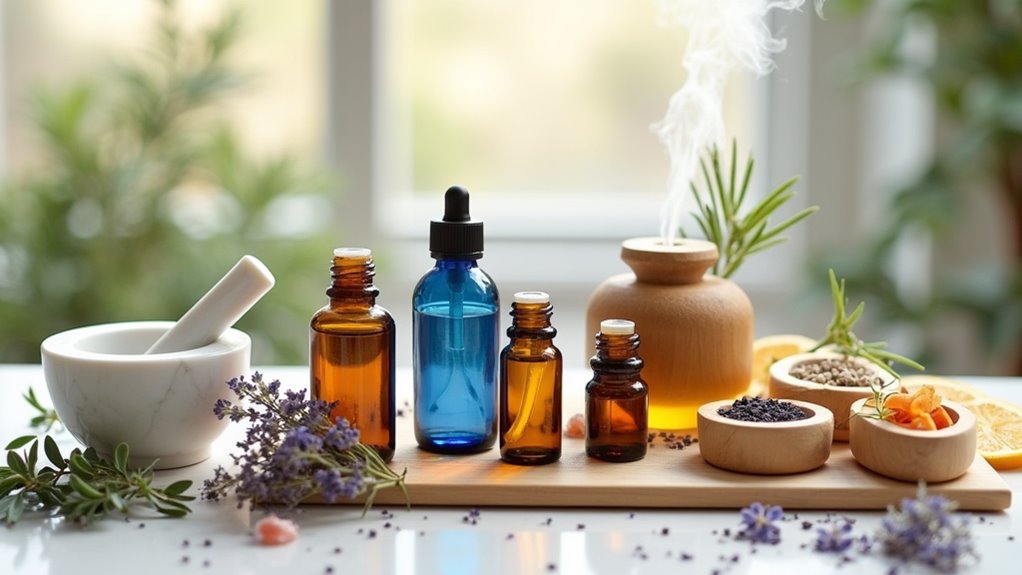
You’ve walked past essential oils countless times, dismissing them as overpriced perfumes. Big mistake. These concentrated plant extracts contain powerful biochemical compounds that target specific physical and emotional conditions with remarkable precision. Forget what wellness influencers preach—the science is solid. From antimicrobial properties to neurochemical responses, essential oils deliver tangible benefits when used correctly. Don’t confuse aromatherapy with pseudoscience; your ancestors knew what modern research confirms. The practical applications await your discovery.
Some of the links in this article may be affiliate links. If you make a purchase through these links, we may earn a small commission at no extra cost to you. Thank you.
The Science Behind Nature’s Healing Extracts
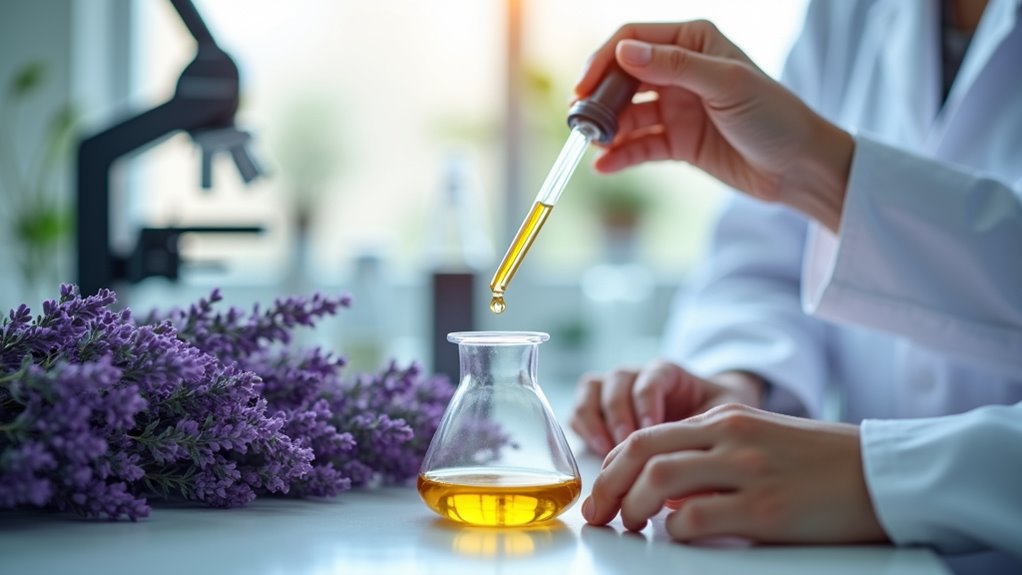
While often dismissed as mere folkloric remedies, essential oils actually contain powerful biochemical compounds with measurable therapeutic effects. These concentrated plant extracts aren’t just pleasant smells—they’re complex mixtures of hundreds of chemicals that evolved to protect plants in the wild.
The chemical composition varies dramatically between botanical sources. Lavender delivers linalool for calming effects, while tea tree’s terpinen-4-ol fights bacteria. Your body responds to these compounds through inhalation, skin absorption, or ingestion. They’re potent medicine—nature’s pharmacy, distilled into drops.
Top Essential Oils Every Home Should Have
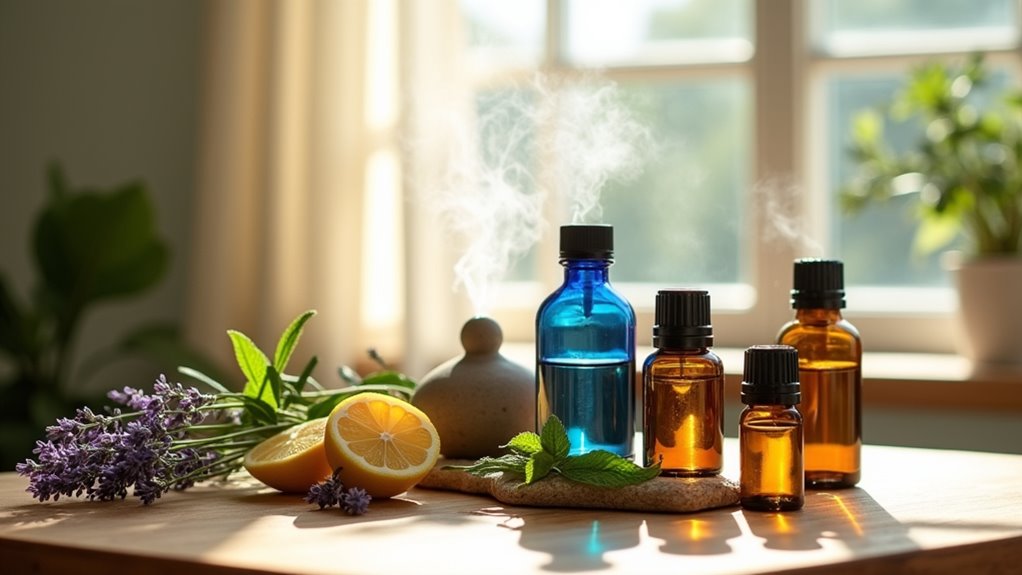
Building a collection of these botanical powerhouses is your next step after understanding their chemical makeup. Start with these non-negotiables: lavender (sleep aid, skin soother), tea tree (antibacterial workhorse), peppermint (headache killer, digestive reset), eucalyptus (respiratory savior), and lemon (cleaning miracle, mood booster).
These five form your essential oils arsenal for common home remedies. Don’t waste money on elaborate kits—master these first. Each serves multiple functions, from fighting infections to calming anxiety. Store them properly: dark bottles, cool location, tightly sealed. They’re potent medicine, not just pleasant smells.
Therapeutic Applications for Common Ailments
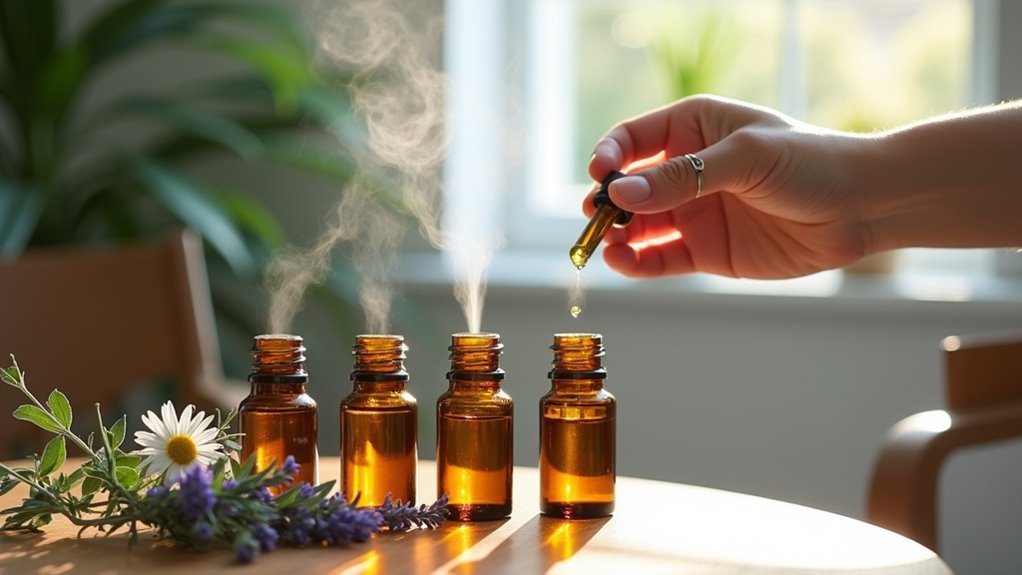
Beyond understanding oils and building your collection, you’ll need practical knowledge of specific therapeutic applications.
For respiratory issues, eucalyptus and peppermint clear congestion instantly. Fighting cold symptoms? Tea tree, lavender, and lemon deliver essential oils benefits through diffusion or steam inhalation.
Tackle infections with potent oregano or tea tree – nature’s antibiotics without the resistance. For autoimmune flare-ups, try anti-inflammatory ginger or clary sage.
Headaches vanish with peppermint applied to temples. Digestive troubles? Ginger or peppermint oil diluted on the abdomen. These common ailments treatments work fast, cost less than prescriptions, and address root causes naturally.
Safe Usage Methods and Best Practices
Understanding proper safety protocols transforms potent essential oils from potential hazards into therapeutic allies. Master these dilution techniques to prevent skin irritation and sensitization—your body will thank you.
| Method | Dilution Ratio | Best For |
|---|---|---|
| Carrier Oils | 2-3% (6-9 drops/oz) | Skin application |
| Bath | 5-10 drops/tub | Full-body therapy |
| Diffuser | 3-5 drops | Ambient exposure |
Always conduct patch testing on your inner wrist 24 hours before widespread use. Never ingest oils without professional guidance. Remember: concentrated power requires respectful handling—what heals at proper dilution can harm at full strength.
Enhancing Emotional Wellness Through Aromatherapy
The profound impact of essential oils on emotional health extends far beyond simple pleasant scents—they’re neurological game-changers. When you inhale lavender or bergamot, you’re triggering limbic system responses that directly affect your mood and stress levels.
Master these aromatherapy techniques: diffuse citrus oils for immediate mood elevation; apply diluted chamomile behind ears for anxiety; keep peppermint inhalers handy for mental fog. Don’t underestimate rose oil’s power against depression—it’s not just fancy perfume.
Your emotional wellness isn’t optional. Start with one oil. Use it consistently. Track results. Expand your arsenal methodically.
Creating Your Own Essential Oil Remedies
Crafting your own essential oil remedies puts ultimate healing control in your hands—no middlemen, no mysterious ingredients. Start with carrier oils like jojoba or coconut before adding drops of your chosen essentials. For respiratory relief, combine eucalyptus, peppermint, and tea tree. For stress? Lavender, bergamot, and clary sage work wonders.
DIY blends require precision—5-15 drops per ounce of carrier oil, depending on potency. Always test custom remedies on small skin areas first. Store in dark glass bottles away from sunlight. Your personalized solutions await.
Frequently Asked Questions
How Long Do Essential Oils Maintain Their Potency After Opening?
Most essential oils maintain their potency for 1-3 years after opening. You’ll extend their shelf life by storing them in dark glass bottles away from heat and light. Proper storage tips matter!
Can Essential Oils Damage Furniture or Clothing?
Did you know 78% of essential oil users report accidental spills? Yes, undiluted oils can damage furniture without proper protection and leave permanent clothing stains, especially citrus and spice varieties you’re using.
Are Organic Essential Oils Significantly Better Than Non-Organic Versions?
Organic essential oils offer benefits like higher oil purity and fewer pesticide residues. You’ll find they’re often more potent, but the difference isn’t always significant enough to justify their higher price.
How Do Essential Oils Interact With Prescription Medications?
Like hungry wolves meeting sheep, essential oils can cause dangerous drug interactions with your medications. You’ll need to consult your doctor about dosage considerations before mixing them together.
Can Essential Oils Help With Seasonal Allergies?
Yes, essential oils can provide natural allergy relief. You’ll find oils like eucalyptus, peppermint, and lavender help reduce symptoms when diffused or applied properly with carrier oils.
Conclusion
You’re now armed with nature’s liquid gold—ready to transform your wellness journey. When life throws you curveballs, these botanical powerhouses step up. They’ll whisper calm to your frazzled nerves and give those everyday discomforts their marching orders. Don’t just survive in today’s chemical soup—thrive with these plant allies. Your body’s been waiting for this reunion with nature’s pharmacy. Start today. Your future self thanks you.
About The Author