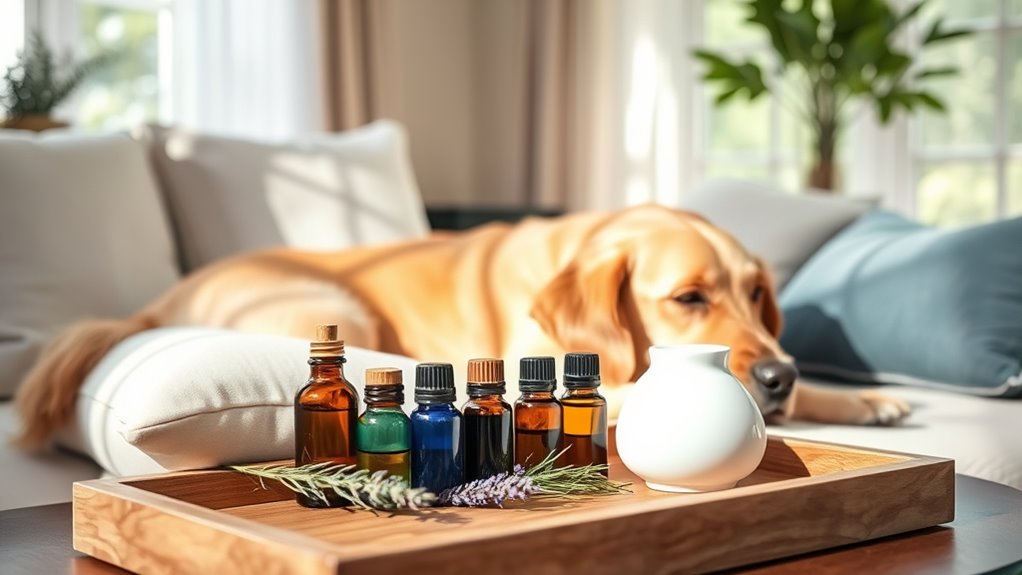
Many pet owners have discovered the benefits of essential oils for their canine companions. These natural remedies can address various issues from anxiety to joint discomfort, though proper knowledge is vital. Not all oils are safe for dogs, and incorrect application might cause harm rather than healing. The growing interest in holistic pet care has sparked debates among veterinarians about efficacy versus risk. Perhaps these aromatic solutions offer a complementary approach worth exploring alongside conventional treatments.
Some of the links in this article may be affiliate links. If you make a purchase through these links, we may earn a small commission at no extra cost to you. Thank you.
Creating Your Canine Essential Oil Toolkit
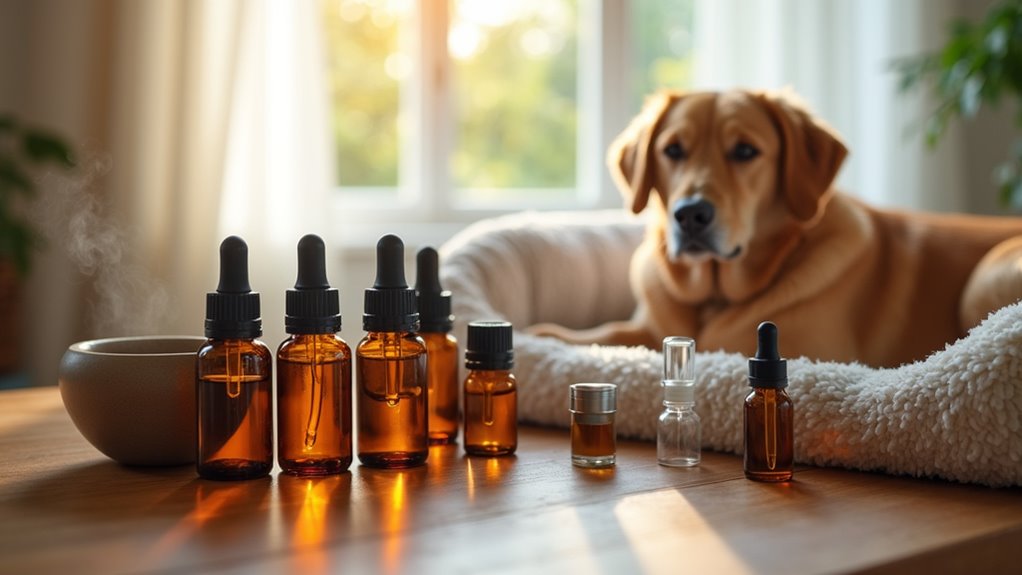
A well-stocked toolkit is essential for any dog owner venturing into the world of canine aromatherapy. Having 12-15 quality oils readily available guarantees you’re prepared for various situations, from training sessions to unexpected anxiety triggers.
Pre-made essential oil blends save time during emergencies, while roller applications offer convenience for quick use.
Perhaps the most important consideration is selecting appropriate carrier oils to properly dilute these potent substances.
For maximum aromatic benefits, invest in therapeutic-grade oils that are chemical-free and steam-distilled. Ready-to-use options from Amazon can be a good starting point, though I think experimenting with individual oils ultimately provides more flexibility as you learn your dog’s preferences.
Safe Application Methods for Different Scenarios
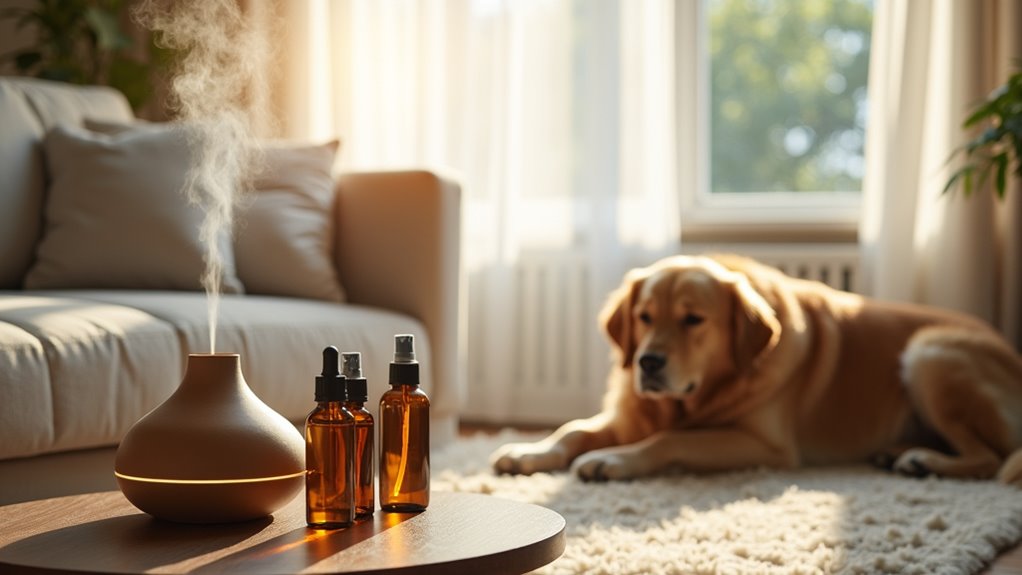
When introducing essential oils to dogs, proper application techniques can make the difference between therapeutic benefits and potential harm.
For everyday use, roller blends offer convenient, controlled application behind ears or on paw pads. Dilution ratios are critical—typically 1-2 drops of essential oil per tablespoon of carrier oil.
For emergency usage, having pre-diluted blends ready can save precious time.
Perhaps the safest method for nervous dogs is diffusion, keeping sessions under 20 minutes. I think direct inhalation works well for car anxiety or vet visits, though some dogs might resist this approach initially.
Remember to start with less and observe your pet’s reaction before increasing concentration or frequency.
Training Enhancement With Aromatherapy
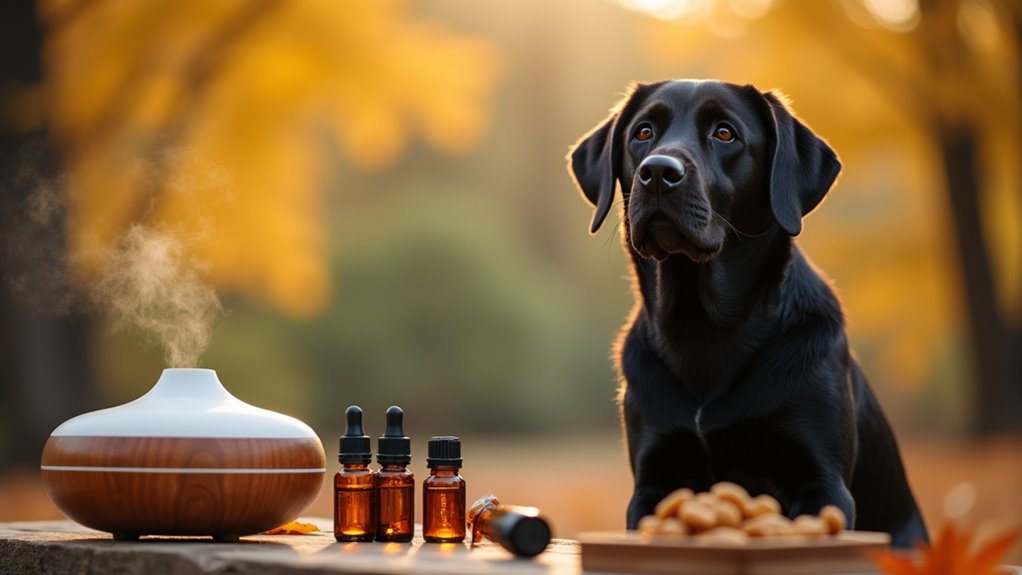
Though many dog trainers rely primarily on treats and clickers, essential oils can greatly enhance training sessions by influencing a dog’s mental state.
Oils like Anise, Black Spruce, and Frankincense can improve concentration and focus, helping even the most distracted pups pay attention to commands.
Natural aromatic helpers like Anise and Frankincense can transform scattered puppy energy into laser-focused training sessions.
For dogs that struggle with training anxiety, Roman Chamomile and Vetiver might be worth trying.
These calming oils can reduce stress that often blocks effective learning.
Perhaps most interesting is how consistent use creates positive associations – the scent becomes a cue that it’s time to work and focus.
Understanding Oil Safety and Quality Standards
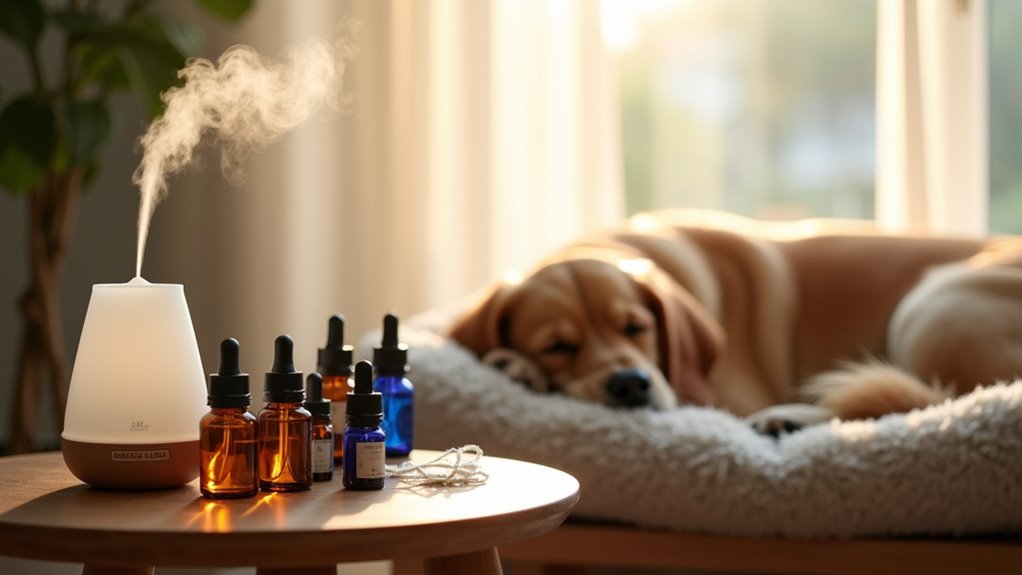
Because proper safety measures cannot be overlooked when using essential oils on dogs, understanding the difference between oil grades becomes critical.
Therapeutic-grade oils, which undergo steam distillation and contain no harmful chemicals, are really the only appropriate choice for medicinal purposes with pets.
Oil sourcing plays a key role in quality assurance—perhaps more than most owners realize.
Aromatherapy or perfume-grade oils might actually harm dogs, especially those with existing health conditions.
I think investing in a reliable reference guide is fundamental for anyone serious about using these oils safely.
Frequently Asked Questions
Can Essential Oils Help With My Dog’s Separation Anxiety?
Some essential oils can be helpful as calming blends for dogs with separation anxiety. The right therapeutic-grade oils may provide anxiety relief when properly diluted and safely used.
How Often Should I Reapply Essential Oils to My Dog?
Reapplication frequency of essential oils varies by type and application method. Roller blends typically need reapplying every 4-6 hours, while diffused oils may last 2-3 hours. Monitor the dog’s response for guidance.
Are Diffused Essential Oils Safe for Puppies and Senior Dogs?
Diffused essential oils require caution with puppies and seniors. Lower oil concentration is vital for diffuser safety. These vulnerable dogs may be more sensitive to aromatherapy effects than adult canines.
Can Essential Oils Interact With My Dog’s Medications?
Essential oils can interact with canine medications. Pet owners should consult veterinarians about potential essential oils interactions before use, as some combinations may reduce medication safety or cause adverse reactions.
How Can I Tell if My Dog Is Allergic to an Essential Oil?
Could your pet be sensitive to essential oils? Watch for skin reactions, redness, itching, sneezing, or behavioral changes. Test oils in small diluted amounts before full application to identify potential oil sensitivities.
Conclusion
When it comes to canine wellness, essential oils can be a powerful ally in your toolkit. With proper knowledge of safety standards and application methods, these aromatic wonders might just help your furry friend turn over a new leaf. While not a replacement for veterinary care, thoughtfully selected oils can enhance training sessions and promote calm. Perhaps the greatest magic lies in the strengthened bond you’ll develop through this shared sensory experience.
About The Author