
Aromatherapy has emerged as a gentle way for parents to enhance their baby’s environment. Using essential oils around infants requires careful consideration, as not all scents are created equal when it comes to delicate systems. The practice, while ancient in origin, has found renewed interest among modern caregivers seeking non-pharmaceutical approaches to common challenges like sleep difficulties and fussiness. Perhaps it’s the natural appeal or maybe the subtle effects that parents notice – either way, there’s certainly more to discover about this sensory approach to infant wellbeing.
Some of the links in this article may be affiliate links. If you make a purchase through these links, we may earn a small commission at no extra cost to you. Thank you.
Essential Oils That Are Safe for Babies
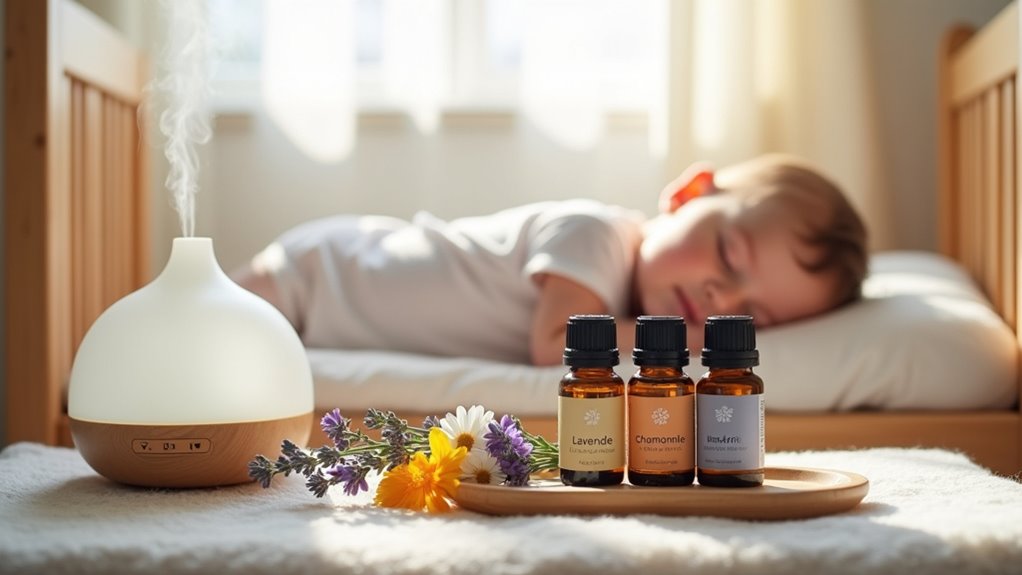
Six essential oils have been found to be safe for babies when used properly: Lavender, Roman Chamomile, Orange, Serenity blend, Frankincense, and Lemon.
These gentle options can be introduced into a baby’s environment with careful attention to dilution ratios.
When selecting safe oil choices for infants, parents should perhaps start with Lavender, which tends to be the mildest option.
The Balance Blend is another consideration worth exploring, though it’s generally better to begin with single oils rather than blends.
Remember that proper dilution is critical – typically much more diluted for babies than for adults.
One drop of essential oil to at least a tablespoon of carrier oil is often recommended.
Best Methods to Apply Aromatherapy for Infant Care
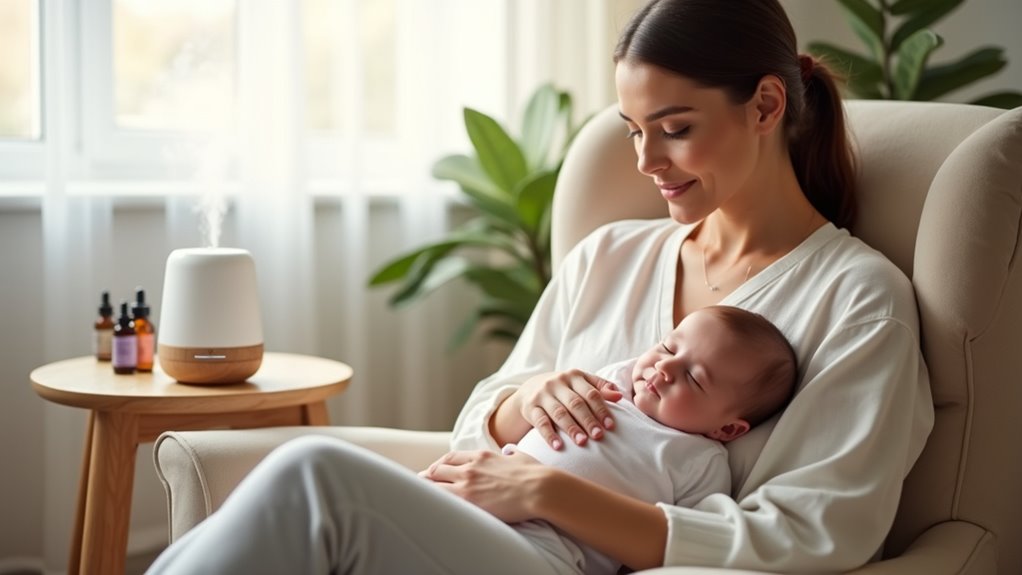
There are several effective methods for applying aromatherapy safely to infants, each requiring careful attention to proper dilution and application techniques. Parents must always prioritize safety precautions when introducing essential oils to their baby’s environment.
| Method | Benefits | Recommended Oils |
|---|---|---|
| Diffusion | Gentle exposure, helps with congestion | Lavender, Orange |
| Diluted massage | Skin-to-skin contact, calming | Roman Chamomile, Frankincense |
| Room spray | Easy application, non-direct | Lemon, Serenity blend |
Perhaps the safest approach is passive diffusion techniques, where oils are diffused for only 15-20 minutes while the room is supervised. I think most parents find this method particularly effective for bedtime routines.
Addressing Common Baby Issues With Essential Oils
Now that parents understand how to apply aromatherapy safely, focusing on specific baby issues can help them select the right oils for their little one’s needs. Each essential oil offers unique benefits that address common infant challenges.
For baby colic relief, gentle options like Roman Chamomile and Lavender can be diffused during fussy periods. Perhaps the most effective approach is combining aromatherapy with frequent burping and proper feeding techniques.
Immune support becomes especially important during cold seasons. Oils such as Frankincense and Lemon may help strengthen a baby’s developing immune system when used in room diffusers.
I think maintaining a consistent aromatherapy routine, rather than just during illness, creates the best results.
Creating a Soothing Bedtime Routine With Aromatherapy
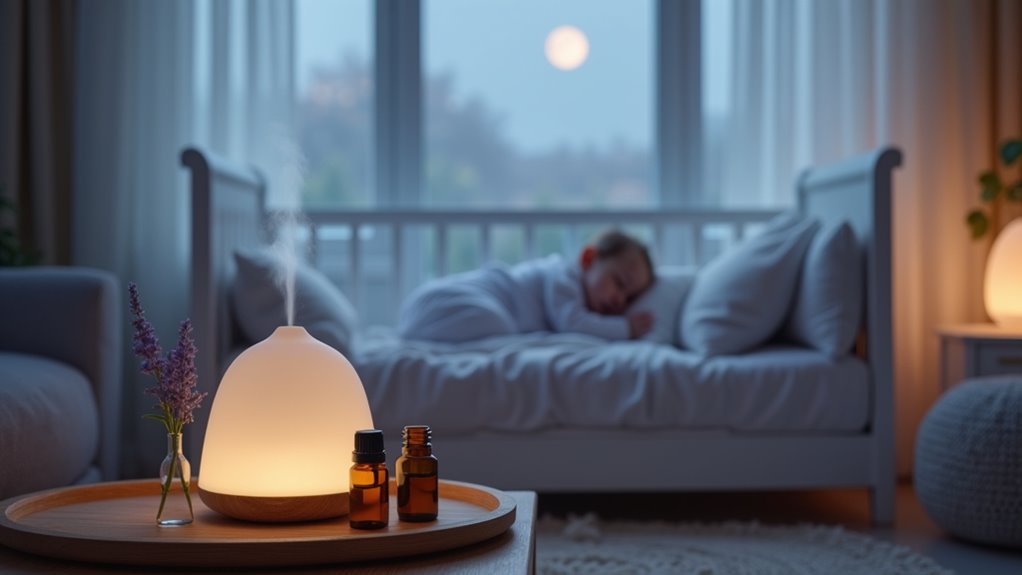
Establishing a consistent bedtime routine enhanced with aromatherapy can transform the often challenging process of putting babies to sleep into a peaceful change.
Parents might notice that incorporating calming scents like lavender or chamomile about 30 minutes before sleep helps signal to the baby that bedtime is approaching.
Simple bedtime rituals such as a warm bath with a drop of diluted lavender oil, followed by a gentle massage, can work wonders.
Perhaps the most effective approach combines these calming scents with white noise and dimmed lighting.
The familiarity of these repeated elements helps babies adapt to sleep more naturally.
Frequently Asked Questions
At What Age Can I Start Using Essential Oils on My Baby?
Essential oil use should generally be avoided for infants under 3 months. After this age, extreme caution with proper oil dilution is essential for infant safety. Always consult a pediatrician first.
How Do Essential Oils Interact With Baby Medications?
Essential oils may interact with baby medications, potentially altering effectiveness. Proper essential oil safety includes consulting healthcare providers about potential medication interactions before introducing aromatherapy to infants on prescribed treatments.
Can Essential Oils Help With Teething Pain?
Amidst a baby’s tearful discomfort, certain essential oils may serve as teething remedies when properly diluted. However, essential oil safety remains paramount—oils must never contact gums directly or be ingested by infants.
Are Diffused Oils Safe in Rooms With Pets and Babies?
Diffused oils require caution around babies and pets. Some oils can cause respiratory issues for infants, while pets may experience adverse reactions. Always research diffuser safety and monitor pet reactions when using essential oils.
How Long Do Aromatherapy Effects Typically Last for Infants?
Aromatherapy effects on infants typically last 2-4 hours due to infant sensitivity. Duration varies based on oil type, concentration, and individual factors. Careful monitoring is recommended when using aromatherapy with babies.
Conclusion
Embracing aromatherapy’s gentle embrace can transform your little one’s fussy episodes into peaceful moments of bliss. When life’s little challenges arise, these natural scents offer a helping hand to both parent and child. Perhaps the greatest gift lies in creating cherished bedtime rituals that may follow your precious bundle through childhood. With proper dilution and mindful application, these botanical whispers can become trusted companions on your parenting journey.
About The Author