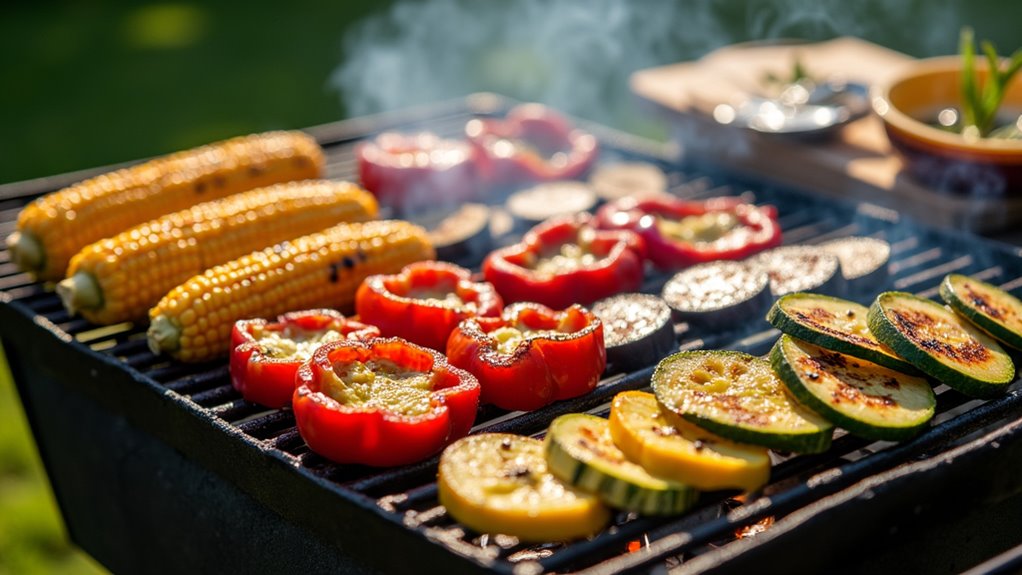
Grilling transforms vegetables into smoky, caramelized delights with minimal effort. Most home cooks underutilize this technique, settling for basic corn and peppers. Mistake. Vegetables contain natural sugars that intensify under direct flame. Proper preparation reveals these flavors. Thick-cut eggplant absorbs marinades like a sponge. Cauliflower steaks develop crisp exteriors with tender centers. Even bitter radicchio mellows dramatically on the grill. The secret? Temperature control and timing. What else might be hiding in your crisper drawer?
Some of the links in this article may be affiliate links. If you make a purchase through these links, we may earn a small commission at no extra cost to you. Thank you.
Mastering the Art of Vegetable Grilling: Essential Techniques
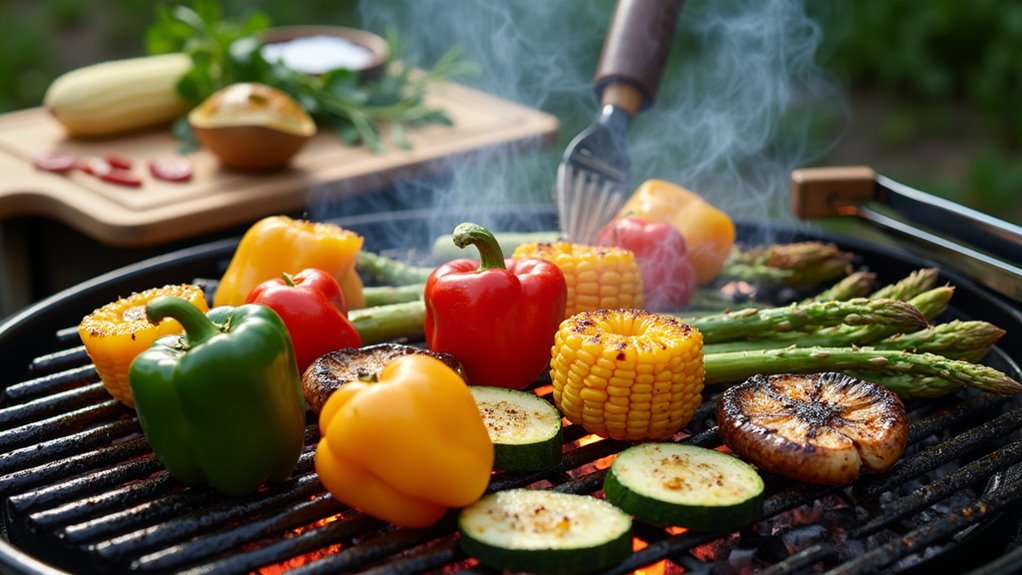
While many backyard chefs focus on perfecting their meat game, vegetables deserve equal attention on the grill. Success hinges on preparation. Clean that grill first—charred remnants ruin delicate produce.
Proper vegetable preparation is non-negotiable. Cut uniformly for even cooking. Oil everything. Not just a sprinkle—coat thoroughly to prevent sticking and drying. Season aggressively.
Master these grilling techniques: direct heat for dense vegetables like corn, indirect for delicate items. Small pieces? Get a grilling basket—period. Timing matters. Zucchini: 3-4 minutes. Eggplant: 5-7. Bell peppers: until skin blackens. Rotation isn’t optional—it’s mandatory.
Top Vegetables That Transform on the Grill
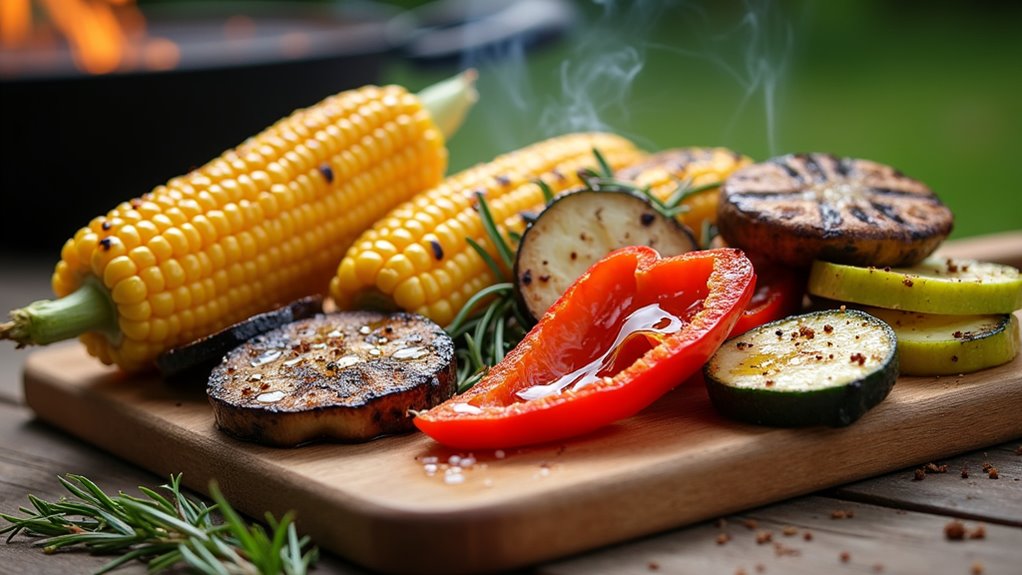
Certain vegetables undergo magnificent transformations when kissed by open flame. Their natural sugars caramelize, creating complex flavor profiles impossible to achieve through other cooking methods.
| Vegetable | Transformation | Best Marinades | Perfect Pairings |
|---|---|---|---|
| Bell Peppers | Smoky-sweet char | Balsamic glaze | Grilled halloumi |
| Corn | Caramelized kernels | Chili-lime butter | Cilantro-based sauces |
| Eggplant | Creamy interior | Miso-honey | Mediterranean herbs |
| Zucchini | Tender yet firm | Lemon-herb oil | Goat cheese crumbles |
Master these grilled vegetable pairings for impressive results. Flavor enhancing marinades aren’t optional – they’re essential. Apply them generously before flame meets food.
Mouthwatering Grilled Vegetable Recipes to Try Today
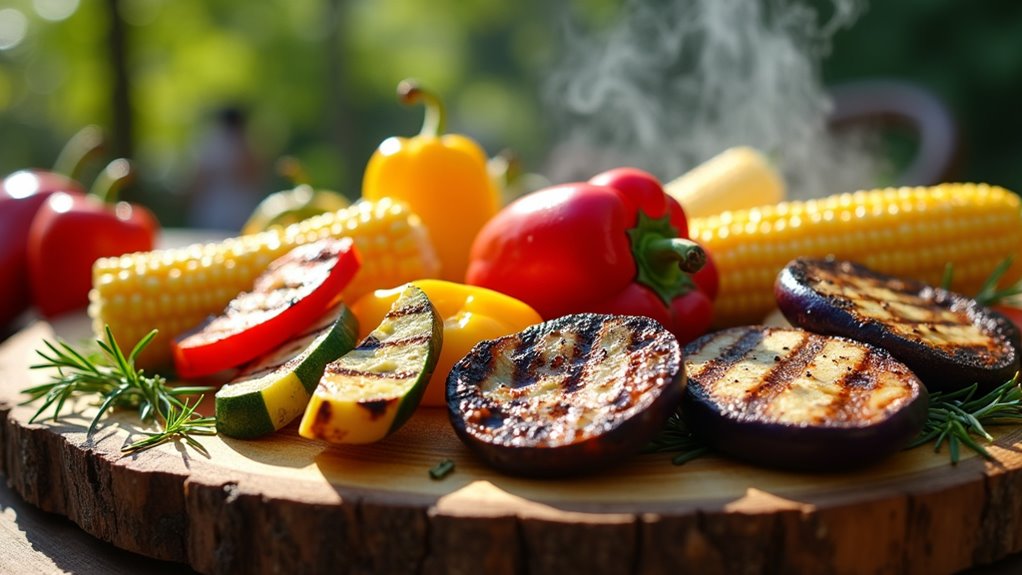
Now that you understand how vegetables transform, it’s time to put that knowledge to work. These recipes elevate backyard cooking with minimal effort.
Honey Butter Grilled Corn delivers sweet caramelization – brush with flavor infused oils midway for maximum impact. For something unexpected, grilled sweet potatoes with lime-cilantro finish outperform traditional sides every time.
Balsamic Roasted Veggies? Game-changer. The key: marinate 20 minutes, not longer. Quality grilled vegetable marinades work best with eggplant and portabellas – their porous structure absorbs flavor aggressively.
For weeknight efficiency, try Grilled Veggie Penne. Char vegetables first, then toss with pasta. Simple. Effective. Impressive.
Beyond the Basics: Unexpected Vegetables for Your Grill Adventure
Most backyard grillers never venture beyond peppers and corn, missing an entire universe of flame-kissed possibilities. Grilled Radicchio Benefits include caramelization that transforms its bitterness into smoky sweetness—a revelation for salad skeptics. Quartered and lightly oiled, it needs just 2-3 minutes per side.
Smoked Cauliflower Flavors develop remarkable depth when florets catch direct heat. Slice into “steaks” for dramatic presentation. Don’t overlook grilled lettuce, blooming onions, or portabella caps stuffed with spinach. Even okra sheds its slimy reputation when charred properly.
Time to expand your grilling repertoire.
Frequently Asked Questions
How Long Should Vegetables Marinate Before Grilling?
Most vegetables should marinate for 30 minutes to 2 hours. Various marinade types allow sufficient flavor infusion without softening texture. Delicate vegetables need less time than dense ones.
Can You Grill Vegetables Directly on Charcoal?
Blackened by direct flames, vegetables can’t be grilled directly on hot charcoal. Proper charcoal grilling requires grates or baskets for vegetable selection, preventing burning and ash contamination.
What’s the Ideal Grill Temperature for Most Vegetables?
The ideal temperature for grilling most vegetables ranges from 400-450°F. Different vegetable types may require slight adjustments, with denser vegetables needing longer cooking times at lower temperatures for even results.
Are Wooden Skewers Better Than Metal for Grilling Vegetables?
When comparing skewer materials for grilling vegetables, metal skewers conduct heat and cook from within, while wooden skewers require soaking first to prevent burning but offer easier handling and disposal.
How Do You Prevent Delicate Vegetables From Falling Through Grates?
Nearly 45% of grill owners use specialized tools for delicate vegetables. Grilling baskets provide secure containment, preventing fall-through while allowing heat circulation. Alternatively, vegetable foils create protective barriers for smaller items.
Conclusion
Grilled vegetables have surged 65% in popularity among home chefs since 2019. The transformation isn’t merely culinary—it’s revolutionary. Perfect char marks, concentrated flavors, and unexpected combinations elevate garden harvests into centerpiece-worthy creations. Master temperature control, embrace bold marinades, and experiment fearlessly. Your grill isn’t just for meat anymore—it’s the ultimate vegetable transformer waiting to reveal flavors you never knew existed.
About The Author