Cinnamon oil transcends its familiar kitchen role. Research confirms its potent anti-inflammatory compounds reduce chronic pain where conventional treatments fail. Its antimicrobial properties destroy pathogens resistant to common disinfectants. Smart users apply it for foot fungus elimination, hair follicle stimulation, and digestive tract soothing. Most consumers remain unaware of its full potential. The difference between therapeutic benefits and harmful side effects? Proper application techniques and dosage protocols.
Some of the links in this article may be affiliate links. If you make a purchase through these links, we may earn a small commission at no extra cost to you. Thank you.
The Science Behind Cinnamon Oil’s Anti-Inflammatory Properties
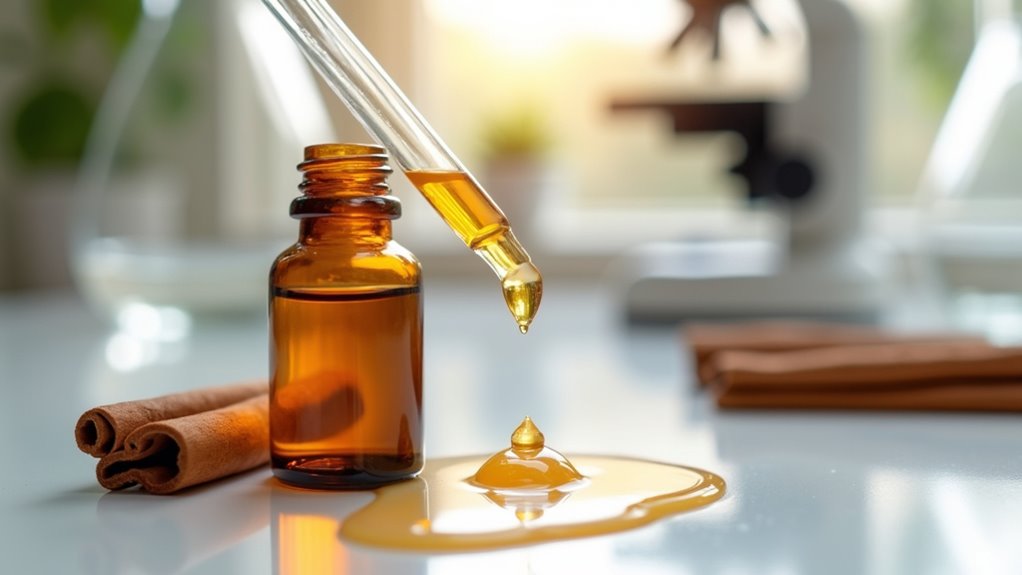
Inflammation – the body’s essential yet often problematic defense mechanism – meets its match in cinnamon oil‘s potent biochemical arsenal.
Research reveals cinnamaldehyde and eugenol compounds directly inhibit inflammatory pathways, blocking production of prostaglandins and cytokines that trigger swelling and pain. Applied topically, cinnamon oil benefits include immediate vasodilation, increasing blood flow to damaged tissues.
The oil’s warming effect isn’t just psychological – it’s biochemical. Massaging diluted cinnamon oil onto affected areas activates thermoreceptors, relaxing muscle tension while compounds penetrate tissue for deeper inflammation reduction. Ancient wisdom validated by modern biochemistry: cinnamon oil delivers targeted relief where conventional treatments often fail.
Harnessing Cinnamon Oil’s Antimicrobial Power for Home and Body

While inflammation represents just one domain where cinnamon oil excels, its antimicrobial capabilities form an entirely different battlefront. Its potent antibacterial properties make it ideal for both antimicrobial cleaning and skin protection applications.
| Application | Benefits | Usage Method |
|---|---|---|
| Home Cleaning | Eliminates germs, freshens air | Dilute with water, spray surfaces |
| Facial Care | Detoxifies, prevents acne | Mix with honey and carrier oil |
| Foot Treatment | Combats fungal infections | Soak in warm water solution |
| Oral Hygiene | Destroys bacteria, freshens breath | Dilute for gargling |
Don’t underestimate this oil’s versatility. Beyond smell, it’s a formidable microbial assassin—perfect for those seeking chemical-free alternatives.
Natural Foot Care: Combating Fungus and Odor With Cinnamon Oil
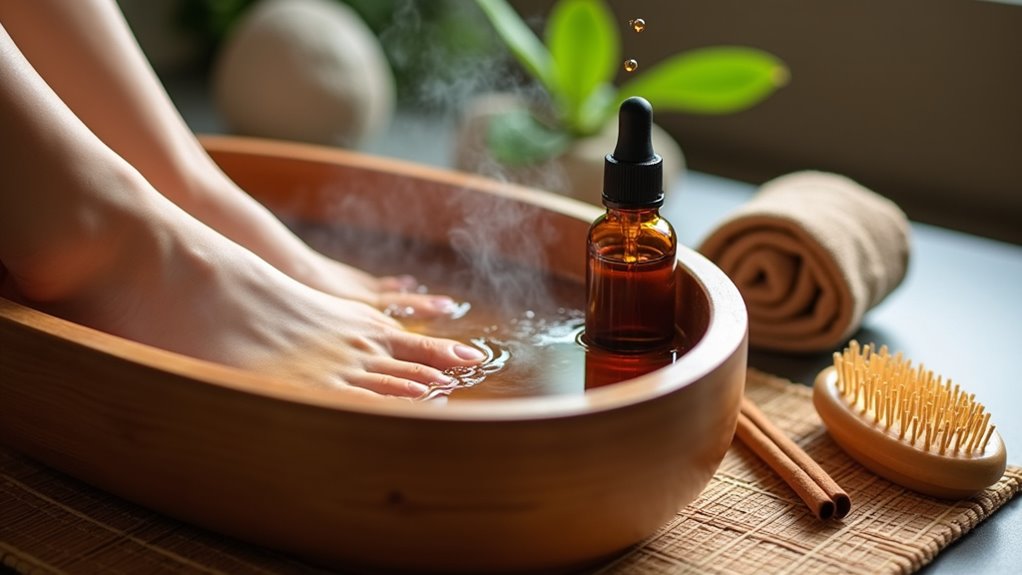
For those struggling with persistent foot problems, cinnamon oil offers a powerful natural solution that addresses both fungal infections and unpleasant odors simultaneously. This potent essential oil penetrates deeply, attacking the root causes of foot issues rather than merely masking symptoms.
- Foot Bath Protocol – Add 5-7 drops to warm water, soak for 15 minutes. Targets fungal treatment zones between toes and under nails.
- Direct Application – Dilute with carrier oil for spot treatment on affected areas.
- Preventative Spray – Mix with water in spray bottle for daily foot hygiene maintenance.
Transform Your Hair Care Routine With Cinnamon Oil
Many hair care enthusiasts overlook the transformative potential of cinnamon oil despite its impressive ability to revolutionize damaged or lackluster locks.
This potent oil disinfects hair from environmental pollutants while enhancing softness and shine. Add it to your natural shampoo – results appear quickly.
For ideal hair nourishment, blend 5-10 drops with your regular conditioner. The stimulating properties promote circulation, supporting scalp health and encouraging growth at the follicle level.
Ditch chemical treatments. Cinnamon oil delivers superior performance without harmful additives. Your hair deserves this upgrade. Start today.
Digestive Relief: How Cinnamon Oil Soothes Your Stomach
Struggling with digestive discomfort? Cinnamon oil offers a natural solution for stomach issues that plague modern diets. This potent extract works directly on the digestive system, calming inflammation and promoting healthy function.
Three ways cinnamon oil improves digestive health:
- Alleviates bloating and cramps through gentle abdominal massage
- Expels gas and reduces discomfort when added to foods in small amounts
- Combats nausea and vomiting symptoms effectively
Don’t underestimate this ancient remedy. For immediate relief, mix two drops with a carrier oil and massage clockwise on your abdomen. Your stomach will thank you.
Beyond the Kitchen: Unexpected Uses of Cinnamon Oil
While most associate cinnamon oil with cooking and aromatherapy, this versatile essential oil serves numerous purposes beyond the kitchen.
As a natural insect deterrent, cinnamon oil repellent effectively banishes mosquitoes and flies from homes when sprayed near entry points. For skincare enthusiasts, cinnamon oil skincare routines offer antibacterial benefits that deep-clean and detoxify. Mixed with honey and carrier oil, it creates an effective facial cleanser.
This powerhouse also functions as a natural mouthwash, disinfects home surfaces, promotes hair growth, and even helps manage foot fungus. Keep a bottle handy—you’ll need it for more than just baking.
Frequently Asked Questions
Is Cinnamon Oil Safe for Children and Pregnant Women?
While cinnamon oil benefits are numerous, precautions must be taken. It’s generally not recommended for children under 6 or pregnant women due to potential skin sensitivity and uterine stimulation effects.
How Long Does Cinnamon Oil Last Before It Expires?
While one might expect eternal shelf life from such a potent oil, cinnamon oil typically lasts 2-3 years. Proper storage tips include keeping it in dark glass containers away from heat and light.
Can Cinnamon Oil Interact With Prescription Medications?
Cinnamon oil interactions with medications are possible as it may affect blood sugar levels and blood thinning medications. Consulting healthcare providers about medication safety is essential before combining with prescription drugs.
What’s the Difference Between Cinnamon Bark Oil and Leaf Oil?
Over 80% of commercial cinnamon products use bark oil. Cinnamon bark oil offers potent antimicrobial benefits, while leaf oil contains eugenol and serves primarily for perfumery, cleaning uses, and milder therapeutic applications.
Does Cinnamon Oil Stain Clothing or Household Surfaces?
Cinnamon oil can stain clothing and surfaces, particularly if undiluted. Prompt stain removal with dish soap or vinegar is recommended. For fabric care, treat spots immediately to prevent permanent discoloration.
Conclusion
Cinnamon’s compelling chemistry conquers countless conditions—from inflammation to infection. Potent properties penetrate problems persistently, providing practical protection for people pursuing preventative practices. This powerful plant proves particularly proficient for pain, pathogens, and personal pampering protocols. Smart specialists suggest stocking several supplies of this sensational substance. Don’t dismiss this dynamic, diverse delight—deploy it deliberately. Cinnamon oil continues to confirm its credentials as nature’s remarkable necessity for nurturing normal, natural nourishment.
About The Author