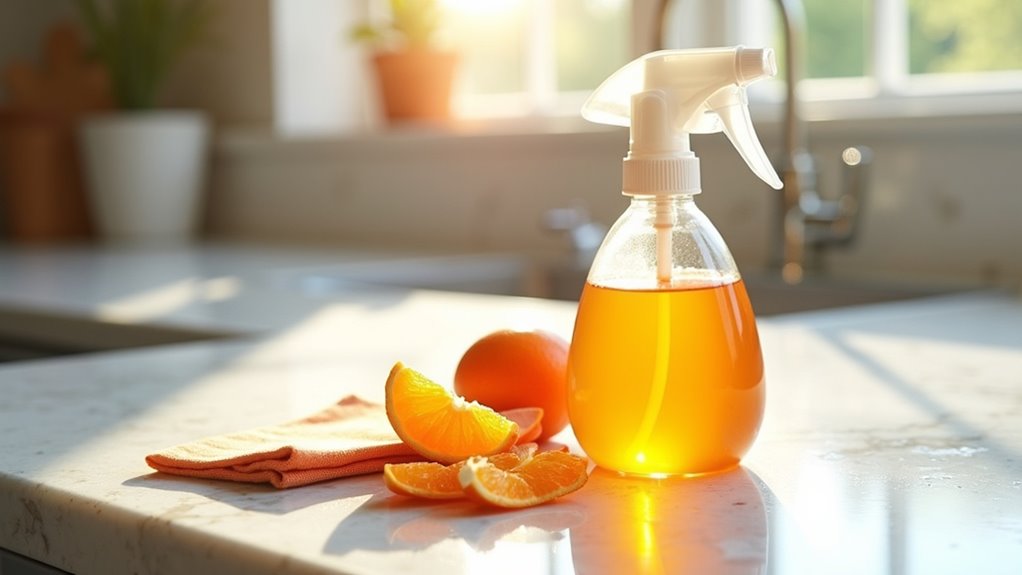
Modern cleaning products contain untested chemicals. Orange peel vinegar offers a simpler, safer alternative. The citrus oils cut through grease while vinegar disinfects—no synthetic fragrances or mystery ingredients required. This natural solution costs pennies per bottle and outperforms commercial products on most household surfaces. The process takes minutes but delivers weeks of effective cleaning power. Those synthetic sprays gathering dust under the sink? Their days are numbered.
Some of the links in this article may be affiliate links. If you make a purchase through these links, we may earn a small commission at no extra cost to you. Thank you.
Why Natural Orange Peel Cleaner Is Better Than Store-Bought
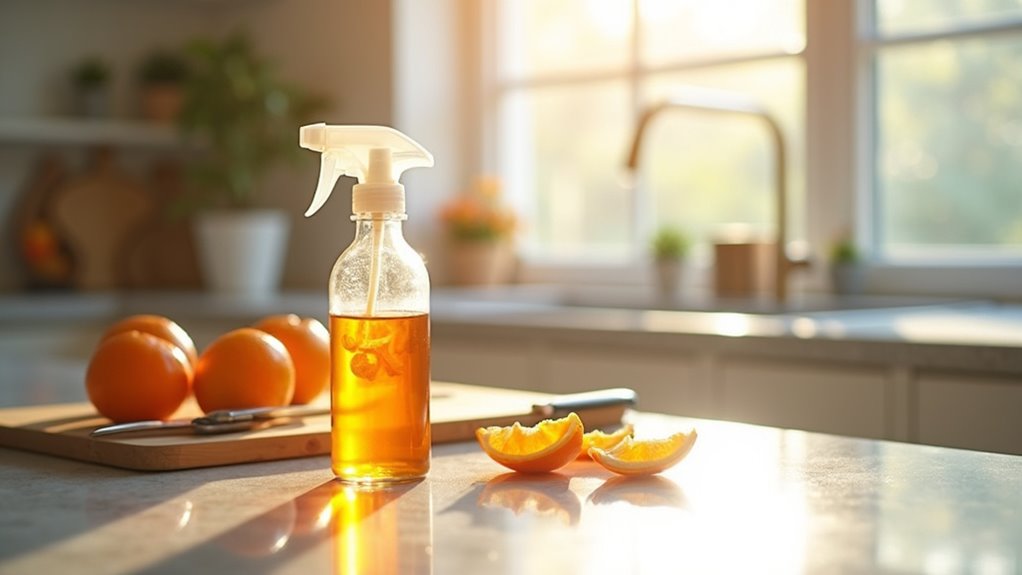
When considering the merits of homemade cleaners versus commercial options, natural orange peel cleaner stands out as decidedly superior. It eliminates exposure to harsh chemicals that trigger headaches and respiratory issues—a vital eco-friendly benefit overlooked by many households.
The cost savings are substantial. A single batch costs pennies compared to $4-7 for commercial alternatives. One gallon of vinegar ($2) plus discarded orange peels creates months of cleaner.
Beyond economics, this solution delivers a genuine citrus scent without synthetic perfumes. Your surfaces get truly clean without the chemical residue that ironically makes homes less healthy.
Step-by-Step Guide to Making Your Orange Peel Vinegar Solution

Creating your own orange peel cleaner requires minimal effort but delivers maximum impact. Simply gather a large glass jar, white vinegar, and orange peels—the overlooked heroes of DIY cleaning.
Pack the jar with peels, pour vinegar until completely covered. Seal tightly. Store in a dark cabinet for two weeks—this isn’t optional, it’s chemistry.
After fermentation, strain the solution, discarding peels. Transfer to spray bottles, diluting 50/50 with water for general use. For stubborn grime? Use straight.
The citrus benefits extend beyond cleaning power; the aroma transforms spaces instantly. Worth every minute of that two-week wait.
Best Uses for Your Homemade Citrus Cleaner Around the House
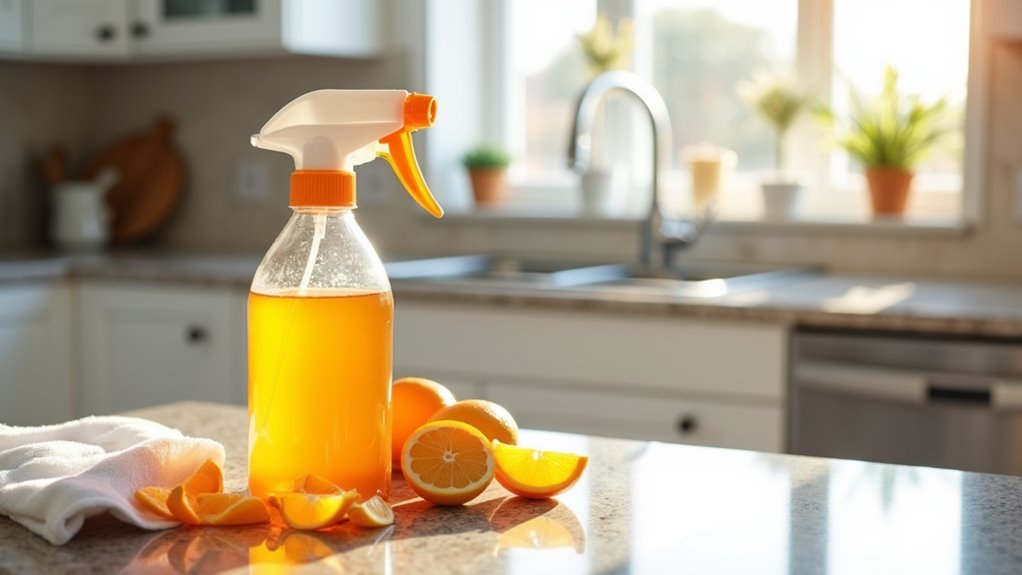
Countless household surfaces beg for the natural power of orange peel vinegar cleaner. This solution tackles dirt with remarkable efficiency while delivering essential citrus benefits. Dilute 50/50 with water for everyday cleaning tasks, or use full-strength for stubborn messes.
| Surface | Cleaning Tips |
|---|---|
| Windows | Streak-free shine without chemical residue |
| Kitchen | Cuts through grease instantly on countertops |
| Bathroom | Eliminates soap scum without scrubbing |
| Cutting Boards | Disinfects wood naturally |
| Appliances | Removes fingerprints and food splatters |
Remember: avoid marble, granite, stone tiles, and terracotta surfaces. These porous materials react poorly with acidic cleaners.
Surfaces to Avoid and Safety Precautions
Caution becomes essential when wielding orange peel vinegar cleaner around certain vulnerable surfaces. Despite its effectiveness, this natural solution poses risks to stone surfaces—particularly marble, granite, and travertine—where the acidic composition can etch and permanently damage sensitive surfaces.
Avoid terracotta, porous materials, and stone floor tiles entirely. The vinegar’s acidity penetrates these materials, causing irreversible harm.
Smart cleaning precautions include spot testing in inconspicuous areas first and immediately wiping dry after application. When uncertain about material compatibility, opt for specialized cleaners designed for those specific surfaces. Proper knowledge prevents costly mistakes.
Frequently Asked Questions
How Long Does Homemade Orange Peel Vinegar Cleaner Last?
Properly stored homemade orange peel vinegar cleaner has a shelf life of approximately 1-2 months. Storage tips include keeping it in a cool, dark place in an airtight container.
Can I Use Lemon or Grapefruit Peels Instead of Orange?
Yes, lemon or grapefruit peels can be substituted for orange peels. Any citrus peels work effectively as cleaning alternatives, offering similar antibacterial properties and pleasant scents when infused with vinegar.
Will the Vinegar Smell Disappear After Cleaning?
Yes, the vinegar smell typically dissipates shortly after cleaning. The citrus oils from the orange peels mask the vinegar scent while maintaining cleaning effectiveness on various surfaces.
Is This Cleaner Safe to Use Around Pets?
While some worry about pet exposure to cleaning products, this orange peel vinegar solution is generally safe around pets. Its natural cleaner ingredients (vinegar and citrus) pose minimal risk compared to chemical alternatives.
Can I Add Essential Oils to Enhance the Fragrance?
Yes, essential oils can be added to the orange peel vinegar cleaner for fragrance enhancement. A few drops of citrus, lavender, or tea tree oil provide additional essential oil benefits while complementing the natural citrus scent.
Conclusion
Orange peels transform from kitchen waste to cleaning gold, arming homes with nature’s antibacterial arsenal. This liquid sunshine cuts through grime like a hot knife through butter, leaving surfaces gleaming and air kissed with citrus freshness. No more chemical cocktails lurking in cabinets—just pure, potent cleaning power harvested from what most discard. Embrace this zero-waste warrior; your home, health, and planet will thank you.
About The Author