
Essential oils have gained attention in cognitive health circles recently. These concentrated plant extracts might do more than just smell pleasant—some research suggests certain oils can actually enhance memory function. Scientists have noted compounds like 1,8-cineole in rosemary oil appear to influence brain chemistry in promising ways. Perhaps the most intriguing aspect isn’t just their potential effectiveness but their accessibility; these natural memory aids can be incorporated into daily life without much effort. What specific oils make the most difference, though?
Some of the links in this article may be affiliate links. If you make a purchase through these links, we may earn a small commission at no extra cost to you. Thank you.
The Science Behind Essential Oils and Brain Function
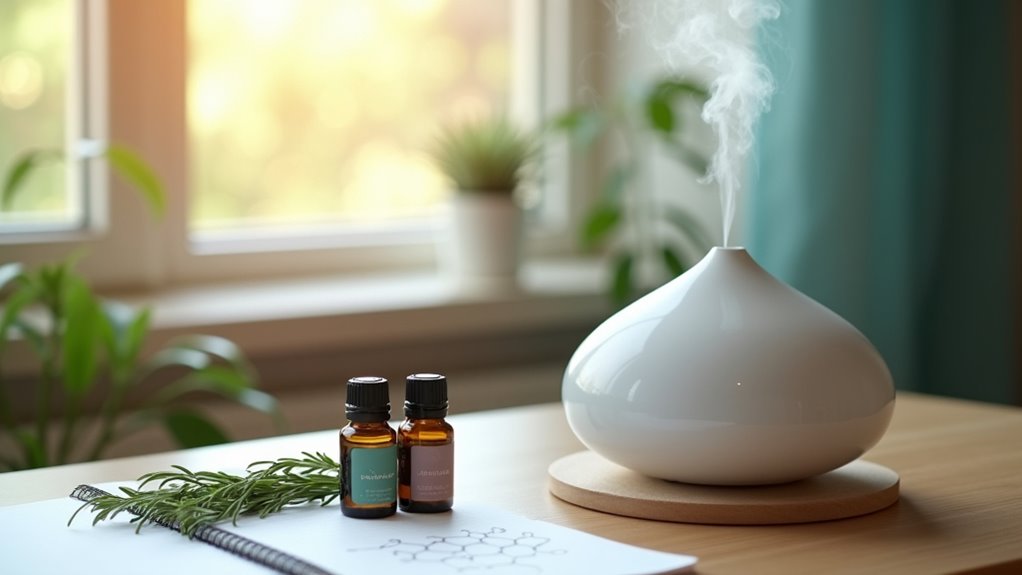
Many researchers have begun to uncover the fascinating connection between essential oils and brain function in recent years. The growing body of neuroscience research suggests that certain compounds in essential oils may interact directly with our neural pathways, potentially enhancing cognitive processes including memory retention.
When inhaled or absorbed topically, essential oil compounds appear to cross the blood-brain barrier, where they might influence neurotransmitter activity. I think this explains why oils like rosemary and peppermint show such promising results.
Perhaps what’s most interesting is how these natural substances stimulate different brain regions than synthetic alternatives – though we still need more controlled studies to fully understand these mechanisms.
Top 5 Memory-Enhancing Essential Oils and Their Properties

Individuals seeking natural memory enhancement might find particular essential oils remarkably effective.
Rosemary benefits include measurable improvements in recall, making it perhaps the most studied option for cognitive function.
Basil applications extend beyond culinary uses, with its fatigue-fighting properties particularly valuable during intensive study sessions.
Cypress versatility shines in family settings, offering gentle memory support without overwhelming scents.
Peppermint effects rival caffeine in some cases, delivering that mental “wake-up” many need for focus.
Sage combinations, especially with citrus oils like lemon, create synergistic blends that ancient healers might have recognized for their powerful cognitive benefits.
How to Use Essential Oils Effectively for Cognitive Benefits

While essential oils offer impressive cognitive benefits, proper application methods greatly enhance their effectiveness. For ideal memory improvement, consider diffusion as the primary technique—allowing oils like rosemary or cypress to permeate study spaces for 30-45 minutes.
Topical application, perhaps mixed with a carrier oil (1-2 drops per teaspoon), works well for peppermint and sage when applied to temples or wrists. I think dosage recommendations vary by oil type and individual sensitivity, so starting with minimal amounts is advisable.
Inhalation methods, such as placing a few drops on a handkerchief, provide immediate cognitive stimulation when needed, especially with basil or sage oils.
Creating Daily Routines With Essential Oils for Long-Term Memory Improvement

Establishing consistent daily routines with essential oils transforms their memory-enhancing benefits from occasional advantages to powerful, long-term cognitive improvements.
Creating daily rituals with oils like rosemary or peppermint helps form scent associations that trigger enhanced mental clarity whenever encountered.
- Morning ritual: Place 2-3 drops of peppermint oil in your shower for an invigorating mental boost that prepares your brain for the day.
- Study/work ritual: Diffuse rosemary or basil while tackling complex tasks to improve retention.
- Evening wind-down: Apply diluted cypress oil to temples before reviewing important information for better overnight consolidation.
These simple routines, when practiced consistently, can perhaps yield more substantial cognitive benefits than sporadic usage.
Frequently Asked Questions
Can Essential Oils Help With Age-Related Memory Decline?
Research suggests certain essential oils may offer aromatherapy benefits for age-related memory decline. Rosemary, sage, and peppermint oils potentially support cognitive function when used consistently through diffusion or topical application.
Are Memory-Enhancing Essential Oils Safe for Children?
Memory-enhancing essential oils require careful consideration for children. Safety guidelines recommend dilution, supervision, and age-appropriate application. Children’s usage should be limited to gentler oils like lavender under parental guidance.
How Quickly Can You Notice Memory Improvements From Essential Oils?
Memory improvements from aromatic therapy typically manifest between a few days to several weeks. Regular use of memory-enhancing oils can optimize cognitive function with cumulative effects over time.
Do Essential Oils Interact With Memory-Enhancing Medications?
Essential oil interactions with memory medications require caution. Some oils may potentiate or inhibit medication effects. Consulting healthcare providers about medication safety is advisable before combining these therapeutic approaches.
Can Essential Oils Reverse Memory Damage From Head Injuries?
Current research on essential oil efficacy for head injury recovery is limited. While certain oils may support cognitive function, they cannot definitively reverse structural memory damage resulting from traumatic brain injuries.
Conclusion
While science continues exploring the full potential of essential oils, many people report remarkable memory improvements with consistent use. Perhaps it’s the combination of aromatic compounds and mindful application that creates this effect. These natural brain boosters offer a promising alternative to conventional cognitive enhancers, though individual results may vary. For those struggling with mental fog or seeking sharper recall, these fragrant allies might just be the missing piece in their cognitive wellness routine.
About The Author
