Pregnancy brings a mix of joy and discomfort, with many women seeking natural remedies to ease their journey. Essential oils offer potential relief, though their use requires careful consideration during this sensitive time. Not all oils are pregnancy-safe, and timing matters greatly. Most experts suggest waiting until after the first trimester before incorporating aromatherapy into self-care routines. The right selection, dilution, and application method can make the difference between a helpful tool and an unnecessary risk.
Some of the links in this article may be affiliate links. If you make a purchase through these links, we may earn a small commission at no extra cost to you. Thank you.
Safe Essential Oil Options for Each Trimester

While traversing the journey of pregnancy, understanding which essential oils are safe for each trimester can be somewhat overwhelming for expectant mothers. Most experts recommend avoiding essential oils entirely during the first trimester precautions period, as this is when the embryo is most vulnerable to external influences.
For the second and third trimesters, the options expand considerably. Second trimester benefits include using gentle oils like Lavender, Sweet Orange, and Sandalwood – all properly diluted, of course. Perhaps Frankincense and Tea Tree oil might be appropriate too. Remember though, even “safe” oils should be used sparingly, and it’s always wise to consult with your healthcare provider first. Additionally, ensuring proper dilution guidelines for young skin is crucial for avoiding any adverse reactions.
Creating Your Pregnancy Aromatherapy Kit
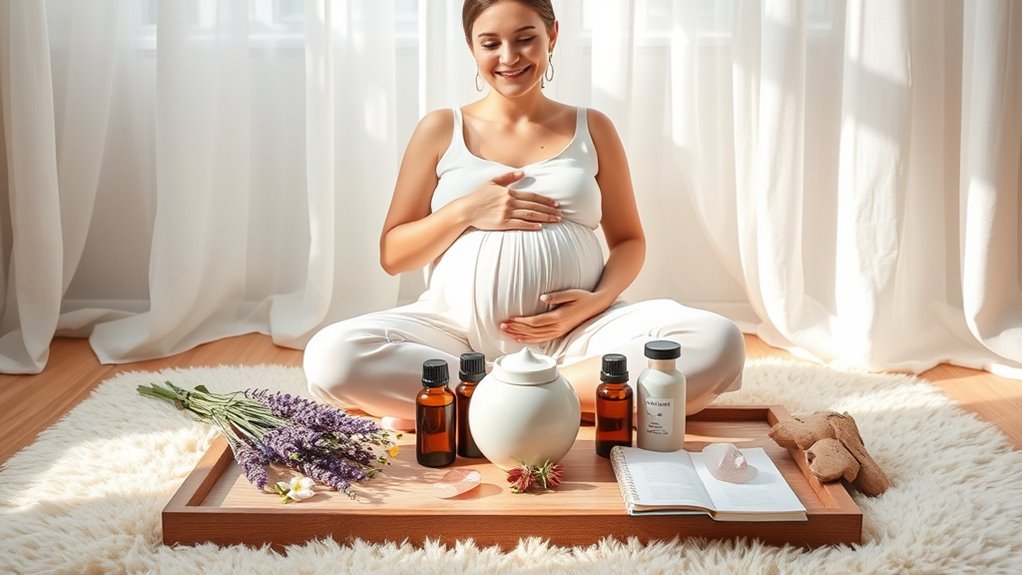
Once an expectant mother has navigated past the first trimester, assembling a well-curated aromatherapy kit can be a meaningful step toward managing pregnancy discomforts naturally. Thoughtful essential oil blends can transform pregnancy self-care routines, perhaps offering relief when conventional options seem limited.
A basic pregnancy aromatherapy kit should include:
- 2-3 carrier oils (sweet almond, jojoba, or fractioned coconut oil)
- 3-5 pregnancy-safe essential oils (lavender, sweet orange, and frankincense are versatile choices)
- Glass bottles, diffuser, and roller bottles for various application methods
Many women find that having these supplies readily accessible makes daily self-care rituals more likely to become habit. Additionally, proper dilution ratios are essential to ensure safety and effectiveness when using essential oils during pregnancy.
Using Essential Oils for Common Pregnancy Discomforts

As pregnancy progresses through its various stages, expectant mothers often encounter uncomfortable symptoms that can disrupt daily life. Essential oils offer gentle relief for these common discomforts when used properly.
Gentle, natural alternatives await mothers-to-be seeking relief from pregnancy’s challenging physical symptoms.
For morning sickness, Ginger essential oil stands out for nausea relief. Perhaps a drop diluted in carrier oil and inhaled can ease queasy feelings that seem to persist despite trying conventional remedies.
Lavender and Frankincense work wonders for stress reduction during pregnancy’s emotional rollercoaster. A few drops in a diffuser before bedtime might improve sleep quality—something many pregnant women desperately need, I think. Additionally, using essential oils 30-60 minutes before sleep can enhance their effectiveness in promoting restful nights.
Always remember to dilute oils appropriately and consult healthcare providers first.
Natural Household Solutions for a Toxin-Free Pregnancy
Creating a toxin-free home environment becomes especially essential during pregnancy when both mother and developing baby face increased vulnerability to harmful chemicals. Many conventional cleaning products contain harsh substances that may potentially affect fetal development or trigger maternal respiratory issues.
Embracing eco-friendly practices during this special time not only protects health but also establishes sustainable habits for the future family:
- Replace commercial cleaners with natural alternatives using lemon, vinegar, and baking soda
- Make DIY all-purpose sprays with 10-15 drops of safe essential oils like tea tree in water
- Ventilate rooms regularly, perhaps opening windows daily to reduce indoor air pollution
Natural cleaners might require a bit more elbow grease sometimes, but the peace of mind is worth it.
Frequently Asked Questions
Can Essential Oils Affect My Baby’s Development in Utero?
Some essential oils can potentially affect fetal development. Certain oils may cause uterine contractions or cross the placental barrier. Consulting healthcare providers before using any essential oils during pregnancy is recommended.
How Do Diffused Oils Compare to Topical Application During Pregnancy?
Compared to topical use, diffusion methods expose pregnant women to lower oil concentrations, offering a gentler approach. Topical application techniques require proper dilution with carrier oils for safe absorption during pregnancy.
Can Essential Oils Help With Postpartum Recovery?
Essential oils can support postpartum healing when used safely. Certain oils may help with mood, fatigue, and physical recovery, but proper dilution and medical clearance remain necessary precautions.
Are Organic Essential Oils Safer for Pregnant Women?
Walking on eggshells is necessary when using essential oils while pregnant. Organic oil benefits include fewer pesticides, but essential oil risks remain the same regardless of organic certification status.
How Do Hormonal Changes Affect Sensitivity to Essential Oils?
Hormonal fluctuations during pregnancy can heighten sensitivity levels to essential oils. Women may experience increased skin reactivity and stronger responses to scents that were previously well-tolerated.
Conclusion
Pregnancy is a transformative journey, and essential oils can be thoughtful companions along the way. When used wisely—with proper dilution, timing, and professional guidance—these natural remedies offer comfort for many common discomforts. What better gift could you give yourself than creating a nurturing environment for both you and your growing baby? With knowledge and caution, essential oils can become valuable allies in your pregnancy self-care toolkit.
About The Author