In recent years, essential oils have gained attention as complementary tools for mental wellness. These concentrated plant extracts offer potential relief for those seeking alternatives to conventional treatments. Some research suggests certain oils may influence brain chemistry, though results vary considerably between individuals. Perhaps the most compelling aspect is their accessibility—anyone can incorporate lavender or citrus scents into daily routines. The question remains, however: can these natural remedies truly address serious conditions like depression and anxiety?
Some of the links in this article may be affiliate links. If you make a purchase through these links, we may earn a small commission at no extra cost to you. Thank you.
The Rising Mental Health Crisis in America

Why is depression reaching epidemic proportions in America today? The statistics paint a troubling picture: depression ranks as America’s number one mental health problem, with approximately 40 million Americans suffering from clinical depression.
Perhaps even more concerning, over 18% of Americans struggle with some form of mental health issues.
The societal impact extends unevenly across regions. While Florida shows the lowest percentage at about 16%, Oregon faces the highest burden with nearly 23% of its population affected.
I think these geographical variations hint at complex underlying factors – environmental, social, and economic – that contribute to our national mental health crisis.
Naturopathic Approaches to Depression Management

Many traditional healers believe that true health emerges from harmony between physical and spiritual well-being, a principle that sits at the heart of naturopathic approaches to depression.
The connection between emotional states and physical manifestations provides a foundation for naturopathic therapies targeting depression. When our mental health suffers, our bodies often respond with tangible symptoms—perhaps explaining why holistic healing focuses on treating the whole person rather than isolated symptoms.
Mind and body speak the same language—healing one inevitably nurtures the other.
Essential oils represent one of nature’s powerful remedies for emotional balance. These concentrated plant essences work subtly yet effectively, offering a complementary approach to conventional treatments.
The environment, it seems, provides many of the solutions we desperately seek.
Top Essential Oils for Alleviating Depressive Symptoms
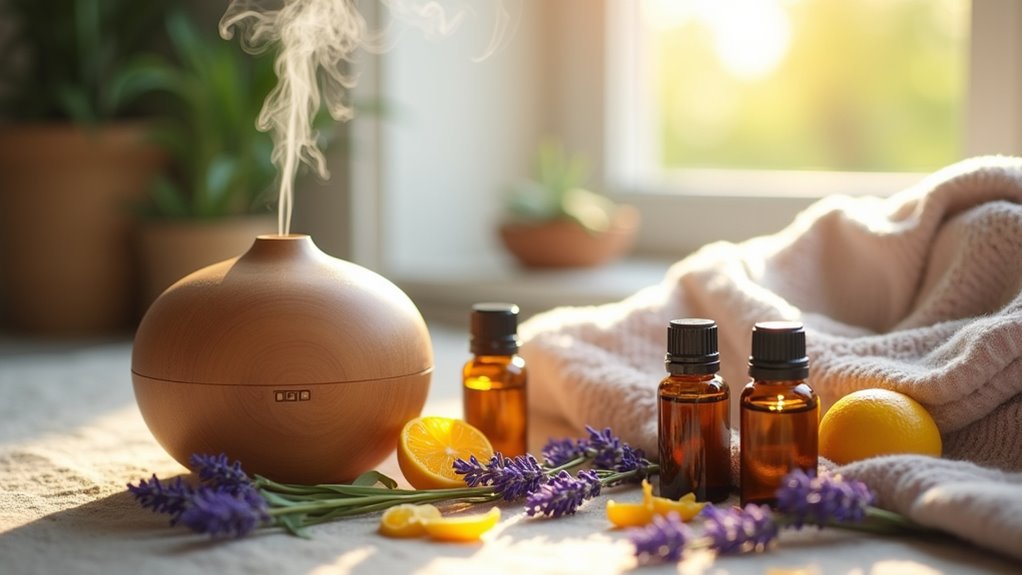
Harnessing the therapeutic power of essential oils offers relief for those struggling with depression’s persistent weight.
Research suggests that Melissa and Lavender oils stand out for their remarkable sedative properties, particularly effective when used in small doses of just 2-5 drops. Curiously, larger quantities might actually reduce their depression relief benefits.
Other significant options include Frankincense, Creeping Hyssop, and Ylang Ylang, which have shown promising results.
I think Mandarin and Clary Sage deserve mention too, perhaps because they work synergistically with other oils to enhance essential oil benefits.
Remember that individual responses may vary, making personalized approaches most effective.
Practical Essential Oil Blends for Stress Relief
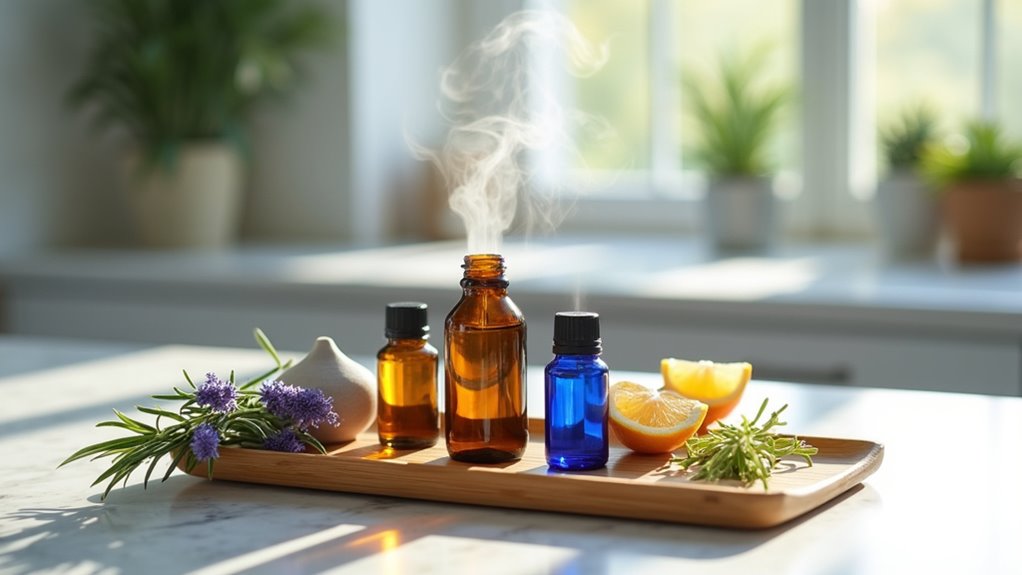
When depression and anxiety take hold, having ready-made essential oil recipes can provide immediate relief without the guesswork.
These practical recipes offer accessible solutions for those difficult moments when emotional balance seems out of reach.
For everyday stress, a simple blend of Mandarin, Mandarin Petitgrain, and Lemon Verbena (20 drops each) creates a calming blend that can be applied to temples and the solar plexus.
Perhaps more intense situations call for the combination of Roman Chamomile, Clary Sage, Mandarin Petitgrain, and Spikenard with Hazelnut Oil as a carrier.
I think the beauty of these formulations lies in their simplicity and effectiveness.
Frequently Asked Questions
Are Essential Oils Safe to Use During Pregnancy?
Pregnancy guidelines suggest caution with essential oils. Some oils can cross the placental barrier. Healthcare practitioners should be consulted first regarding essential oil safety during this sensitive period.
How Long Do Essential Oils Retain Their Therapeutic Properties?
What causes essential oils to lose their potency over time? Properly stored essential oils generally retain therapeutic properties for 1-3 years, though shelf life varies by oil type and storage conditions greatly impact longevity.
Can Children Safely Use These Essential Oil Remedies?
Children’s safety with essential oils requires modified protocols. Essential oil guidelines recommend dilution rates of 0.25-0.5% for young children and caution against certain oils entirely for those under 6.
Do Essential Oils Interact With Prescription Antidepressants?
Essential oil interactions with prescription antidepressants are possible. Some oils may alter antidepressant efficacy or increase side effects. Consulting healthcare providers before combining treatments is strongly recommended for safety.
Are Organic Essential Oils More Effective for Treating Depression?
Quality trumps labels when push comes to shove. Research hasn’t conclusively shown organic essential oils contain more potent aromatic compounds for mood enhancement than conventional ones, though both may help depression symptoms.
Conclusion
As our mental health landscape evolves, essential oils stand as gentle guardians at the crossroads of traditional wisdom and modern wellness. Like keys that open different chambers of emotional healing, these natural extracts offer personalized pathways through the fog of depression and anxiety. Though not a replacement for clinical care, essential oils perhaps provide what many seek most in difficult times – a moment of peace, a breath of clarity, and a return to nature’s balance.
About The Author