
Depression affects millions worldwide, yet many seek alternatives to conventional treatments. Essential oils offer a promising avenue for relief through their natural aromatic compounds. The relationship between scent and emotion isn’t just anecdotal—it’s backed by research showing how these concentrated plant extracts interact with our limbic system. While they shouldn’t replace professional care, oils like lavender and bergamot might provide gentle support for emotional balance. What exactly happens in the brain when these ancient remedies meet modern stress?
Some of the links in this article may be affiliate links. If you make a purchase through these links, we may earn a small commission at no extra cost to you. Thank you.
Understanding Depression and Its Warning Signs

Depression is more than just a temporary feeling of sadness or having a “bad day.” It’s a complex mental health condition that affects millions of people worldwide, manifesting through various physical and emotional symptoms that can greatly impact daily life.
Recognizing the warning signs is essential for managing symptoms effectively. These often include persistent fatigue, changes in appetite (either overeating or lack of interest in food), irritability, and diminished self-esteem.
While the exact causes of depression remain complex—perhaps involving genetics, brain chemistry, and life circumstances—identifying these indicators early allows for more timely intervention, which I think makes a significant difference in recovery outcomes.
How Aromatherapy Affects Mood and Emotional Well-being

While our senses constantly process information about our surroundings, the olfactory system holds a unique power to influence our emotional state almost instantaneously. This connection forms the basis of aroma therapy, which taps into our brain’s limbic system—the center of emotions and memories.
The practice works because scent molecules trigger neurological responses that can shift mood within seconds. Perhaps this explains why a whiff of lavender might calm nerves after a stressful day, or why bergamot can lift spirits when feeling low.
For those seeking emotional balance, essential oils provide a gentle yet effective pathway, creating subtle changes that support overall well-being without harsh side effects.
Top 5 Essential Oils to Combat Depressive Symptoms

When seeking natural remedies for emotional challenges, certain essential oils stand out for their therapeutic properties. Through various oil applications and scent therapy methods, these natural extracts may help alleviate symptoms of depression and promote emotional well-being.
| Essential Oil | Potential Benefits |
|---|---|
| Lavender | Stress relief, mood enhancement |
| Bergamot | Sensory stimulation, inner balance |
| Sandalwood | Nerve calming, promotes peace |
| Ylang Ylang | Stress reduction, mood improvement |
| Geranium | Emotional regulation, balancing |
Perhaps the most appealing aspect of these oils is their versatility – they can be diffused, applied topically when diluted, or even incorporated into daily self-care routines.
Creating Your Own Depression-Fighting Oil Blends
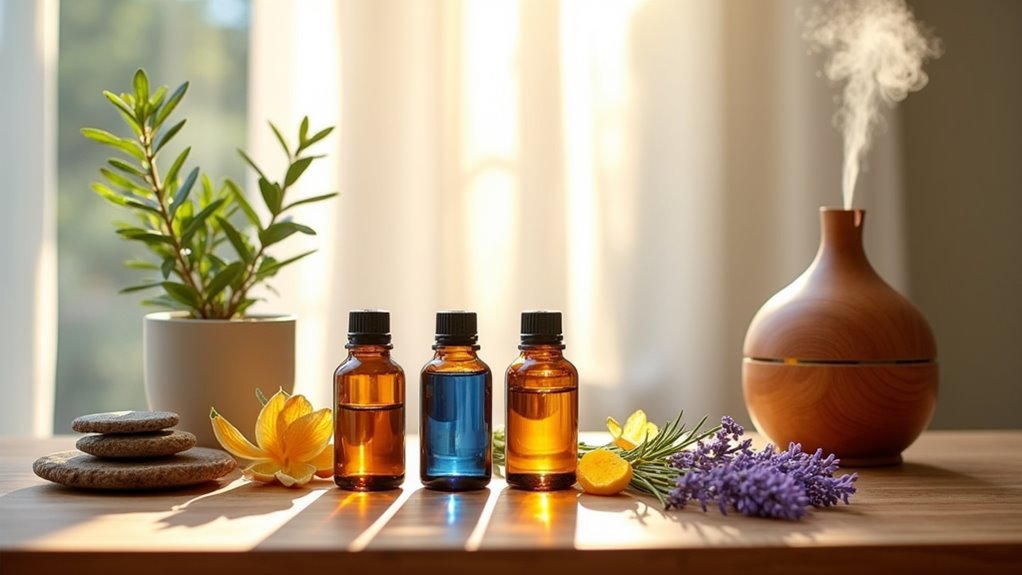
Creating a personalized blend of essential oils might be the key to finding relief that works specifically for your emotional needs.
Combining oils with complementary properties can enhance their effectiveness against depression symptoms. Perhaps the most powerful aspect of custom blends is how they can be adjusted to address your unique emotional state.
When oils unite in harmony, they become powerful allies in your personal battle against depression’s darkness.
- Start with a base of lavender (3 drops) and add bergamot (2 drops) for a balancing effect.
- Experiment with adding 1-2 drops of geranium to help regulate emotional responses.
- Consider sandalwood or ylang ylang (1 drop) if you’re seeking deeper calm.
Frequently Asked Questions
Can Essential Oils Replace Prescribed Depression Medications?
Essential oils benefits may complement treatment but cannot replace prescribed depression medications. Mental health alternatives should be considered alongside professional care, not as complete substitutes for medical intervention.
How Long Does It Take to Feel Effects From Aromatherapy?
From immediate moments to gradual weeks, aromatherapy duration varies widely. Effects can appear within minutes for those with high scent sensitivity, while deeper emotional benefits typically develop over consistent daily use.
Are There Any Side Effects When Using Essential Oils?
Essential oils may cause skin irritation, allergic reactions, and essential oil sensitivity in some individuals. Proper dilution and safe application techniques are important to minimize adverse effects when using these products.
Can Children Safely Use Essential Oils for Mood Improvement?
Studies show 80% of parents seek natural solutions for children’s emotional health. Using essential oils for child safety requires dilution and supervision. Proper application can support mood enhancement in children with fewer risks.
Do Essential Oils Expire or Lose Their Therapeutic Properties?
Essential oils do expire, with shelf life typically ranging from 1-5 years. Proper storage tips include keeping them in dark glass bottles away from heat and light to preserve therapeutic properties.
Conclusion
Like vessels adrift on stormy seas, those battling depression often seek natural harbors of relief. Essential oils represent these lighthouses of hope—illuminating paths to emotional balance through nature’s fragrance. While not a replacement for professional care, I think they offer gentle waves of support in the journey toward wellness. Perhaps, in these small amber bottles, daily rituals become subtle anchors, grounding the spirit when darkness threatens to overwhelm.
About The Author
