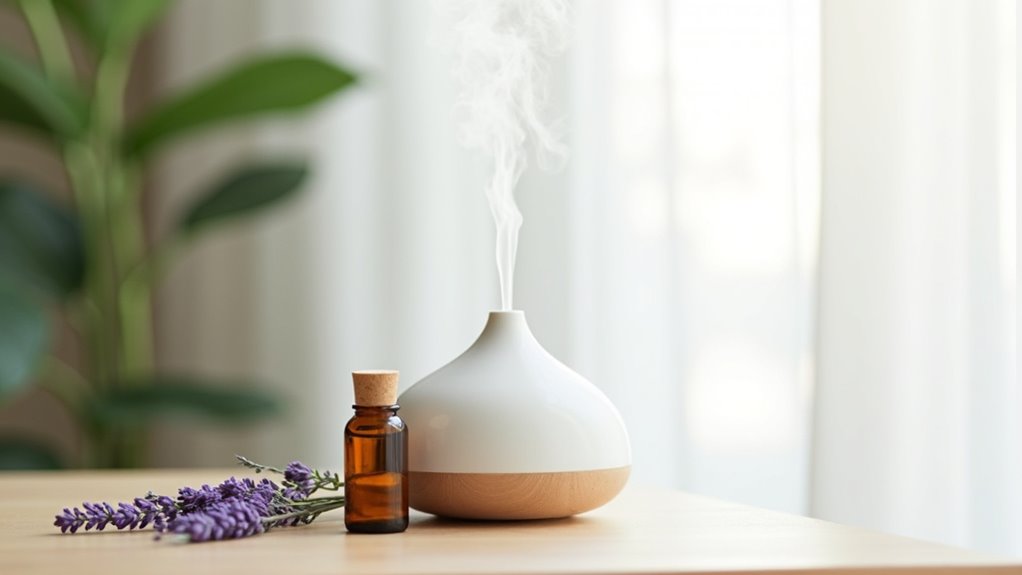
Many people turn to essential oils as a natural remedy for stress relief, though evidence varies on their effectiveness. The aromatic compounds in certain oils like lavender and chamomile seem to interact with the brain’s emotional centers. Perhaps it’s the ritual of application that helps as much as the oils themselves. Diffusing these scents can transform an ordinary space into a sanctuary of calm—something we could all use after a long day. What specific oils might work best for different stress triggers?
Some of the links in this article may be affiliate links. If you make a purchase through these links, we may earn a small commission at no extra cost to you. Thank you.
Understanding the Science Behind Essential Oils and Stress
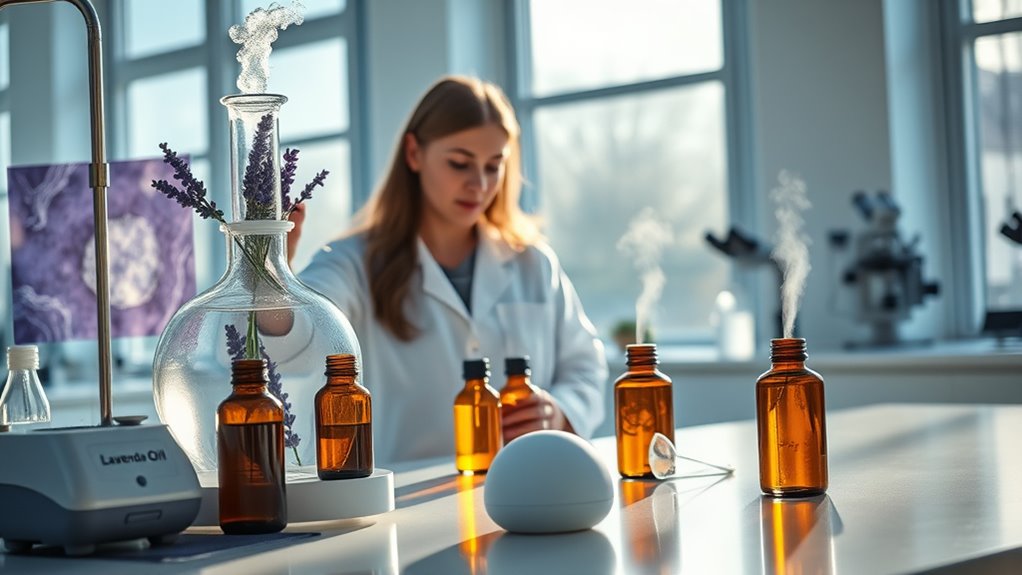
Aromatherapy, with its ancient roots spanning thousands of years, has evolved from traditional practices into a scientifically studied field of stress management. When we inhale essential oils, their chemical properties interact with our limbic system—the brain’s emotional center—triggering responses that can reduce cortisol levels and promote relaxation.
The olfactory effects are perhaps most fascinating; scent molecules travel directly to brain regions controlling mood and memory. I think this explains why certain fragrances evoke such powerful emotional responses. Research suggests these natural compounds may influence neurotransmitter activity, though the exact mechanisms aren’t fully understood. The complexity of these plant extracts makes them uniquely effective for many people seeking stress relief. Notably, essential oils like Melissa and Lavender have remarkable sedative properties that can enhance emotional balance.
Top Essential Oils for Creating a Calming Environment

Creating a serene home environment starts with selecting the right essential oils known for their calming properties. Lavender stands out as perhaps the most versatile option, while bergamot and ylang ylang offer uplifting yet soothing effects. Roman chamomile is excellent for promoting sleep.
For maximum benefit, experimenting with calming blends often yields wonderful results. A simple diffuser recipe might combine three drops of lavender with two drops each of wild orange and geranium. I think this creates a balanced atmosphere that both calms and refreshes—perfect for unwinding after a hectic day. Lavender oil’s anti-anxiety properties can enhance the overall calming effect of your blends.
Tranquility blends containing rose and vanilla notes can transform even the most stress-filled spaces into sanctuaries.
Practical Ways to Incorporate Essential Oils Into Your Daily Routine

The daily routine presents countless opportunities to harness the power of essential oils for stress relief. Establishing simple aromatherapy rituals can transform ordinary moments into calming experiences. Perhaps the most effective approach is daily diffusion in spaces where stress typically accumulates. Additionally, incorporating essential oils into your routine can help combat the hidden dangers of chronic insomnia.
| Time of Day | Application Method | Recommended Oil |
|---|---|---|
| Morning | Shower steam | Citrus or mint |
| Afternoon | Desktop diffuser | Lavender blend |
| Evening | Pillow spray | Chamomile |
These applications don’t require much time—just a few drops can create a sanctuary of calm amid life’s chaos.
Safety Tips and Best Practices for Essential Oil Use
While enjoying the benefits of essential oils in daily routines, users should remember that these powerful plant extracts demand respect and proper handling. Safety precautions should always be top of mind, particularly for those with low blood pressure or skin sensitivities.
Proper dilution ratios are perhaps the most important aspect of essential oil use. I think most experts recommend starting with a 2% dilution (about 12 drops per ounce of carrier oil) for adults. Always perform patch tests before applying oils to larger areas.
Never ingest essential oils unless directed by a qualified aromatherapist, and keep all oils out of reach of children and pets.
Frequently Asked Questions
Can Essential Oils Interact With Prescription Medications?
Some essential oils can interact with medications, potentially altering their effectiveness. Patients should consult healthcare providers about essential oil interactions when discussing medication safety before combining treatments.
How Long Do the Calming Effects of Essential Oils Typically Last?
The calming duration of essential oils typically varies from 2-6 hours depending on application method, individual body chemistry, and specific oil used. Essential oil efficacy diminishes gradually rather than suddenly stopping.
Are Essential Oil Benefits Scientifically Proven or Mostly Anecdotal?
Is science at odds with folk wisdom? Essential oil benefits have some scientific research supporting certain claims, but many rely primarily on anecdotal evidence rather than rigorous clinical studies.
Can Children and Pets Safely Be Around Diffused Essential Oils?
Essential oil safety requires caution with children and pets. Some oils can be toxic, especially for cats. Diffusing guidelines recommend diluted oils, limited exposure time, and well-ventilated spaces for household safety.
Do Essential Oils Lose Potency Over Time After Opening?
Properly preserved potency preserves performance. Essential oils do lose strength over time after opening. Storage conditions greatly impact longevity – keeping them in cool, dark places away from direct sunlight extends their effectiveness.
Conclusion
Like a gentle lighthouse guiding ships through stormy seas, essential oils offer a natural sanctuary for the overwhelmed mind. These aromatic allies, when incorporated mindfully into daily life, can transform stressful moments into opportunities for calm. Though not a cure-all, perhaps the subtle power of these botanical essences lies in their ability to ground us in the present moment, offering a fragrant reminder to breathe deeply amidst life’s chaos.
About The Author
