
Migraines affect millions of people worldwide, often disrupting daily life with debilitating pain and sensitivity. Standard medications don’t always provide relief, leading many sufferers to explore alternative options. Essential oils have emerged as a promising natural remedy, offering both physical and emotional benefits without the side effects of pharmaceuticals. Studies suggest certain plant extracts can reduce pain intensity and frequency when properly applied. Perhaps what makes these natural solutions particularly appealing is their accessibility and the sense of control they give back to those who feel helpless against recurring headaches.
Some of the links in this article may be affiliate links. If you make a purchase through these links, we may earn a small commission at no extra cost to you. Thank you.
Understanding Migraines: Causes and Symptoms

When the first pangs of a migraine strike, millions of sufferers around the world know they’re in for a potentially debilitating experience unlike a typical headache. These neurological events typically manifest as intense, throbbing pain on one or both sides of the head, often accompanied by nausea and heightened sensitivity to light and sound.
Migraine triggers vary widely among individuals, perhaps including stress, certain foods, hormonal changes, or environmental factors. Headache symptoms may present with warning signs resembling stroke-like symptoms such as visual disturbances or weakness. I think what makes migraines particularly challenging is their unpredictable duration and intensity, which can disrupt daily activities for hours or even days.
How Essential Oils Provide Migraine Relief
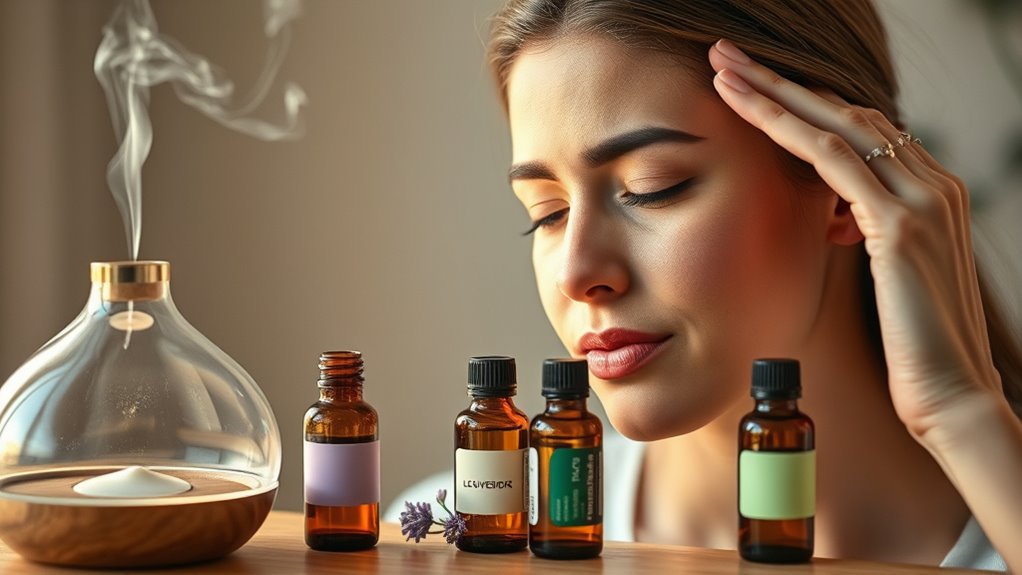
Despite growing skepticism in many medical circles, essential oils have emerged as a complementary approach to migraine relief for many sufferers seeking natural alternatives to pharmaceuticals. These aromatic compounds work through multiple pathways, potentially addressing migraine triggers at their source rather than simply masking symptoms.
When inhaled or applied topically, essential oils like lavender and peppermint may influence the brain’s chemistry, reducing inflammation and easing tension that often precedes migraine attacks. I think what makes them particularly attractive is their versatility – they can be diffused, added to bathwater, or diluted for direct application. Perhaps their greatest benefit is providing a sense of control to those dealing with unpredictable migraine episodes. Additionally, the science behind essential oils suggests that aromatic compounds can trigger neurochemical responses that help alleviate headache pain.
Top 5 Essential Oils Proven Effective for Headache Management

Five essential oils stand out for their remarkable effectiveness in managing migraine headaches, each offering unique properties that target different aspects of headache pain.
| Essential Oil | Primary Benefits | Best For |
|---|---|---|
| Lavender | Tension relief, hormone balance | Stress-related headache triggers |
| Peppermint | Cooling sensation, pain relief | Tension headaches |
| Eucalyptus | Anti-inflammatory, sinus clearing | Sinus-related migraines |
| Roman Chamomile | Sedative, calming | Insomnia-triggered headaches |
| Rosemary | Circulation improvement | Hormonal headaches |
Perhaps the most versatile is lavender, which addresses multiple headache triggers while providing essential oil benefits beyond pain management. Research shows lavender’s effectiveness for tension and stress-related headaches is supported by scientific evidence.
Incorporating Essential Oils Into Your Migraine Care Plan
After discovering which essential oils work best for migraine relief, the practical question becomes how to properly use them as part of a thorough headache management strategy. These oils can be incorporated in several application methods to maximize their benefits.
Many find diffusing lavender or peppermint creates a calming environment during a migraine episode. For more direct relief, perhaps try applying diluted oil combinations like peppermint and eucalyptus to temples or neck. Some people I know swear by adding a few drops to a warm bath for full-body relaxation. Additionally, using essential oils 30-60 minutes before sleep can enhance their calming effects and promote overall relaxation.
Frequently Asked Questions
Can Essential Oils Replace Prescription Migraine Medications?
Essential oil effectiveness for migraines varies, but research does not support them as replacements for prescription migraine medications. They may serve as complementary approaches alongside medical treatment.
Are Essential Oils Safe During Pregnancy When Experiencing Migraines?
Some essential oils require pregnancy precautions due to potential risks. Lavender and chamomile are generally considered safer, while rosemary and peppermint essential oil types should be avoided during pregnancy.
How Quickly Can Essential Oils Provide Migraine Relief?
Essential oils may provide migraine relief within 15-30 minutes depending on application methods. Topical applications typically work faster than diffusion, though effectiveness timeline varies between individuals and oil types.
Can Children Safely Use Essential Oils for Headache Relief?
Like delicate seedlings, children require caution when considering oil application for headaches. Dilution is essential, and adult supervision is necessary for child safety with any essential oil treatment.
Do Essential Oils Cause Side Effects When Used for Migraines?
Essential oils may cause side effects like skin irritation, allergic reactions, or headache worsening in some individuals. Reactions vary based on personal sensitivity and application method.
Conclusion
Like stars guiding weary travelers through darkness, essential oils offer beacons of relief in the stormy seas of migraine pain. These botanical treasures—each with unique healing properties—create pathways to wellness beyond conventional treatments. As sufferers embrace these natural allies, they perhaps reclaim not just pain-free moments but the power to navigate their own healing journey. In nature’s ancient wisdom, they often find what modern remedies alone cannot provide.
About The Author