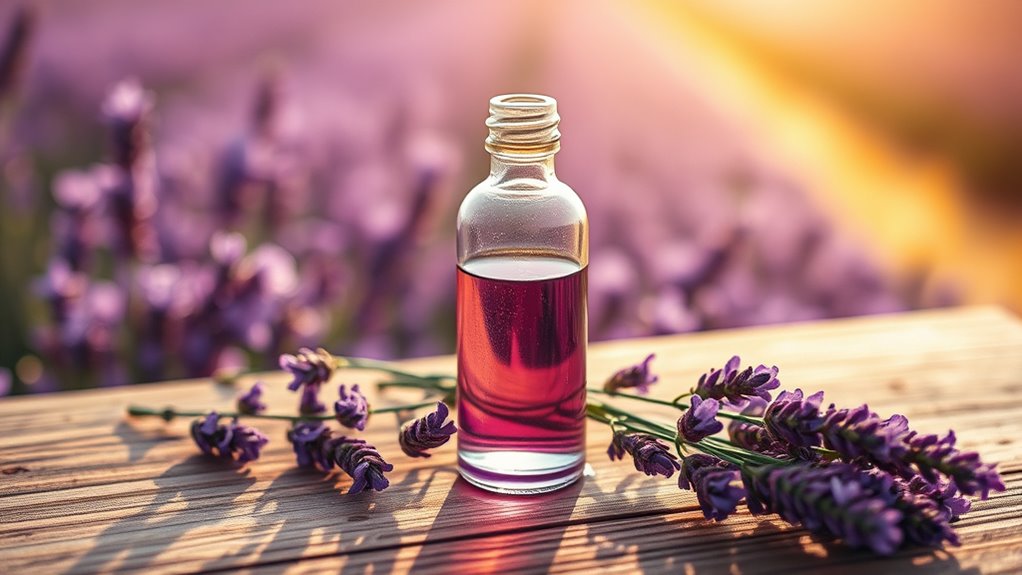
Lavender oil stands as one of nature’s most potent healing agents. Its versatility extends beyond its pleasant aroma, offering genuine therapeutic benefits for many common ailments. The oil contains compounds that work effectively against inflammation and certain microbes, while simultaneously promoting skin regeneration. Though widely available, many people underestimate its practical applications in home care. Perhaps its familiar scent masks its true medicinal potential. Understanding how lavender works might change how we approach minor health concerns entirely.
Some of the links in this article may be affiliate links. If you make a purchase through these links, we may earn a small commission at no extra cost to you. Thank you.
Science Behind Lavender’s Healing Properties
Although often overlooked as simply a pleasant-smelling fragrance, the science behind lavender oil’s healing properties is actually quite fascinating.
The complex lavender chemistry includes compounds like linalool and linalyl acetate, which directly interact with our body’s systems to promote healing.
These natural compounds trigger specific healing mechanisms when applied topically or inhaled. Perhaps most impressive is lavender’s ability to reduce inflammation while simultaneously fighting microbes that might cause infection.
I think what makes lavender truly remarkable is how its chemistry works on multiple fronts – calming irritation, encouraging cell regeneration, and even helping manage pain during the healing process.
Essential Oils That Complement Lavender for Enhanced Healing
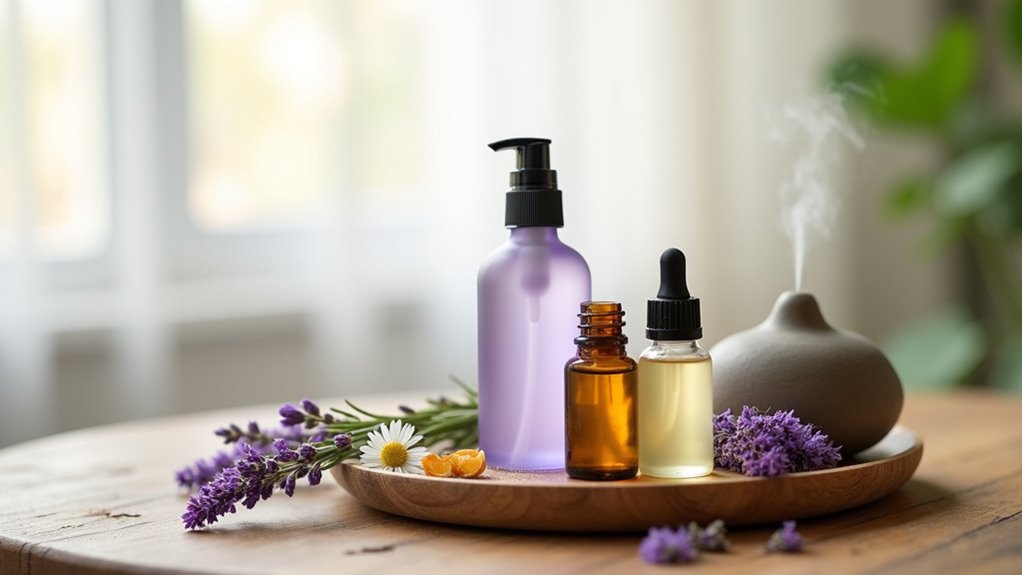
While lavender oil works wonders on its own, combining it with complementary essential oils can dramatically enhance its healing capabilities. The right peppermint synergy can provide cooling pain relief when mixed with lavender, especially for headaches and muscle pain.
Perhaps the most remarkable combinations come from pairing lavender with respiratory-supporting oils. Eucalyptus infusion, for instance, creates a powerful healing blend that addresses both inflammation and infection simultaneously.
| Oil Partner | Healing Enhancement |
|---|---|
| Tea Tree | Amplifies antimicrobial effects |
| Frankincense | Deepens tissue repair |
| Chamomile | Soothes irritated skin |
| Peppermint | Cooling pain relief |
| Eucalyptus | Respiratory support |
DIY Lavender Healing Blends for Common Ailments
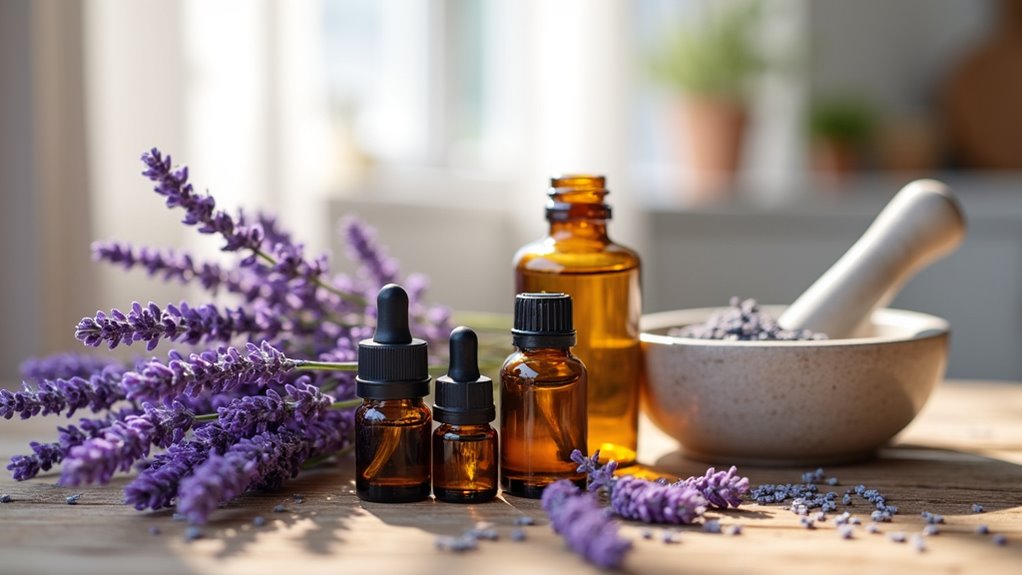
How can you harness the healing power of lavender oil for everyday health concerns?
Creating simple blends at home might be easier than you think, and they’re remarkably effective for family use.
For lavender headache relief, combine 5 drops of lavender with 2 drops each of peppermint and eucalyptus in a roller bottle with carrier oil. Apply to temples and neck for quick comfort.
Lavender skin soothing blends work wonders for minor irritations.
Perhaps the simplest approach is mixing 10 drops of lavender with an ounce of aloe vera gel. This combination calms inflammation while promoting healing.
Tools and Accessories for Maximizing Lavender’s Therapeutic Benefits
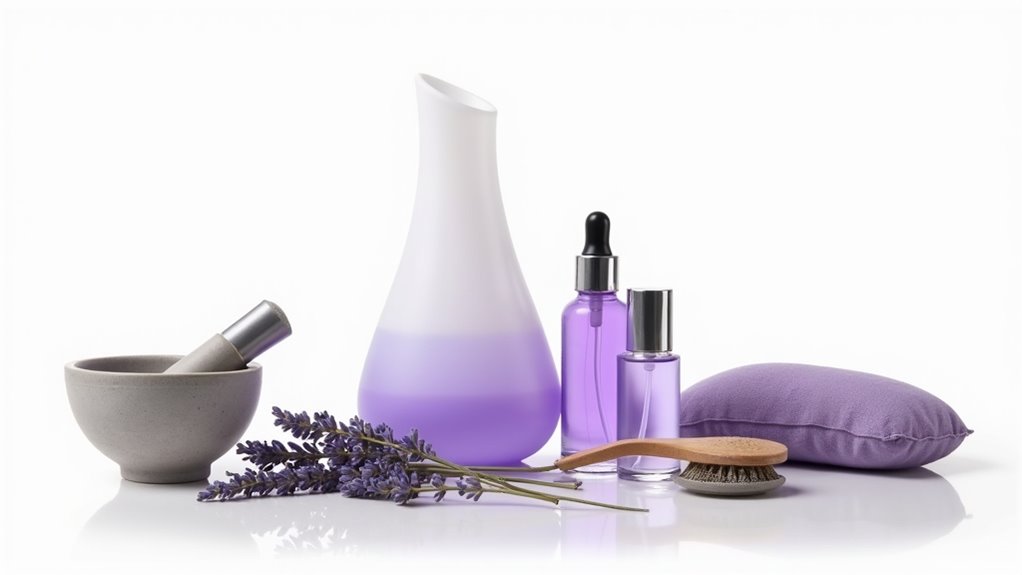
Efficiency transforms how we experience lavender oil’s therapeutic properties. The right accessories make all the difference in extracting maximum benefits from this versatile essential oil.
Various diffuser types, from ultrasonic to nebulizing models, deliver lavender’s healing properties throughout your space, perhaps creating the most immersive experience.
Roller bottles, I think, deserve special attention for their practicality. They allow for targeted application directly to pulse points or areas needing healing.
Some users keep several pre-mixed blends ready for different needs – one for sleep, another for headaches.
Storage solutions matter too; amber glass containers protect lavender oil from degrading in sunlight.
Frequently Asked Questions
Can Lavender Oil Be Used Directly on Open Wounds?
Applying lavender oil directly to open wounds is not recommended. While it possesses wound healing and essential properties, undiluted application may cause irritation. Dilution with carrier oils is safer.
Is Lavender Essential Oil Safe for Use During Pregnancy?
While lavender oil benefits are numerous, pregnancy safety concerns warrant caution. Experts recommend consulting healthcare providers before using essential oils during pregnancy due to potential hormonal effects and sensitivities.
How Long Does Properly Stored Lavender Essential Oil Last?
Time marches on, but properly stored lavender essential oil endures. Its shelf life typically ranges from 3-5 years when kept in dark glass containers away from heat and light using proper storage methods.
Can Children Safely Use Lavender Oil Products?
Lavender oil benefits extend to children when properly diluted. Generally safe for kids over age 2, appropriate lavender oil dosage requires significant dilution—typically 0.5-1% in carrier oil for topical use.
Does Lavender Oil Cause Photosensitivity When Applied Before Sun Exposure?
Unlike some essential oils, lavender oil doesn’t typically cause photosensitivity. It’s generally considered safe for skin application before sun exposure without increasing skin sensitivity to UV rays.
Conclusion
As twilight falls on our exploration of lavender’s healing world, its essence lingers—a violet mist of possibility. In gardens and medicine cabinets alike, this humble flower stands ready, perhaps our most faithful natural ally. Its delicate blooms belie remarkable strength, offering comfort to body and spirit through changing seasons of health. Lavender reminds us that sometimes, nature’s simplest gifts carry the most profound healing wisdom.
About The Author