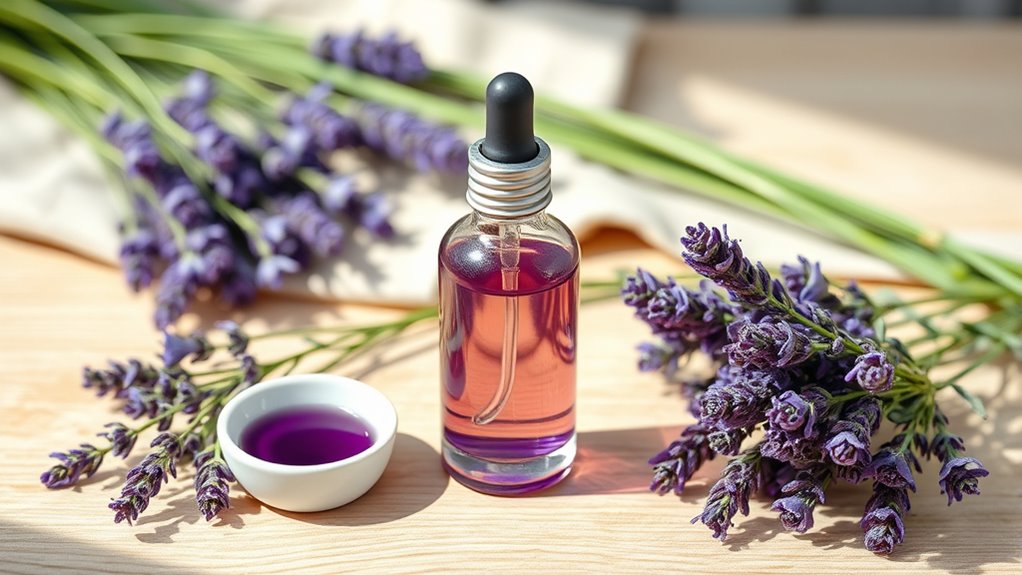
Lavender oil has quietly become a household staple for many seeking natural wellness solutions. Its versatility ranges from promoting better sleep to soothing minor burns—sometimes working where conventional remedies fall short. The gentle floral scent masks powerful properties that might surprise even skeptical minds. Perhaps what’s most remarkable is how this simple plant extract addresses such diverse concerns, from anxiety to skin inflammation. The purple-flowered plant’s concentrated essence holds secrets worth exploring.
Some of the links in this article may be affiliate links. If you make a purchase through these links, we may earn a small commission at no extra cost to you. Thank you.
The Power of Lavender Oil for Restful Sleep
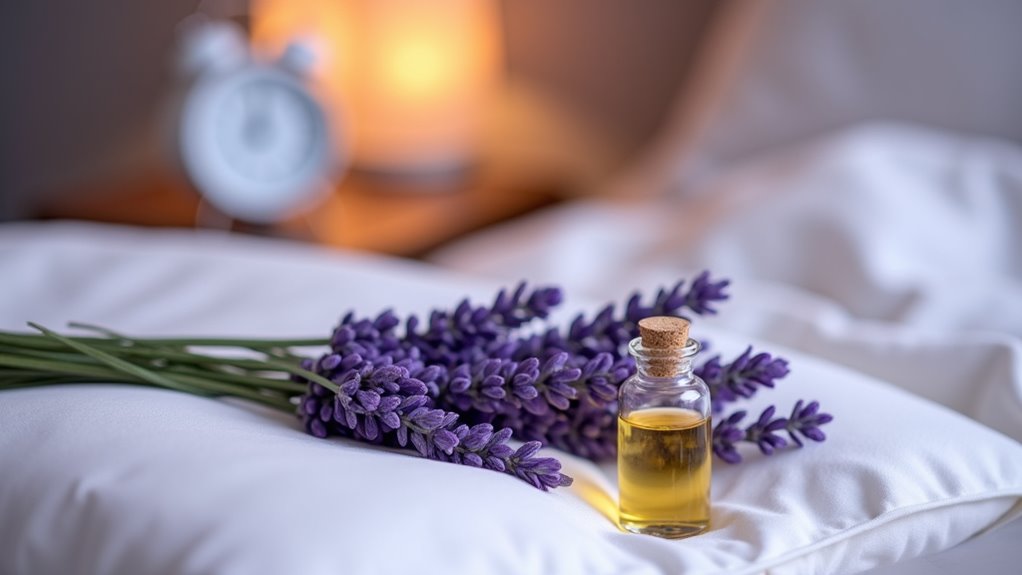
Why do so many people struggle with sleep in today’s fast-paced world?
Between digital distractions and mounting stress, quality rest seems increasingly elusive for many.
Lavender oil offers a natural solution that’s gained tremendous popularity.
Research suggests it promotes relaxation and improves sleep quality without the grogginess of medication.
Studies show lavender oil enhances relaxation and sleep without medication’s side effects.
Perhaps its most effective application involves applying a blend of lavender and cedarwood oils to the temples and feet before bedtime.
Many find that diffusing lavender blends in the bedroom creates a calming atmosphere, helping to quiet racing thoughts.
I think it’s especially helpful during periods of change or heightened anxiety.
Natural Skin Care Solutions With Lavender Oil

Beyond supporting sleep, lavender oil has become a cornerstone in natural beauty routines. This versatile oil offers remarkable benefits for various skin concerns, from acne to sunburn.
Perhaps one of the most appreciated lavender oil benefits is its ability to control bacteria without harsh chemicals, making it ideal for blemish-prone skin. When mixed with coconut oil or aloe vera, it can soothe irritation and reduce inflammation almost immediately.
Many enthusiasts create simple lavender oil recipes by combining a few drops with carrier oils, creating effective treatments for dry skin, eczema, and even age spots.
Regular application seems to help tone skin and prevent breakouts naturally.
Healing Burns and Sunburns Using Lavender Essential Oil

Lavender essential oil stands out as one of the most effective natural remedies for treating minor burns and soothing sunburned skin. Its natural antiseptic and antibacterial properties help prevent infection while stimulating circulation to speed up healing.
I’ve found that immediate application after exposure seems to work best for sunburn relief.
- Provides quick pain relief for kitchen burns and mild sunburns
- Contains antiseptic properties that prevent infection
- Stimulates blood circulation to promote faster healing
- Can be applied directly or mixed with aloe vera for enhanced burn healing
- Reduces inflammation and redness associated with sunburn relief
Many burn sufferers report that lavender oil considerably reduces discomfort almost immediately upon application, perhaps making it worth keeping in your kitchen first aid kit.
Soothing Anxiety and Stress With Aromatherapy

While many people turn to medication for relief from anxiety, essential oils like lavender offer a natural alternative that has been embraced for centuries. Its calming properties promote stress relief without the side effects often associated with pharmaceuticals.
Lavender oil can be diffused throughout rooms, creating an atmosphere that naturally enhances mood.
Perhaps the most practical application is carrying a small bottle for on-the-go anxiety management. Many find that adding a few drops to homemade hand lotion provides both immediate and lasting comfort.
Lavender’s portable anxiety relief puts wellness in your pocket, offering instant calm whenever life’s stresses arise.
For those seeking deeper relaxation, incorporating lavender oil into massages seems to amplify its anxiety-reducing effects.
Lavender Oil for Hair Growth and Treatment

When it comes to promoting healthy hair growth, few natural remedies have gained as much recognition as lavender essential oil. This versatile oil offers remarkable benefits for those struggling with hair loss or simply wanting healthier locks.
The lavender oil benefits for hair treatment include:
- Stimulates follicles to encourage new growth
- Effectively treats both lice and nits
- Soothes dry, itchy scalp conditions
- Works best when massaged directly into the scalp
- Shows peak results with twice-weekly application
Perhaps most impressive is how lavender oil works on a deeper level, addressing the underlying issues that often contribute to hair problems.
Many users report noticeable improvements after consistent use.
First Aid Applications: Cuts, Wounds and Insect Bites
Many first aid kits across the world could benefit from the addition of a small bottle of lavender essential oil. This versatile oil has powerful anti-microbial properties that make it particularly effective for treating minor cuts, wounds, and those annoying insect bites we all encounter.
For first aid applications, lavender can be applied directly to small cuts or diluted with coconut oil for larger areas.
Perhaps its most practical use is for bug bites, where it helps reduce both swelling and itching while preventing infection.
Lavender essential oil’s most practical application is treating bug bites—reducing swelling and itching while fighting potential infection.
I think lavender’s dual ability to both disinfect and soothe makes it uniquely valuable in everyday first aid situations.
Safe Usage Guidelines for Children and Pets
Lavender oil, despite its gentle reputation, requires special consideration when used around children and pets.
When applying to little ones or furry family members, proper dilution ratios are essential for safety while maintaining therapeutic benefits.
- For children: Dilute at 0.5-1% (1-2 drops per tablespoon of carrier oil)
- For infants over 3 months: Use only 0.25% dilution when necessary
- For cats: Exercise extreme caution as they lack certain liver enzymes
- For dogs: Start with 0.5% dilution and monitor for reactions
- For all pet considerations: Apply to small areas first as a patch test
Frequently Asked Questions
What’s the Shelf Life of Lavender Essential Oil?
Lavender essential oil typically has a shelf life of 3-5 years when properly stored in a dark glass bottle away from heat, light, and air exposure.
Can I Ingest Lavender Oil for Health Benefits?
Consuming lavender oil is generally not advised by health professionals due to safety concerns. While some products are specially formulated for consumption, regular lavender essential oil lacks established dosage guidelines and may cause adverse reactions.
Does Lavender Oil Stain Clothing or Fabrics?
Pure lavender oil can leave oily stains on fabrics. For proper fabric care, dilute the oil before application near clothing and treat any stains immediately with dish soap or stain remover.
How Can I Tell if My Lavender Oil Is Pure?
Coincidentally, many wonder about oil authenticity. Pure lavender oil has a distinctive aroma profile—sweet, herbaceous, not synthetic. Check extraction methods on labels; steam distillation indicates quality. Price and reputable sources also matter.
Can Lavender Oil Help With Menstrual Cramps?
Lavender oil may provide menstrual relief when used as a natural remedy for cramps. Its anti-inflammatory and calming properties potentially help reduce discomfort when applied topically with a carrier oil.
Conclusion
As the sun sets, lavender oil stands as nature’s gentle guardian. Its purple essence flows through our daily routines – calming restless minds, healing tender skin, and perhaps offering the peace we’re all searching for. Like twilight’s soft glow, it wraps around our wellness journey, touching everything from troubled sleep to wounded skin. In this small bottle, I think, lies a universe of healing that our ancestors understood all too well.
About The Author