
Back problems can derail a senior’s independence faster than you’d think—actually, it’s probably the most overlooked foundation issue in aging bodies. Most folks don’t realize their spine works like the main support beam in a house; when it’s compromised, everything else starts to sag or shift. Well, the good news is strengthening exercises can reinforce this critical structure, but… maybe not all exercises are created equal for older adults.
Some of the links in this article may be affiliate links. If you make a purchase through these links, we may earn a small commission at no extra cost to you. Thank you.
Why Lower Back Health Matters for Seniors

Most seniors don’t realize it, but their lower back acts like the foundation of a house – when it starts to weaken, everything else begins to suffer. Think about it – you wouldn’t ignore cracks in your home’s foundation, right? Well, your spine deserves the same attention. A weak lower back throws off your body’s structural integrity, leading to poor posture and compensatory movements that stress other joints. It’s like a domino effect, really. When seniors maintain strong lower backs, they’re fundamentally reinforcing their body’s framework, preventing pain and maintaining independence for daily activities.
Types of Exercises That Benefit Your Lower Back

Picture your lower back exercise routine like building a toolkit – you wouldn’t try to construct a house with just a hammer, would you? Well, your spine needs the same variety of support tools.
Core strengthening acts like your foundation work – it’s absolutely essential for structural integrity. Stretching exercises? Think of them as your flexibility joints, keeping everything moving smoothly. Strength training provides the heavy-duty framework, while balance exercises are your safety equipment preventing falls.
I’ve seen too many people focus on just one type, but honestly, you need all four working together for a solid back.
Five Effective Lower Back Exercises to Try
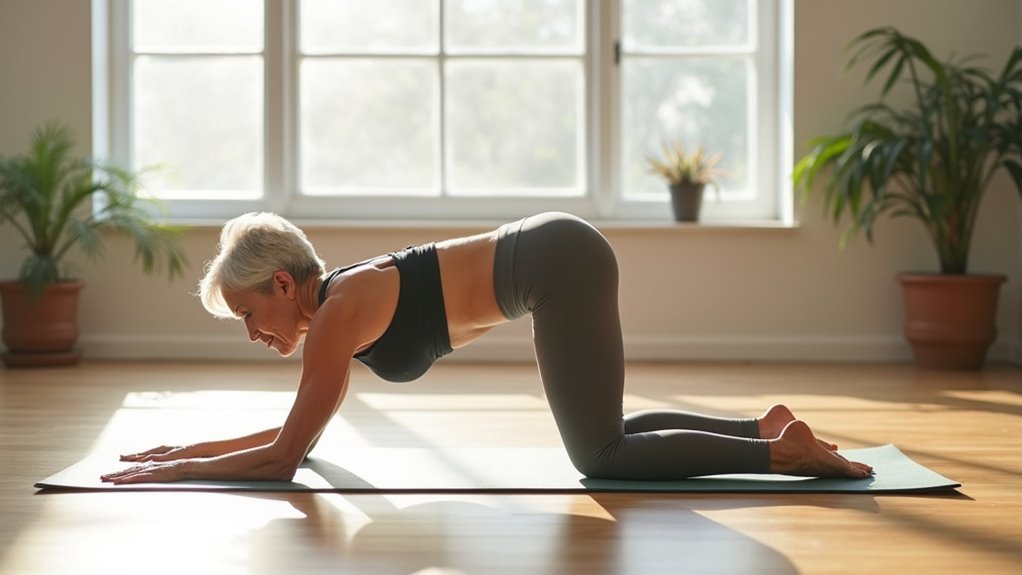
Transform your daily routine with these five powerhouse exercises that’ll actually make a difference in how your back feels. The Chair-Assisted Single-Leg Romanian Deadlift builds stability like reinforcing a wobbly foundation—you’re strengthening one leg while keeping balance. Dumbbell Deadlifts work your major muscle groups without beating up your joints. Cat Camel stretches are, well, exactly what they sound like—arching and rounding your spine to keep it flexible. Bird Dog exercises engage multiple muscles at once, kind of like… actually, think of it as tuning up your core’s engine. Push Up Planks tone everything while maintaining proper alignment.
Working With a Personal Trainer for Optimal Results
Finding the right personal trainer can honestly make or break your back strengthening journey—think of it like hiring the right contractor for a home renovation. You wouldn’t trust just anyone with your foundation, would you? A qualified trainer specializes in senior fitness and understands how bodies change with age. They’ll assess your current mobility, maybe identify muscle imbalances you didn’t know existed, and create a customized plan that actually works.
A qualified trainer is like hiring the right contractor—you wouldn’t trust just anyone with your foundation.
Here’s what to look for:
- Certification in senior fitness – not just general training
- Experience with injury rehabilitation – essential for back issues
- Patient communication style – someone who explains things clearly
Getting Started With Your Lower Back Exercise Routine
Most seniors approach their first lower back exercise routine with a mix of enthusiasm and—let’s be honest—a bit of nervous energy, which is completely normal when you’re dealing with something as important as your spine’s foundation.
Starting smart means building your routine like constructing a solid foundation—you don’t rush the groundwork. Begin with two sessions per week, maybe three if you’re feeling ambitious.
| Week | Exercise Duration | Rest Between Sets |
|---|---|---|
| 1-2 | 10-15 minutes | 60-90 seconds |
| 3-4 | 15-20 minutes | 45-60 seconds |
| 5-6 | 20-25 minutes | 30-45 seconds |
| 7+ | 25-30 minutes | 30 seconds |
Think of it like learning to drive again—start slow, master the basics.
About The Author


