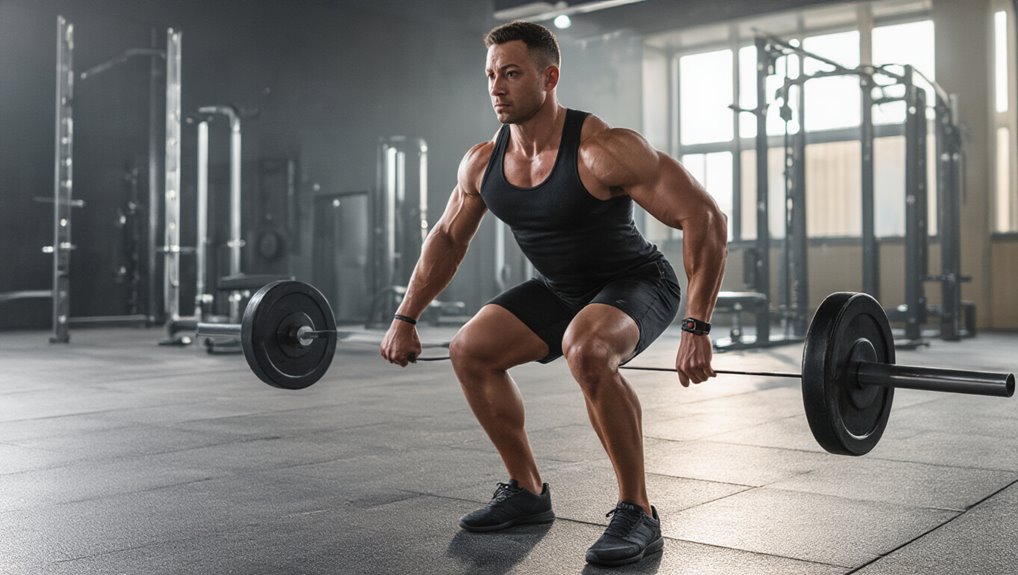
Building a strong back isn’t just about looking good—it’s like reinforcing the foundation of a house. Without proper structural support, everything else starts to break down. Most people, well, they think pull-ups are enough, but that’s probably not going to cut it. Barbell movements actually target the deep stabilizing muscles that dumbbells can’t reach. The real question isn’t whether you should use barbells for back training, but which specific exercises will give you the most bang for your buck.
Some of the links in this article may be affiliate links. If you make a purchase through these links, we may earn a small commission at no extra cost to you. Thank you.
Barbell Deadlift for Maximum Glute and Back Development
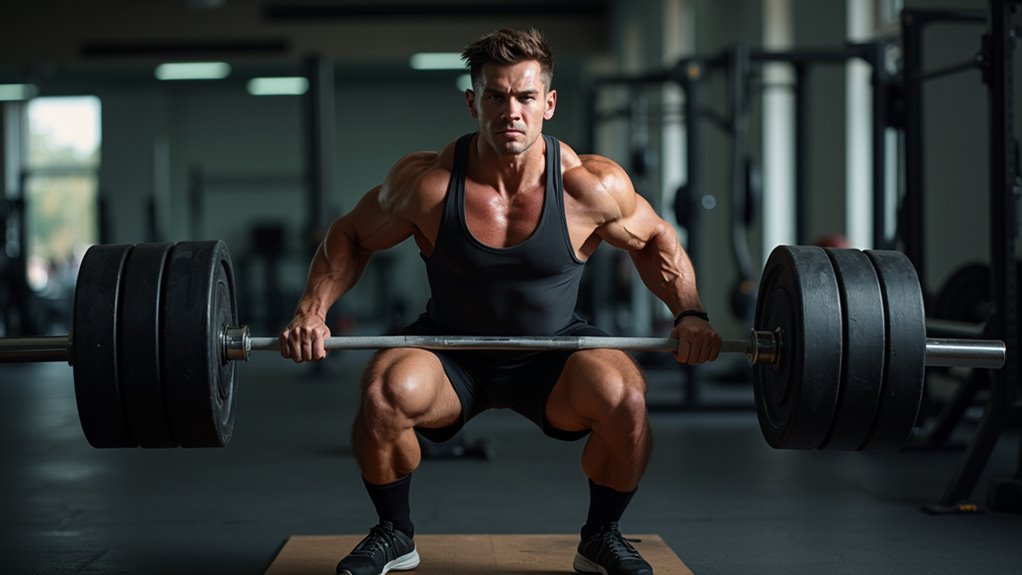
Picture the barbell deadlift as the foundation of your back-building house – without it, everything else you’re trying to build just won’t hold up properly. This move’s like your strongest power tool for developing the gluteus maximus and back muscles. You’ll want to start with feet hip-width apart, knees slightly bent. Grip that barbell with an overhand grip, hands shoulder-width apart. Keep your back straight throughout the entire lift – think of it as maintaining proper form on a construction site. The beauty is you can perform this outdoors without any special equipment, making it incredibly accessible for building strength.
Barbell Sumo Deadlift to Target Hip Flexibility and Strength
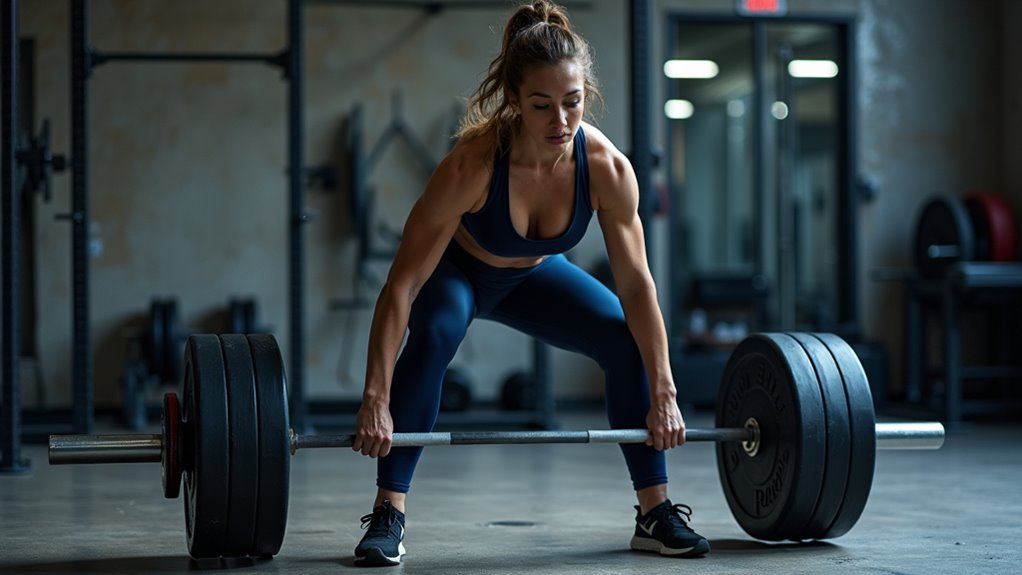
While the traditional deadlift builds that solid foundation, the sumo deadlift is like switching from a standard drill bit to a specialized attachment – it gets into those hard-to-reach places your regular tool can’t quite hit. You’ll position your feet wider than shoulder-width with toes pointed outward. Think of it as setting up a stable tripod. Grip the barbell with hands just outside your legs – narrower than you’d expect. This stance targets your glutes and hamstrings differently, actually improving hip flexibility while building strength. It’s probably the best variation for folks with longer torsos or hip mobility issues.
Barbell Romanian Deadlift for Hip Mobility and Muscle Activation
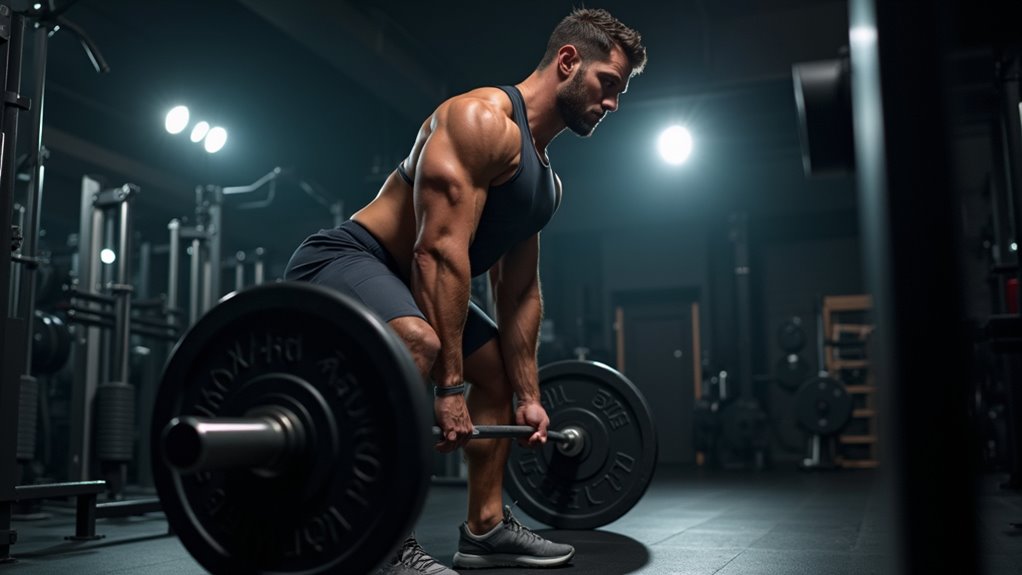
Think of the Romanian deadlift as the precision instrument in your barbell toolkit – it’s all about controlled movement and hitting those specific muscle groups that regular deadlifts sometimes miss. This exercise really zeroes in on hip mobility while firing up multiple muscle groups simultaneously.
The Romanian deadlift focuses on that hip hinge movement pattern – you know, the one that’s essential for everyday activities:
Master the hip hinge pattern that powers your daily movements – from picking up groceries to playing with kids.
- Start with feet hip-width apart, barbell positioned in front
- Bend at hips, lowering your torso until thighs are parallel to floor
- Keep that back straight and knees slightly bent throughout
- Thrust hips forward to return upright
Barbell Good Morning to Build Lower Back Power
Master the barbell good morning and you’ll develop serious lower back strength that translates directly into better performance on every other lift in your routine. Think of it like reinforcing the foundation of a house – you’re building the structural support your spine needs.
Position the barbell on your shoulders, step forward, and hinge at the hips. Keep your back straight as you lower the weight toward your knees. It’s actually trickier than it looks initially, but the movement pattern becomes second nature with practice. Focus on 10-12 controlled reps to build that posterior chain strength effectively.
Barbell Rack Pull for Core Stability and Posterior Chain Strength
Set up the rack pull correctly and you’ll build a rock-solid foundation that supports every heavy lift in your arsenal. This exercise works like a crane’s support system—actually, it’s probably the best way to strengthen your posterior chain muscles. Position the barbell at knee height in the rack, then grip it shoulder-width apart.
Here’s what makes rack pulls effective:
- Targets posterior chain muscles essential for athletic performance
- Builds core stability through heavy loading patterns
- Improves deadlift lockout strength considerably
- Reduces injury risk by strengthening supporting muscles
Pull to your thighs while maintaining that 45-degree back angle.
About The Author


