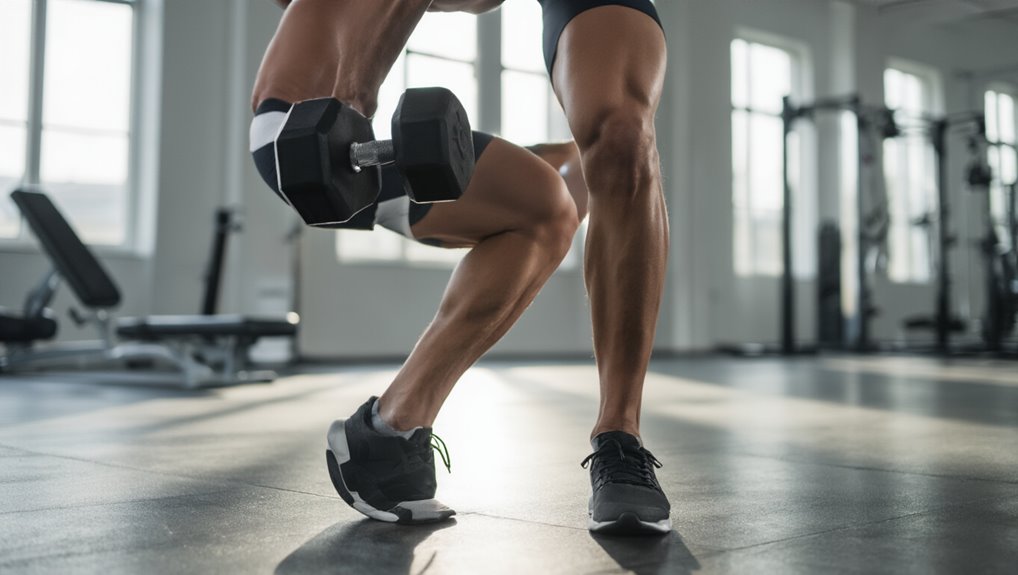
You’ve probably noticed that most people focus on building their quads and glutes, but honestly, they’re missing an essential piece of the puzzle. Your hamstrings are like the foundation of a house – if they’re weak, everything else becomes unstable. I think it’s time we fix that oversight. Well, with the right dumbbell exercises, you can actually target these muscles more effectively than you’d expect. Here’s why your current leg routine might be leaving you vulnerable.
Some of the links in this article may be affiliate links. If you make a purchase through these links, we may earn a small commission at no extra cost to you. Thank you.
Why Hamstring Training Is Essential for Lower Body Development

When most people think about leg workouts, they’re usually focused on building impressive quads or getting that perfect squat form—but honestly, they’re missing a huge piece of the puzzle. Your hamstrings are like the foundation of a solid structure—neglect them, and everything else becomes unstable. These muscles handle knee bending, hip extension, and leg rotation, making them essential for athletic performance and injury prevention. Without proper hamstring strength, you’re basically building your lower body on shaky ground. Think of it as trying to frame a house with weak support beams—it just won’t hold up long-term.
Key Dumbbell Exercises for Maximum Hamstring Activation

While there are dozens of hamstring exercises you could choose from, I’ve found that certain dumbbell movements just hit differently—they’re like using the right tool for the job instead of trying to hammer a nail with a wrench. You’ll want to master these four movements: dumbbell deadlifts, leg curls, good mornings, and weighted glute bridges. Each targets your hamstrings from different angles, kinda like how you’d use different drill bits for different materials. The deadlift’s your workhorse—it’ll build serious strength. Leg curls isolate those muscles perfectly, while good mornings teach proper hip hinge mechanics.
Mastering Proper Form and Technique for Each Movement

Getting the form right on these exercises is honestly more important than how much weight you’re throwing around—think of it like learning to use power tools safely before you tackle your first big project. You wouldn’t grab a circular saw without checking the blade alignment first, right? Same principle here. Start with lighter dumbbells and nail the movement pattern. Keep your spine neutral during deadlifts—imagine there’s a level sitting on your back. For squats, sit back like you’re actually reaching for a chair. Don’t rush the eccentric portion; control beats chaos every time.
Complete Workout Routine With Sets and Repetitions
Since you’ve got the form dialed in—think of it like having your measurements twice-checked before cutting expensive lumber—it’s time to put together a solid routine that’ll actually build the strength you’re after. Here’s your blueprint: Start with Dumbbell Deadlifts, 3 sets of 8-10 reps. Follow with Box Squats, same sets and reps. Then hit Leg Curls for 4 sets of 10-12—these really target those hamstrings. Finish with Weighted Glute Bridges, 3 sets of 10-12. Rest 30-60 seconds between sets. It’s straightforward construction work for your legs.
Equipment Requirements and Setup for Home Training
When it comes to setting up your home leg workout, you’re looking at one of the simplest equipment lists in fitness—honestly, it’s like needing just a hammer and nails for a basic project. You’ll need a pair of dumbbells. That’s it. Well, maybe grab a sturdy bench or box for the squats, but even a couch works in a pinch. The beauty here is you don’t need fancy machines or tons of space. Any flat surface works—your living room, garage, or bedroom. It’s honestly invigorating how uncomplicated this setup is compared to other workouts.
Safety Tips and Injury Prevention Strategies
While equipment setup couldn’t be simpler, injury prevention—now that’s where things get serious, and honestly, it’s the difference between building strength and ending up sidelined for weeks. First thing: warm up properly. Your hamstrings are like cold rubber bands—stretch them too fast, they’ll snap. Start with light bodyweight movements for five minutes. Form is everything here. I can’t stress this enough—perfect your technique with lighter weights before going heavy. Keep your back neutral during deadlifts, and don’t let your knees cave inward during squats. Listen to your body; pain isn’t gains.
Expert Guidance From Certified Fitness Professional
Following proper safety protocols becomes a whole lot easier when you’ve got someone who actually knows what they’re doing in your corner. That’s where Adnan Munye comes in—he’s a certified personal trainer who’s been around the block with everything from weight loss to injury rehab. Think of him as your safety foreman on the job site. With his background in multiple sports and deep understanding of body mechanics, he knows how to keep you injury-free while building serious leg strength. Having that expertise backing your routine? Well, it’s like having blueprints for success.
About The Author


