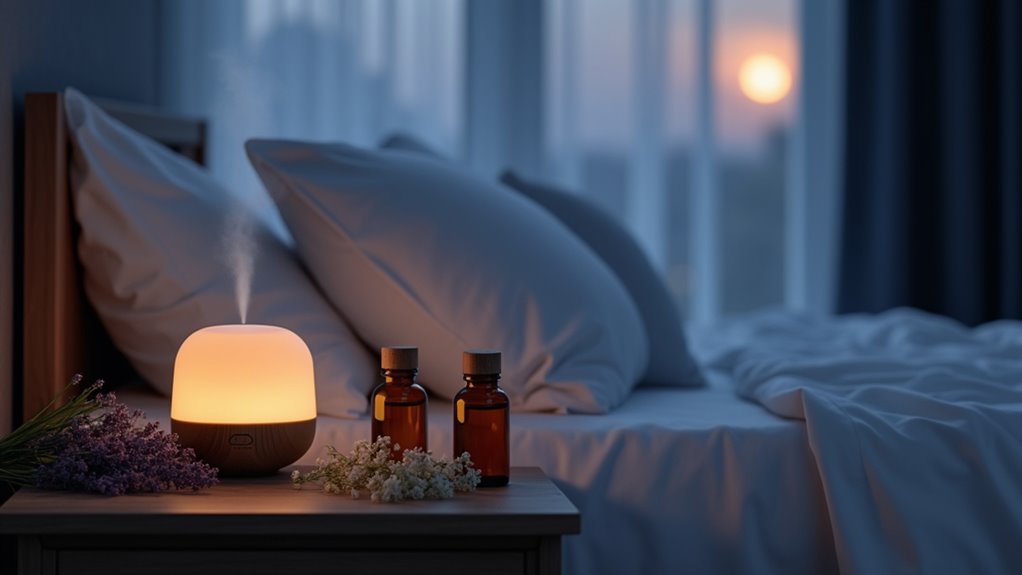
Essential oils have quietly transformed the way people approach sleep troubles. Many find themselves turning to these natural remedies when counting sheep simply doesn’t cut it anymore. The aromatic compounds in these plant extracts interact with our nervous system in fascinating ways, potentially easing the shift from wakefulness to slumber. Not every oil works the same for everyone, of course. Some might respond better to lavender’s gentle embrace while others might need vetiver’s earthy grounding. The question remains: which scents might reveal your best night’s rest?
Some of the links in this article may be affiliate links. If you make a purchase through these links, we may earn a small commission at no extra cost to you. Thank you.
The Science Behind Essential Oils and Sleep
While scientists continue to study the complex relationship between aromatherapy and sleep, there’s growing evidence that essential oils can greatly impact our neurological systems. The distinct molecular structures in these oils interact with our limbic system, potentially triggering relaxation responses that prepare the body for sleep.
Recent sleep research suggests that certain aromatic compounds may influence brain wave activity and neurotransmitter production. Perhaps most compelling is how aroma chemistry plays a role in stimulating receptors that regulate our circadian rhythm. Additionally, compounds like linalool in lavender have been shown to produce calming effects that can enhance sleep quality.
Though more studies are needed to fully understand these mechanisms, many sleep specialists acknowledge that the right essential oils can create physiological conditions conducive to deeper, more restorative sleep patterns.
Top 10 Essential Oils for Better Sleep Quality
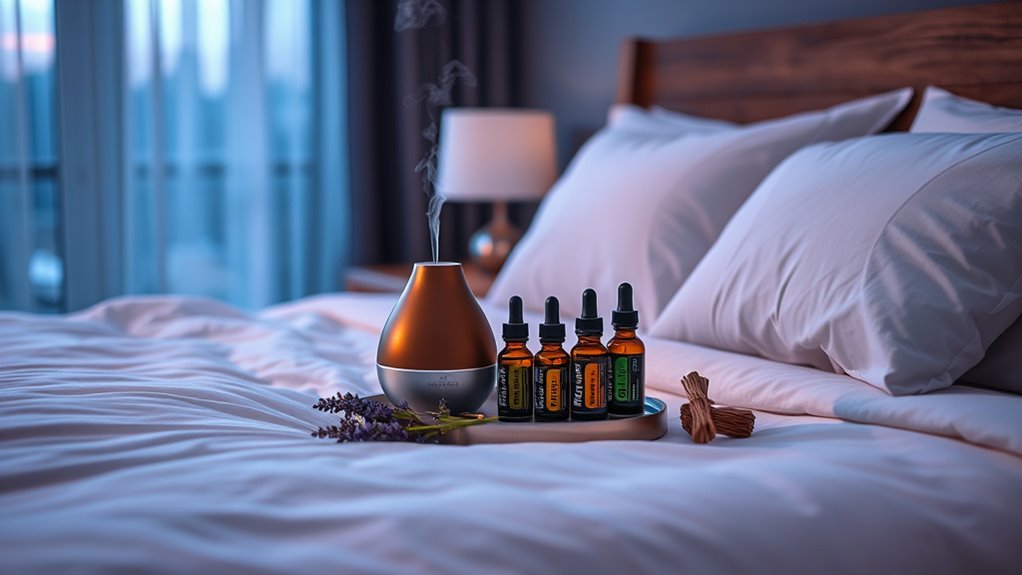
Although many essential oils offer relaxation benefits, certain varieties stand out for their remarkable ability to induce and sustain quality sleep. When incorporated into sleep enhancement techniques, these natural remedies can transform restless nights into peaceful slumber. Perhaps the most consistently effective options include lavender, vetiver, and chamomile, though individual responses may vary.
Nature’s sleep symphony relies on essential oils that calm the mind and relax the body when conventional remedies fail.
- Lavender’s gentle floral scent enveloping a darkened bedroom as moonlight filters through curtains
- Chamomile’s sweet, apple-like aroma warming the air around a cozy bed
- Frankincense’s rich, earthy fragrance creating a sanctuary-like atmosphere
- Cedarwood’s woody notes evoking a peaceful forest retreat
Essential oil benefits extend beyond pleasant scents—they work with the body’s chemistry to promote relaxation. To maximize their effectiveness, it’s essential to choose high-quality essential oils that have been extracted via steam distillation or cold pressing.
Ways to Use Essential Oils in Your Bedtime Routine
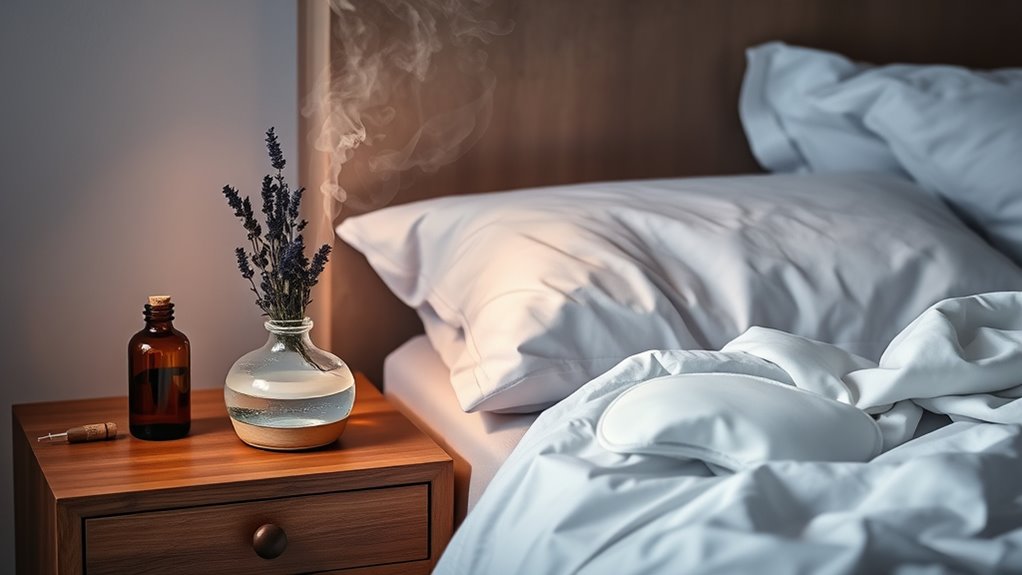
Integration of essential oils into a nightly routine creates powerful sleep-inducing rituals that signal to both mind and body that it’s time to rest. Perhaps the most accessible method is adding a few drops to a diffuser, which gently fills the bedroom with calming aromas.
For a more direct approach, try applying diluted oils to pulse points or adding them to a warm bath before bed. Some people find that lightly misting pillowcases or keeping a lavender sachet nearby enhances their bedtime rituals. Inhaling lavender compounds increases slow-wave sleep patterns, contributing to a more restorative rest.
Creating a consistent, calming environment is key – the familiar scents become powerful cues that help shift from day to night.
Creating Your Own Sleep-Enhancing Oil Blends
Creating your own sleep-enhancing essential oil blends offers a deeply personal approach to addressing sleep challenges. By experimenting with different combinations of oils like lavender, chamomile, and vetiver, you can craft a custom blend perfectly suited to your needs. Perhaps the most rewarding aspect is discovering which scents work best for your particular sleep issues.
The personal journey of crafting sleep blends unlocks the perfect aromatic key to your unique restful night.
- Lavender and chamomile mixed in equal parts creates a gentle, floral aroma that soothes an active mind
- Cedarwood and vetiver blend for a grounding, earthy scent that promotes deep sleep
- Clary sage with a touch of frankincense helps quiet anxious thoughts before bed
- Marjoram and ylang-ylang combination creates a sweet, herbaceous fragrance
Proper essential oil storage in dark glass containers guarantees your custom blend recipes maintain potency.
Essential Oil Safety Tips for Nighttime Use
Safe use of essential oils at night requires careful attention to several important guidelines. While these oils offer wonderful sleep benefits, they’re potent substances that need proper handling. Proper dilution ratios are vital – most experts recommend no more than 2-3% concentration in carrier oils for bedtime application.
Allergy awareness is essential before incorporating any oil into your routine. Perhaps test a small amount on your wrist before full application.
| Safety Consideration | Recommendation | Why It Matters |
|---|---|---|
| Dilution | 2-3 drops per tablespoon of carrier oil | Prevents skin irritation |
| Application Area | Feet, wrists, chest | Avoids eye and mouth contact |
| Children/Pets | Use extra caution, lower dilution | More sensitive systems |
| Diffuser Time | 30-60 minutes before bed | Prevents overexposure |
Frequently Asked Questions
How Long Before Bedtime Should I Apply Essential Oils?
For ideal absorption and effectiveness, essential oil application timing should be 30-60 minutes before bedtime, allowing the aromatic compounds to fully integrate with the body’s systems during pre-sleep routines.
Can Essential Oils Help With Sleep Apnea or Other Disorders?
While certain aromatic remedies may offer complementary benefits for slumber challenges, research is limited on essential oils benefits specifically for sleep apnea solutions. Medical consultation remains necessary for diagnosed sleep disorders.
Are Essential Oils Safe for Children and Pregnant Women?
Essential oil safety varies for children and pregnant women. Many experts recommend caution, dilution, and consulting healthcare providers. Some oils are contraindicated during pregnancy, while others require specific pregnancy guidelines for appropriate use.
Will I Develop Tolerance to Sleep-Enhancing Essential Oils?
Research suggests most people do not develop significant tolerance to essential oil efficacy for sleep. Rotating different oils periodically can help maintain effectiveness if individuals notice changing tolerance levels over time.
Can Essential Oils Interact With Sleep Medications?
Studies show 32% of adults taking sleep medications use complementary remedies. Essential oil interactions with sleep medication effects can occur, as oils may potentiate or reduce pharmaceutical effectiveness through shared metabolic pathways.
Conclusion
Essential oils offer a natural pathway to better sleep that’s worth exploring. Consider Sarah, who struggled with insomnia for years until incorporating lavender oil into her nightly routine. After just two weeks, she reported falling asleep 30 minutes faster and waking less frequently. While not a cure-all, perhaps these aromatic allies might be the missing piece in your quest for those elusive restful nights.
About The Author
