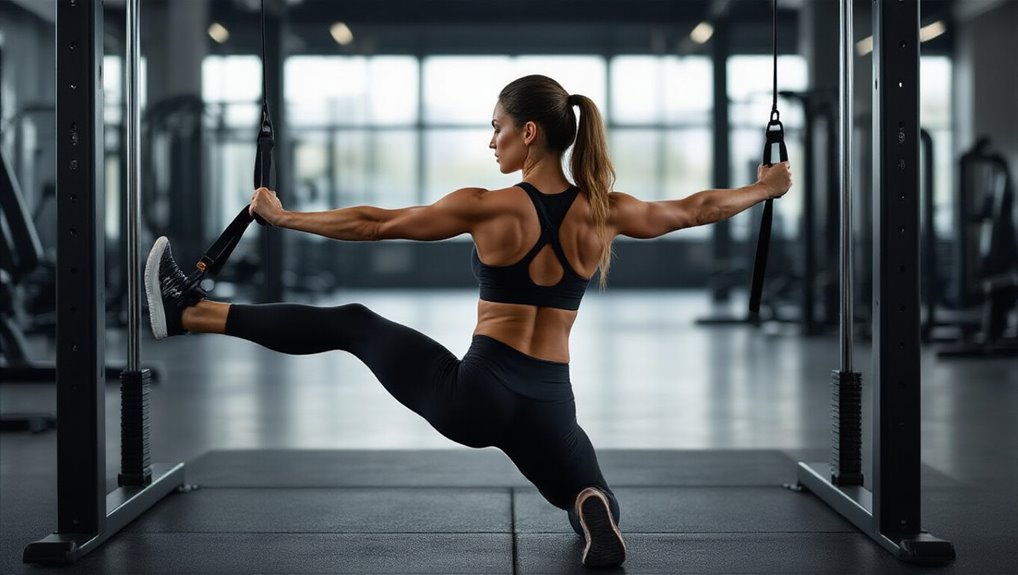
Most people think they’re building strong glutes with squats and deadlifts, but honestly, they’re missing a vital piece of the puzzle. Cable kickbacks might look simple—almost too easy, actually—but they’re like the finishing work on a construction project. You can have solid framing, but without proper trim and detail work, well, the whole thing falls short. The technique seems straightforward, yet there’s more precision required than most realize to truly access their potential.
Some of the links in this article may be affiliate links. If you make a purchase through these links, we may earn a small commission at no extra cost to you. Thank you.
The Power Behind Strong Glutes: More Than Just Aesthetics

Most fitness enthusiasts think of glute training as purely cosmetic work—something to make their jeans fit better or boost confidence at the beach. But here’s the thing—your glutes are actually the foundation of your entire movement system. Think of them like the concrete foundation of a house. When that foundation is weak, everything above it starts to crumble. Weak glutes don’t just look bad; they create a domino effect throughout your body. You’ll probably notice knee pain, hip issues, and that nagging lower back discomfort that just won’t quit. Strong glutes keep everything properly aligned.
Target Muscles: Understanding What Cable Kickbacks Activate

Now that we recognize why glute strength matters so much for overall body mechanics, let’s break down exactly which muscles cable kickbacks target—and honestly, it’s more extensive than you might think. Unlike compound movements such as squats, cable kickbacks work like a precision tool, isolating specific muscle groups.
| Muscle Group | Primary/Secondary | Function |
|---|---|---|
| Gluteus Maximus | Primary | Hip extension, power |
| Gluteus Medius | Primary | Hip stabilization |
| Gluteus Minimus | Primary | Hip abduction |
| Hamstrings | Secondary | Assists hip extension |
This isolation approach guarantees every glute fiber gets recruited properly—think of it as targeted construction work rather than demolition.
Step-by-Step Cable Glute Kickback Technique

Perfect form makes the difference between wasted effort and real glute gains—honestly, it’s like the difference between using a hammer properly versus just swinging it around. Start by attaching an ankle cuff to the low pulley cable machine. Secure it around your working leg’s ankle, then step back to create tension. Plant your support leg firmly and grip the machine for balance. Keep your knees slightly bent—think of it as your foundation. Now kick that leg straight back, focusing on squeezing your glute at the top. Hold for two seconds, then control the return.
Maximize Your Results: Essential Tips for Perfect Form
Getting the form right isn’t just about following instructions—it’s like building a house where every detail matters, or you’ll end up with wobbly walls. Control your tempo like you’re operating precision machinery—two seconds up, squeeze for one, then lower slowly over three to four seconds. Don’t rush the foundation work here. Focus on range of motion, not heavy weight. Think of it like fine carpentry; the squeeze at the top is where the magic happens. Actually, I’d say most people skip this part, but that contraction is your money shot for glute activation.
Programming Cable Kickbacks for Your Fitness Goals
Most lifters want to know exactly where cable kickbacks fit into their training blueprint, and honestly, it’s simpler than you might think. These exercises work best as finishers after your heavy compound movements—think of them as the detail work after you’ve laid the foundation.
| Goal | Programming Approach |
|---|---|
| Strength | 3-4 sets, 8-12 reps, moderate weight |
| Hypertrophy | 3-5 sets, 12-15 reps, focus on squeeze |
| Athletic Performance | 2-3 sets, 10-12 reps, explosive movement |
| Muscle Activation | 2-3 sets, 15-20 reps, light weight |
Place them after squats or deadlifts when your glutes are already warmed up but not completely exhausted.
About The Author


