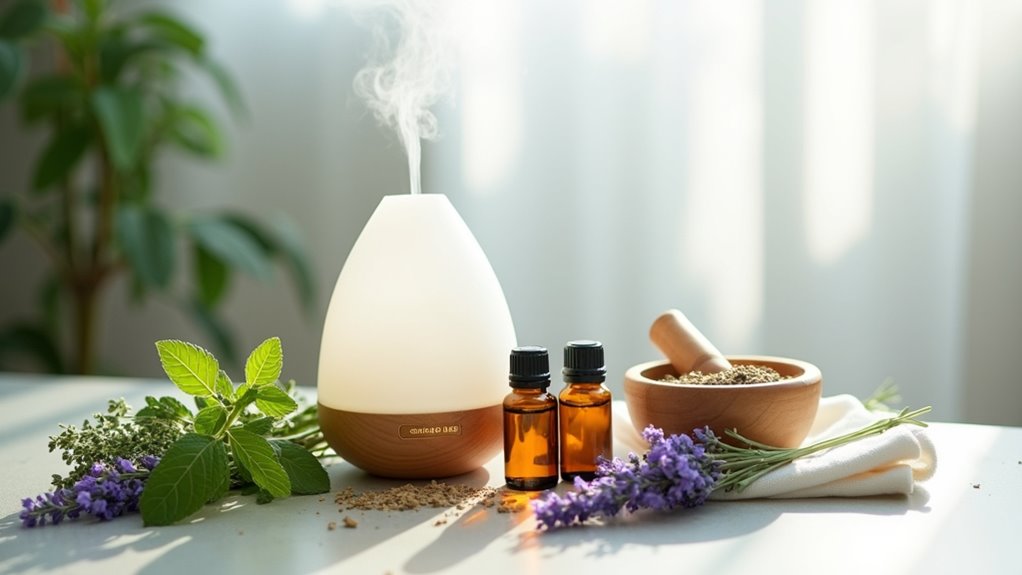
Essential oils might just be the unsung heroes in the world of allergy relief. Many people overlook these natural extracts, but research suggests they possess genuine anti-inflammatory and antihistamine properties. A good friend of mine swears by lavender oil for her hay fever—perhaps there’s something to it. While no natural remedy works for everyone, essential oils offer a compelling alternative to conventional medications, especially for those tired of pharmaceutical side effects. The science behind their effectiveness deserves closer examination.
Some of the links in this article may be affiliate links. If you make a purchase through these links, we may earn a small commission at no extra cost to you. Thank you.
Understanding the Science Behind Essential Oils for Allergy Relief

While many people view essential oils as merely pleasant fragrances, the science behind their effectiveness for allergy relief is actually quite fascinating.
Essential oils like cedarwood and lavender contain natural antihistamine and anti-inflammatory compounds that can help reduce the body’s allergic response.
Nature has gifted us anti-inflammatory solutions in essential oils like cedarwood and lavender, offering relief from allergic reactions.
When inhaled, these compounds interact with our respiratory system, potentially easing inflammation in the lungs and airways.
Take blue tansy oil, for example – its azulene content specifically targets inflammation on nerves.
Perhaps most interesting is how oils like rosemary, with its strong cineole content, can help clear blocked tissues that allergies often cause.
Additionally, essential oils can promote emotional wellness by triggering relaxation-related brain receptors, which may further alleviate allergy symptoms.
Top 5 Essential Oils That Combat Seasonal Allergies
Five essential oils stand out for their remarkable ability to combat seasonal allergies, each offering unique properties that can help ease discomfort during allergy season.
Cedarwood oil, with its sweet aroma, contains antihistamine properties that reduce inflammation in the respiratory system. Additionally, cedarwood essential oil has a long history of use in various cultures for its health benefits, making it a trusted option for holistic wellness.
Lemongrass oil’s fresh scent helps calm inflamed lungs, promoting easier breathing. Blue Tansy, rich in azulene, prevents inflammation on nerves, while Lavender works as a natural antihistamine for mild allergies. Perhaps the most penetrating is Rosemary oil, which clears blocked tissues with its strong cineole scent.
I think combining these oils might provide extensive relief for those struggling with seasonal allergies.
How to Use Essential Oils Effectively for Respiratory Comfort

Now that we’re familiar with the top essential oils for allergies, understanding the proper application methods can maximize their effectiveness for respiratory relief.
The most common techniques include diffusion, steam inhalation, and topical application with carrier oils.
For immediate comfort, perhaps try adding 5-7 drops of cedarwood or lavender oil to a diffuser in your bedroom.
Steam inhalation works well too – just add 3-4 drops to hot water and breathe deeply.
When applying directly to skin, always dilute with coconut or jojoba oil.
A chest rub mixing lemongrass and blue tansy can be particularly soothing, I think, especially before bedtime when congestion often worsens. Additionally, consider the therapeutic benefits of using high-quality essential oils for enhanced relief.
Creating Your Own Anti-Allergy Essential Oil Blends
Creating personalized anti-allergy blends allows individuals to combine multiple essential oils for enhanced respiratory benefits. The synergy between oils like cedarwood and lavender can provide both anti-inflammatory and antihistamine effects, perhaps making them more effective together than alone.
A simple yet effective blend might combine 3 drops of lavender oil with 2 drops each of lemongrass and blue tansy. For stronger clearing effects, adding a drop of rosemary can help penetrate blocked tissues. Additionally, lavender oil’s antibacterial properties can contribute to overall skin health, making it a versatile addition to your blend.
Everyone responds differently to essential oils, so I think experimentation is key. Start with smaller concentrations and adjust based on your body’s response to find your perfect anti-allergy solution.
Incorporating Essential Oils Into Your Daily Wellness Routine
Once you’ve created your perfect anti-allergy blend, integrating these powerful essential oils into your daily routine can help maintain respiratory health throughout allergy season.
Regular use may enhance their benefits, especially when incorporated thoughtfully into everyday activities.
- Add 3-5 drops to a warm bath before bedtime to ease nighttime congestion.
- Place a few drops on a tissue and inhale throughout the day when symptoms flare.
- Use a diffuser in your bedroom while sleeping or in your workspace.
- Mix with a carrier oil for a soothing chest rub before bed.
- Add to a steam inhalation bowl for quick relief when congestion is severe, as proper blending and application techniques are crucial for safety and effectiveness.
Frequently Asked Questions
Can Children Safely Use Essential Oils for Allergy Relief?
Children can use essential oils for allergy relief only with adult supervision and proper dilution. Oils like lavender may be safer, while others require caution due to potential sensitivities.
Do Essential Oils Interact With Conventional Allergy Medications?
Essential oils may interact with conventional allergy medications. Some oils could enhance medication effects or cause adverse reactions. Consultation with healthcare providers is recommended before combining these treatments for allergy relief.
How Long Do the Allergy-Relieving Effects of Essential Oils Last?
Studies show 60% of users report relief lasting 2-4 hours. Essential oils’ allergy-relieving effects vary by oil type, application method, individual sensitivity, and symptom severity. Reapplication is typically necessary throughout the day.
Can Essential Oils Help With Food or Pet Allergies?
Essential oils may offer symptomatic relief but cannot treat food or pet allergies. They primarily address respiratory and skin symptoms rather than addressing the underlying allergen sensitivity mechanisms.
Are There Any Essential Oils That Should Be Avoided During Pregnancy?
Like playing with fire, many essential oils should be avoided during pregnancy. Rosemary, cedarwood, and blue tansy oils are contraindicated for pregnant women due to potential risks to fetal development.
About The Author