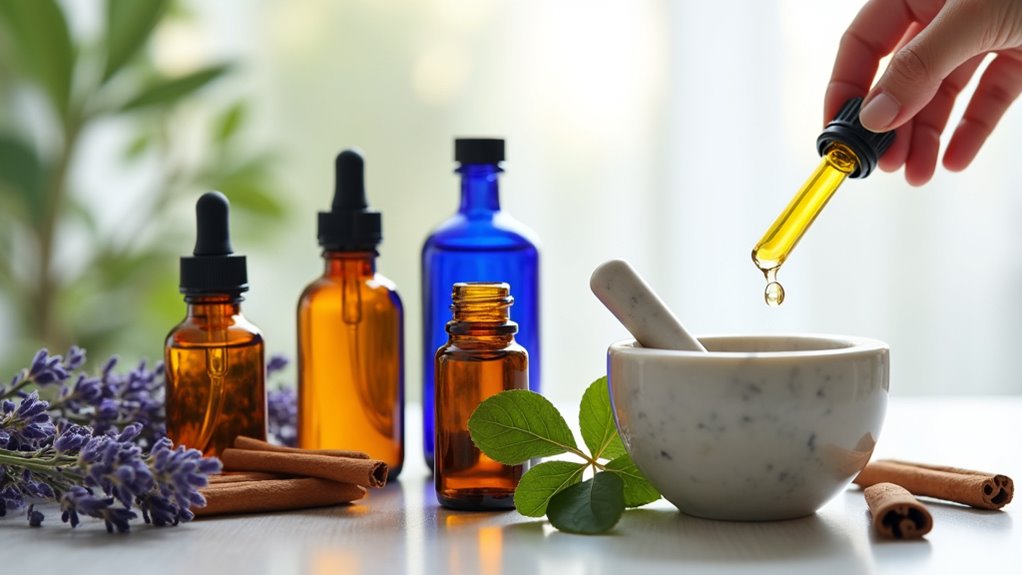
Have you ever felt the subtle shift in your mood when you catch a whiff of lavender or citrus? You’re not imagining it—essential oils can truly transform your daily experience. When you combine these potent plant extracts, you’ll reveal benefits that single oils can’t achieve alone. I’ve found that blending creates something almost magical, like how certain musical notes create a chord that resonates more deeply than individual tones. Maybe it’s time you discovered which combinations might work for your specific needs?
Some of the links in this article may be affiliate links. If you make a purchase through these links, we may earn a small commission at no extra cost to you. Thank you.
The Art and Science of Essential Oil Blending
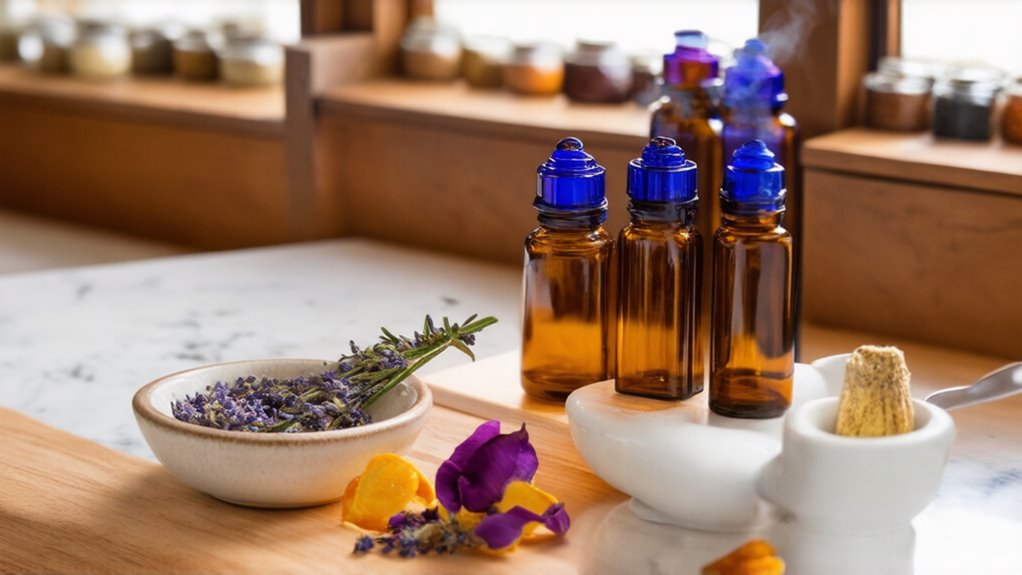
When you first begin exploring essential oil blending, you’ll quickly discover it’s both an intuitive art form and a precise science.
Much like cooking, it requires understanding individual ingredients and how they interact together to create something greater than the sum of its parts.
The alchemy of blending oils mirrors culinary arts—each component contributes its unique character to create harmonious compositions that transcend individual elements.
You’ll want to learn the basic “notes” of oils—top, middle, and base—to create balanced blends.
I think mastering this takes practice, but don’t worry about getting it perfect right away.
Perhaps start with simple 2-3 oil combinations before attempting complex recipes. Additionally, understanding the therapeutic properties of each essential oil can greatly enhance the effectiveness of your blends.
Creating Custom Blends for Your Specific Needs
Once you’ve familiarized yourself with essential oils and their properties, creating custom blends tailored to your specific needs becomes an empowering practice. I think the key is starting with your intended purpose – whether you’re seeking stress relief, better sleep, or perhaps an energy boost – then selecting oils that complement each other both aromatically and therapeutically.
- Begin with a simple formula: 1-2 base notes, 1-2 middle notes, and 1 top note.
- Test small batches first, adjusting drop ratios until you find your perfect balance.
- Keep a journal of your creations, noting both the formula and your body’s response.
Additionally, remember that proper storage is crucial to maintain the potency of your blends, ensuring they remain effective over time.
Top 10 Essential Oil Combinations for Everyday Wellness
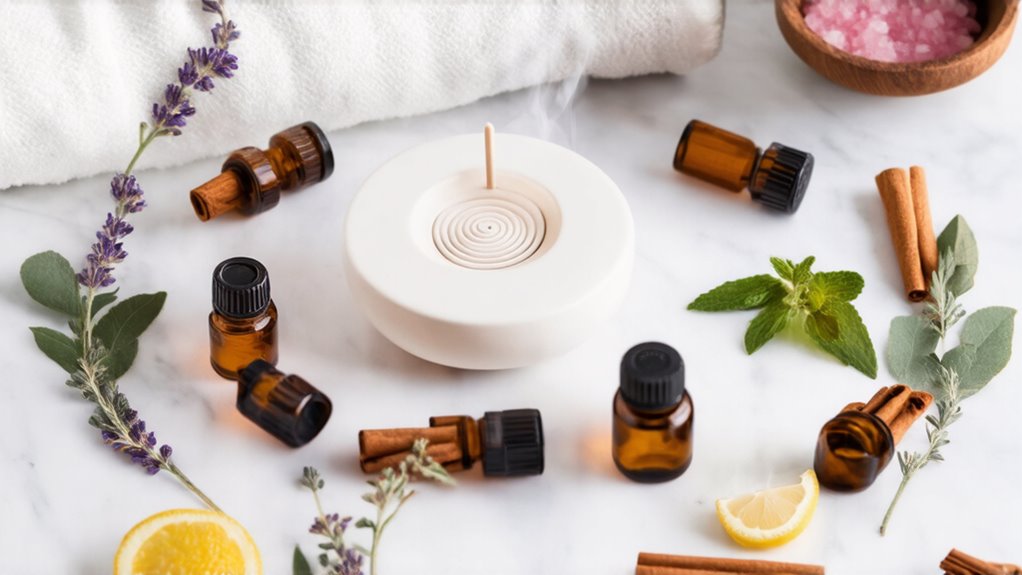
These ten essential oil combinations have become my go-to arsenal for tackling everyday wellness challenges. I think you’ll find them incredibly versatile for your daily needs.
Lavender + peppermint soothes headaches when applied to temples.
For immune support, try lemon + tea tree + eucalyptus in your diffuser.
Struggling with focus? Perhaps frankincense + rosemary will help clear mental fog.
For better sleep, the bergamot, geranium, frankincense, and chamomile blend I mentioned earlier works wonders. Incorporating essential oils into your routine can also promote deep sleep and enhance overall well-being.
Clary sage + ylang ylang eases tension, while wild orange + cinnamon creates an uplifting atmosphere that honestly changes my mood instantly.
Therapeutic Applications of Synergistic Oil Blends
-
- Insomnia relief: Try the bergamot-geranium-frankincense-chamomile blend applied to feet and neck before bedtime
- Pain management: Lavender and peppermint combinations work wonders for tension headaches
- Emotional balance: Citrus oils paired with grounding frankincense help stabilize mood swings. Additionally, essential oils offer benefits without the side effects of prescription medications.
- Insomnia relief: Try the bergamot-geranium-frankincense-chamomile blend applied to feet and neck before bedtime
Safe Practices for Blending and Using Essential Oil Recipes
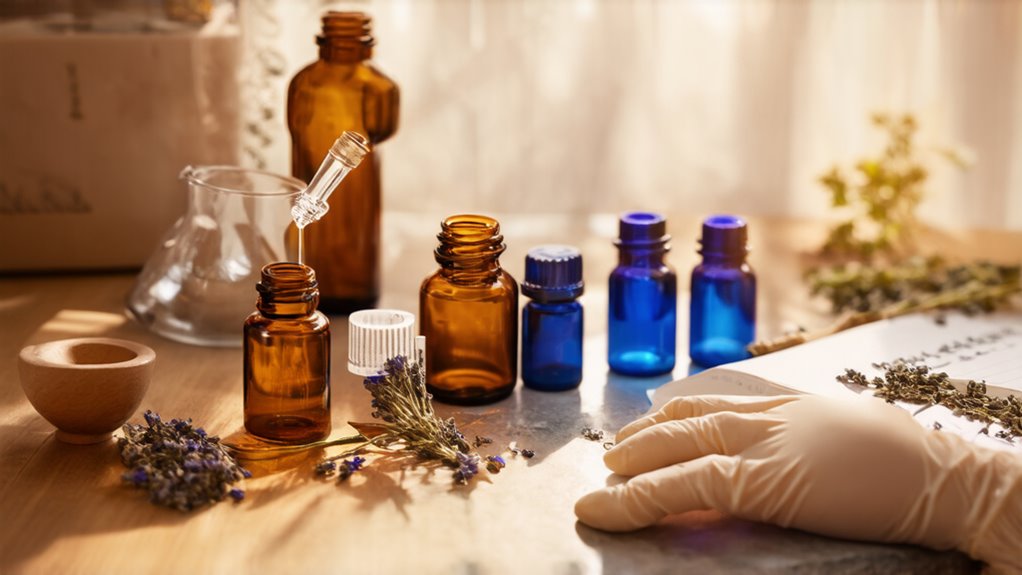
Safety should always be your top priority when working with essential oils, regardless of your experience level.
Whether beginner or expert, prioritize safety first when working with essential oils.
Even natural substances can cause reactions if used improperly. Always dilute oils properly—I think a good rule of thumb is 2-3 drops per teaspoon of carrier oil for most applications.
Never apply undiluted oils directly to skin, and perhaps do a patch test first, especially with new blends.
Keep oils away from eyes, inner ears, and sensitive areas.
Children and pregnant women require extra caution. Some oils aren’t suitable for them at all. Proper dilution ratios are essential for safe application, particularly with children.
When in doubt, consult a qualified aromatherapist before experimenting with new recipes.
Frequently Asked Questions
Can Pregnant Women Safely Use Essential Oil Blends?
Consult your doctor before using essential oils during pregnancy. You’ll need to avoid certain oils like clary sage and rosemary, and always dilute properly for safety.
How Long Do Homemade Essential Oil Blends Stay Potent?
Ever wonder about your blend’s lifespan? You’ll find most homemade essential oil blends remain potent for 6-12 months when stored in dark glass bottles away from heat and light sources.
Why Do Some Oils Separate in My Blends?
Oil separation occurs when you’ve mixed water-based and oil-based ingredients without an emulsifier. Different oil densities can also cause layers. Always shake before using to recombine your blend.
Can Essential Oil Blends Stain Clothing or Furniture?
Yes, some essential oils can stain your clothing and furniture. Dark oils like cinnamon and patchouli are particularly prone to leaving marks, so you’ll want to apply them carefully.
Should Essential Oil Blends Be Stored Differently Than Single Oils?
Like precious gems, essential oil blends should be stored the same as single oils—in dark glass bottles, away from heat and light, tightly sealed to preserve their potency.
About The Author