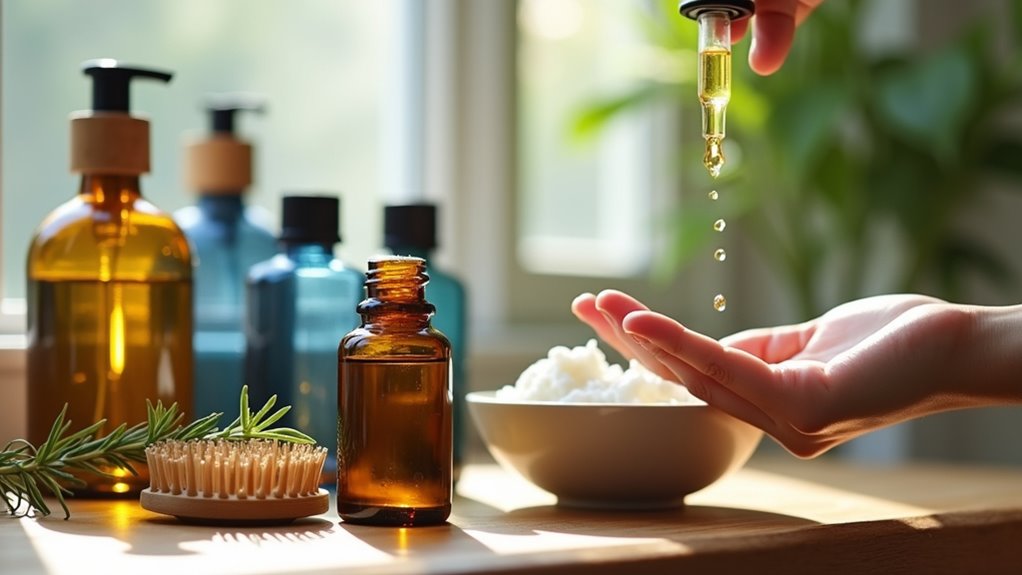
Essential oils might just be the natural hair solution many have overlooked. These concentrated plant extracts work by nourishing the scalp and strengthening hair follicles without harsh chemicals found in commercial products. Most people don’t realize that proper application—mixing with carrier oils and consistent use—makes all the difference in effectiveness. Perhaps the most compelling aspect is how specific oils target different concerns, from thinning to dryness. The transformative results often speak for themselves, though patience remains key.
Some of the links in this article may be affiliate links. If you make a purchase through these links, we may earn a small commission at no extra cost to you. Thank you.
Understanding Essential Oils and Their Hair Benefits
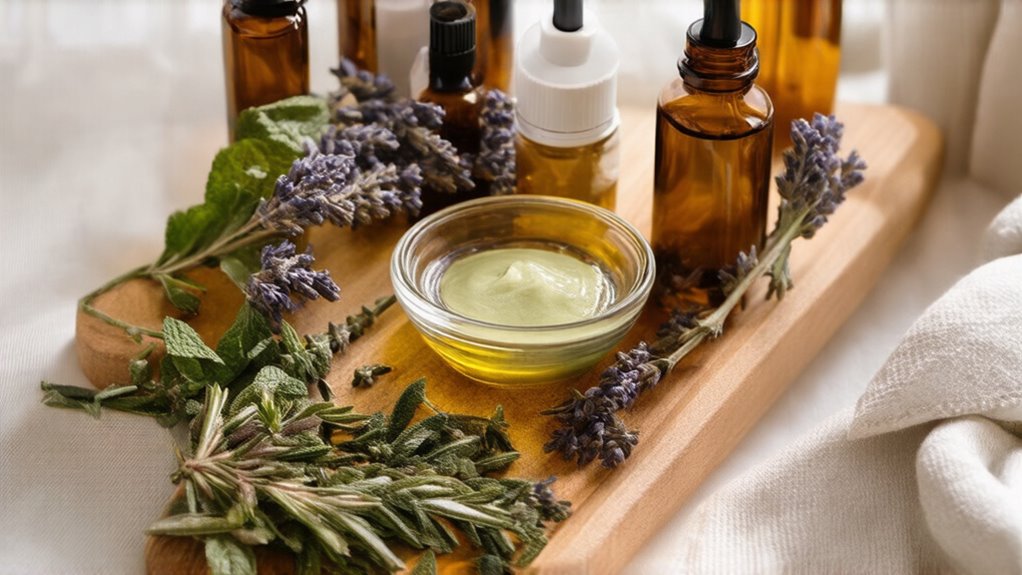
While many people view essential oils merely as pleasant fragrances for aromatherapy, these powerful plant extracts actually offer remarkable benefits for hair health and growth. Their concentrated botanical properties can address various hair concerns from root to tip.
Essential oils work by improving circulation to hair follicles, strengthening the hair shaft, and providing natural moisture. They’re particularly effective when paired with carrier oils like jojoba or almond oil, which help deliver their potent compounds to the scalp.
Different oils target specific issues – lavender works for nearly all hair types, while cypress helps control oiliness. Coconut oil’s ability to stimulate hair growth complements the use of essential oils for optimal results.
Perhaps most impressive is how they accomplish this without the harsh chemicals found in many commercial products.
The Science Behind Essential Oils for Hair Health
The science behind essential oils for hair care isn’t just compelling—it’s rooted in centuries of traditional use now validated by modern research.
Essential oils deliver time-tested hair remedies backed by scientific research, bridging ancient wisdom with modern understanding.
These plant extracts work primarily through their ability to penetrate the hair shaft and interact with the scalp’s sebaceous glands, perhaps explaining why oils like rosemary and cedarwood show promising results for circulation improvement.
Essential oils contain terpenes and phenolic compounds that may strengthen the hair follicle itself.
I think what’s most interesting is how these natural substances interact with our scalp’s microbiome—something we’re just beginning to understand.
Different oils seem to offer targeted benefits, which is why combining them often yields better results than using just one.
DIY Essential Oil Recipes for Common Hair Problems

Creating your own essential oil hair treatments gives you control over exactly what touches your scalp and strands.
Different hair types require specific oils – perhaps the most effective approach is matching recipes to your particular concerns.
For common hair issues, try these targeted blends:
- Dry, damaged hair: Mix 5 drops sandalwood, 3 drops lavender, and 1 tablespoon avocado oil
- Oily scalp: Combine 4 drops cypress, 4 drops peppermint, and 2 tablespoons jojoba oil
- Dandruff: Blend 6 drops cedarwood, 4 drops rosemary, and 1 tablespoon almond oil
Remember that consistency is key. I think most people see results after several weeks of regular application. Additionally, using medium-chain fatty acids in your hair treatments can help improve overall scalp health.
Choosing the Right Carrier Oils for Your Hair Type
Selecting appropriate carrier oils forms the foundation of any effective essential oil hair treatment. Different carrier oils offer unique benefits, making it essential to match them with your specific hair needs.
Jojoba oil mimics natural sebum, making it perhaps the most versatile option for all hair types. For those with dry, brittle strands, avocado and cocoa butter provide intense moisture.
I think almond oil works beautifully for normal hair, adding shine without weighing it down. Oily hair types might benefit from lighter options like grapeseed oil, though it isn’t on our must-have list.
Essential Oil Application Methods and Best Practices
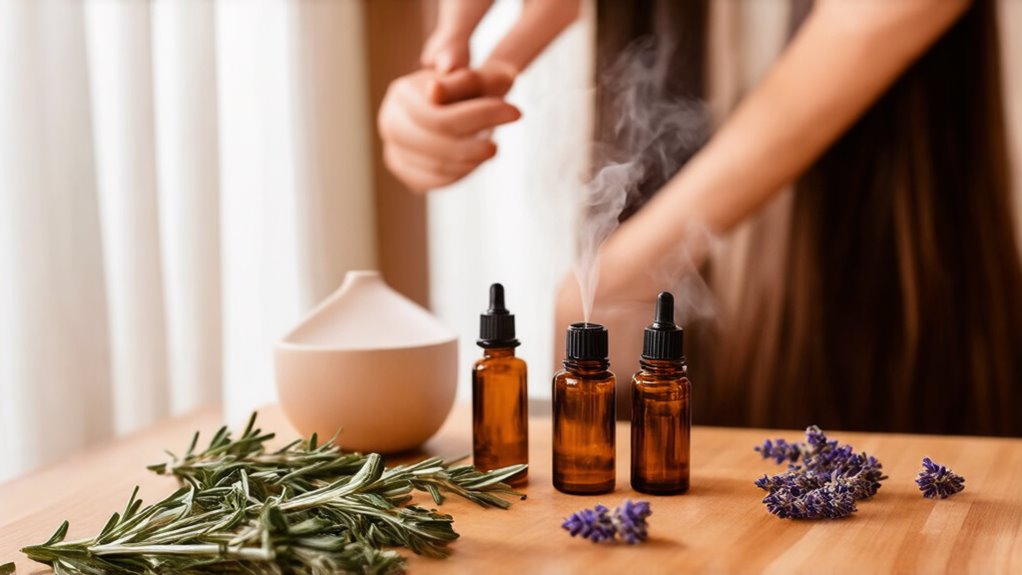
Proper application methods remain crucial when using essential oils for hair treatments, regardless of which oils you select. The techniques used can greatly impact effectiveness, perhaps even more than the specific oil combinations themselves.
Most experts recommend diluting essential oils properly in carrier oils before applying to prevent scalp irritation.
Essential oils must be diluted in carrier oils to protect your scalp from potential irritation.
- Create a warm oil treatment by gently heating carrier oils (never microwave essential oils)
- Apply oil mixtures to damp hair for better absorption
- Consider overnight treatments with a shower cap for intensive repair
Remember to patch test new oil combinations on your inner wrist before full application.
I think consistent application—rather than sporadic treatments—tends to yield the most noticeable improvements for most hair types. Additionally, using natural astringent properties can help absorb excess sebum without stripping moisture.
Frequently Asked Questions
How Long Do Essential Oil Treatments Take to Show Visible Results?
Essential oil hair treatments typically show visible results after 2-4 weeks of consistent use. Individual results may vary depending on hair type, condition, and specific oils used.
Can Essential Oils Change Hair Color or Affect Colored Hair?
Essential oils cannot change hair color naturally but may gradually lighten hair with citrus oils. They’re generally compatible with colored hair, though some oils might strip dye if used excessively.
Are There Any Essential Oils Pregnant Women Should Avoid?
Pregnant women should avoid certain essential oils including rosemary, clary sage, cinnamon, and thyme. They can stimulate contractions or affect hormone levels. Always consult healthcare providers before using any essential oils during pregnancy.
How Should Essential Oils Be Stored to Maintain Potency?
Like fine wine protected from light, essential oils should be stored in dark glass bottles, tightly sealed, in cool locations away from sunlight. This preserves their therapeutic compounds and extends shelf life.
Can Children Safely Use Essential Oil Hair Treatments?
Essential oils should be used cautiously for children. Most products need significant dilution for those under 12, and some oils aren’t recommended for children under 6 at all.
About The Author