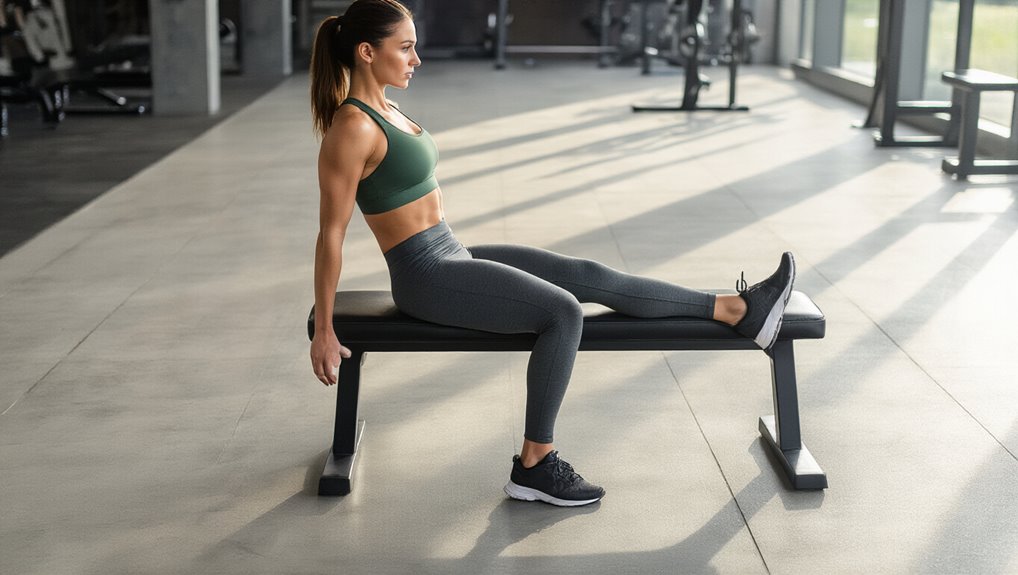
Building serious leg strength isn’t rocket science, but most people get it wrong from the start. They’ll jump into fancy machines or complicated routines when what they actually need is mastering the basics first. Think of it like constructing a house – you wouldn’t start with the roof before laying a solid foundation, right? Well, maybe some weekend warriors would try that approach, but smart builders know better. The key exercises that’ll transform weak legs into powerhouses require proper technique over heavy weight.
Some of the links in this article may be affiliate links. If you make a purchase through these links, we may earn a small commission at no extra cost to you. Thank you.
Barbell Deadlift for Maximum Muscle Engagement
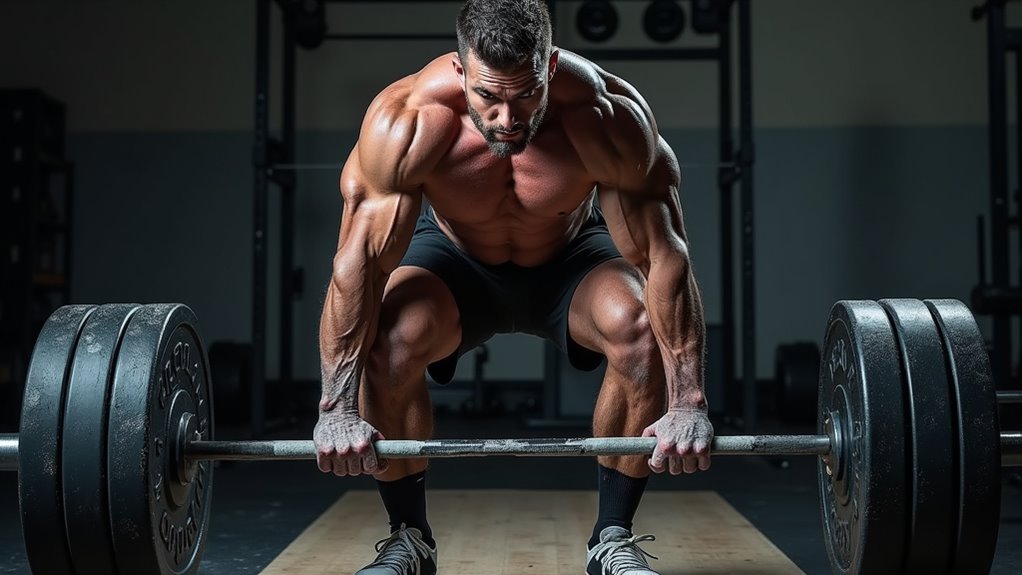
Picture the barbell deadlift as the Swiss Army knife of leg exercises – it’s probably one of the most all-encompassing movements you’ll find in any serious lifter’s toolkit. This powerhouse targets your hamstrings, quads, glutes, and even your back muscles all in one motion. Think of it like laying a foundation – you’re building from the ground up. Position your feet under the bar, grip outside your knees, then drive those hips forward to stand tall. The key is resetting after each rep, kind of like – well, actually – starting fresh each time for perfect form.
Barbell Squat for Lower Body Power Development

Load up that barbell and step into what many consider the king of all leg exercises – the barbell squat delivers raw power development like nothing else can. Think of it as building your foundation from the ground up. Set that bar at shoulder height, duck under it, and you’re working your quads, hamstrings, glutes, and calves all at once. The technique’s straightforward: squat down keeping your back straight, then explode back up. It’s like a controlled demolition in reverse – breaking down to build back stronger than before.
Romanian Deadlift for Enhanced Hamstring Activation

Hinge at those hips and discover what a University of Memphis study confirmed – the Romanian deadlift maximizes hamstring activity better than most other leg exercises. Think of it like a controlled hinge motion, similar to closing a toolbox lid. You’ll feel those hamstrings fire up immediately.
Start with feet hip-width apart, gripping the barbell at your thighs. Keep that back straight – I can’t stress this enough – and lower the bar while pushing your hips back. It’s not a squat; you’re hinging. Contract those glutes hard to return to standing. This movement builds serious hamstring strength.
Leg Press for Beginner-Friendly Strength Building
Most gym newcomers find the leg press machine less intimidating than wrestling with a loaded barbell on their shoulders – and honestly, there’s nothing wrong with that approach. The leg press is like training wheels for your legs – it gives you all the muscle-building benefits without the balance headaches. You’re basically sitting in a chair, pushing weight with your feet. Simple as that. Position yourself on the plate, bend those knees to ninety degrees, then drive through your heels. It hammers your quads and glutes effectively while you learn proper form. Smart foundation building, if you ask me.
Dumbbell Lunge for Functional Movement Training
Step forward with a dumbbell in each hand, and you’re basically mimicking how humans naturally move through life – walking, climbing stairs, getting up from chairs. That’s what makes lunges so valuable – they train real-world movement patterns. Think of it like building muscle memory for everyday tasks. The dumbbell lunge targets your quadriceps and glutes while improving core stability. It’s compact, doesn’t need much space, and works well in crowded gyms. Step forward with one leg, keep your front thigh parallel to the ground, then return to standing. Alternate legs for at least twelve total reps.
Barbell Glute Bridge for Posterior Chain Strength
Lying flat on your back with a barbell positioned across your hips might look awkward at first, but the glute bridge is actually one of the most underrated exercises in any leg routine. Think of it like building a solid foundation—you’re literally creating a bridge with your body. This move targets your glutes and hamstrings better than most people realize. Here’s the thing: proper form matters more than heavy weight. Drive through your heels, squeeze those glutes at the top, and don’t rush the movement. It’s surprisingly effective for posterior chain strength.
Building Your Progressive Leg Training Program
When it comes to building a solid leg training program, think of it like constructing a house—you need a strong foundation before you can add the fancy details. Start with basic movements like squats and deadlifts—these are your concrete slab. You can’t rush the process, and honestly, trying to skip ahead usually backfires.
Progressive overload is your blueprint for success:
- Begin with bodyweight movements before adding external load
- Increase weight by 5-10 pounds weekly when you can complete all sets
- Master form first—sloppy technique leads to injury, not gains
- Schedule leg sessions 2-3 times per week for ideal recovery
About The Author


