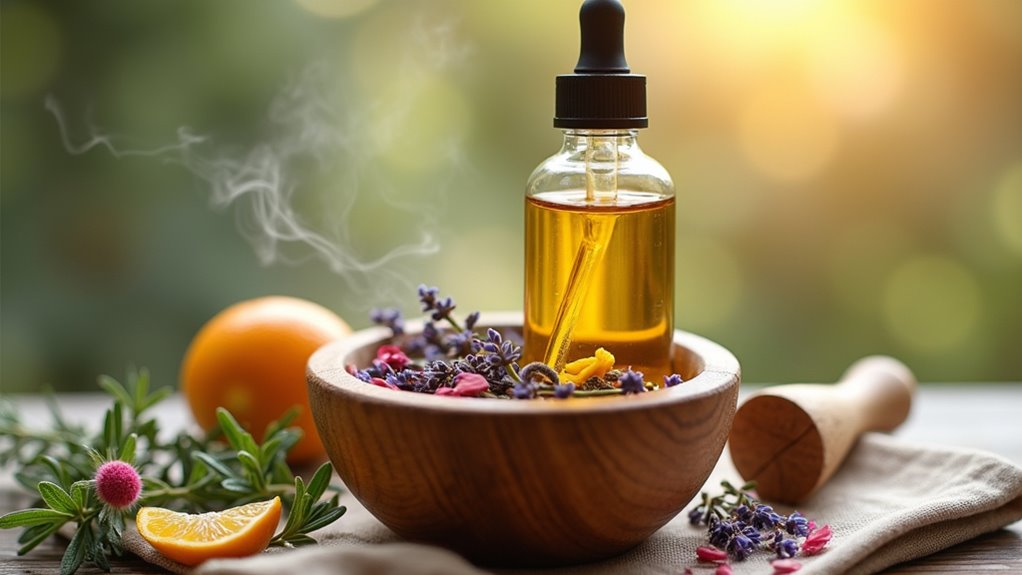
Essential oils hold ancient secrets that modern science is just beginning to understand. Their potency depends greatly on quality, yet many consumers remain unaware of what separates therapeutic-grade oils from diluted commercial versions. Extracting the full benefits requires knowledge about proper sourcing, storage, and application techniques. Perhaps the most overlooked aspect is verification—knowing exactly what’s inside those tiny amber bottles. The difference between authentic and adulterated oils isn’t just about price; it could determine whether you experience genuine healing properties or merely pleasant scents.
Some of the links in this article may be affiliate links. If you make a purchase through these links, we may earn a small commission at no extra cost to you. Thank you.
The Science Behind Pure Essential Oil Benefits
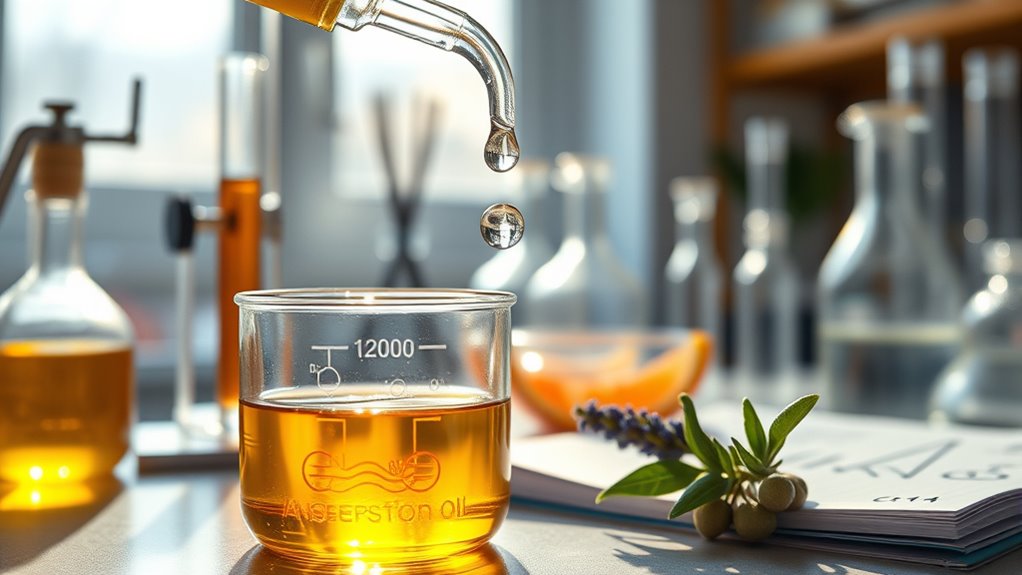
When exploring the fascinating world of essential oils, understanding the science behind their benefits becomes crucial for anyone seeking natural wellness solutions. Pure essential oils contain concentrated plant compounds that interact with our bodies in remarkable ways, perhaps more effectively than we initially realized.
Different extraction methods greatly impact the quality of oils. Steam distillation tends to preserve more beneficial properties than solvent extraction, I think. The aroma profile of a quality oil reveals its purity – complex, nuanced scents indicate minimal processing, while flat or chemical-like smells suggest adulteration. Modern extraction techniques have evolved while honoring traditional methods, ensuring that essential oils retain their therapeutic properties.
The therapeutic potential of these oils depends entirely on maintaining their natural chemical composition through proper handling.
How to Verify Your Essential Oils Are Genuinely Pure
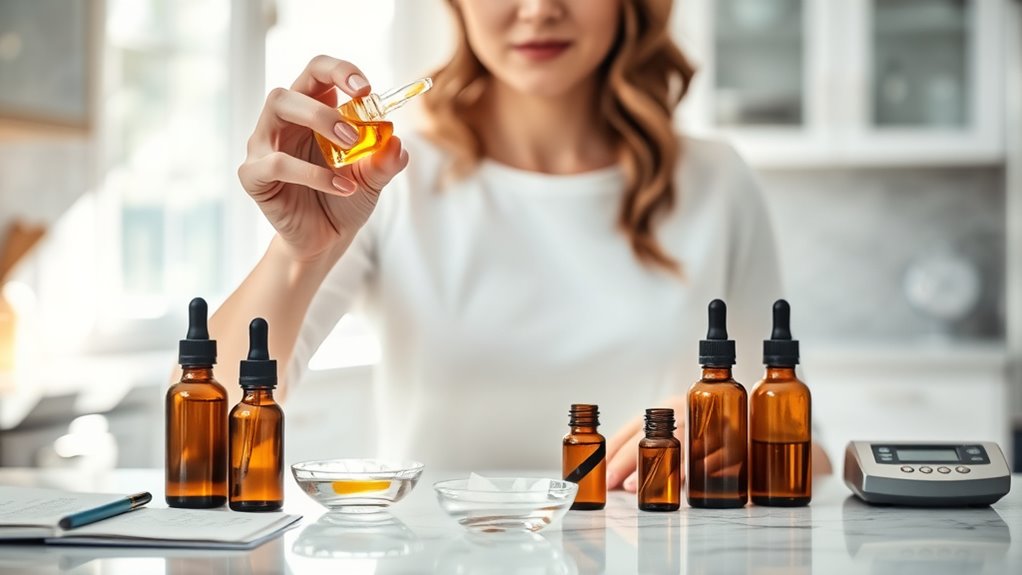
How can consumers reliably determine if their essential oils are genuinely pure amid a market saturated with misleading claims? The answer lies in understanding proper oil sourcing and utilizing testing methods that reveal authenticity. Perhaps the most reliable approach combines label investigation with sensory evaluation.
- Check for botanical Latin names and country of origin on labels
- Assess the oil’s aroma – pure oils have complex, distinctive scents
- Compare pricing across brands (unusually cheap oils are suspect)
- Research company testing practices and transparency
- Consider the oil’s appearance – pure oils typically leave no residue
Additionally, ensure that the oils are stored in glass containers to maintain their potency and prevent degradation.
Common Adulterants and Red Flags in Commercial Oils
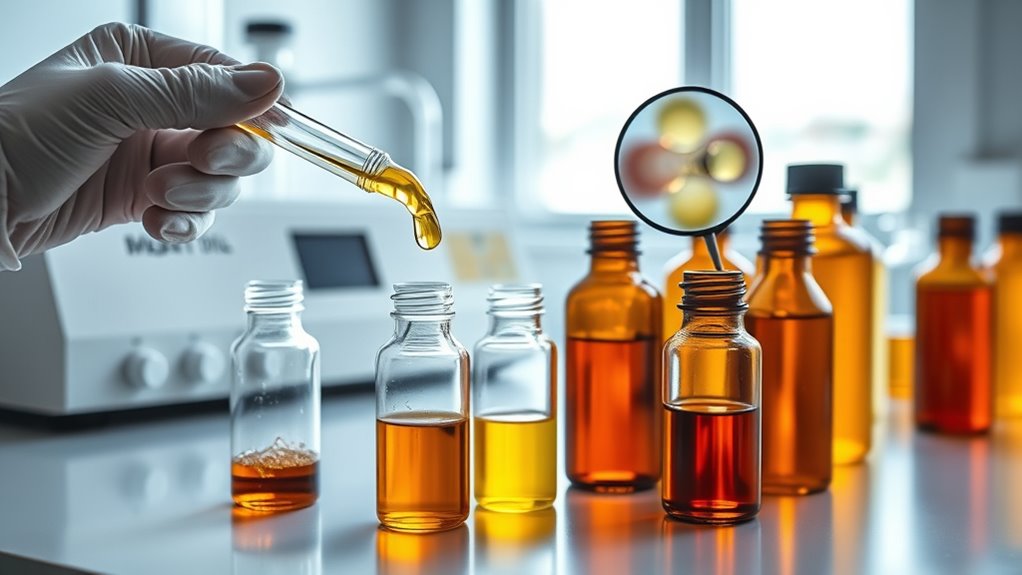
The industry’s darkest secret lies in the widespread practice of essential oil adulteration, which undermines consumer trust and compromises therapeutic benefits. Manufacturers often dilute pure oils with synthetic compounds, vegetable oils, or cheaper essential oils to maximize profits.
Quality indicators to watch for include unusually low prices, inconsistent aromas, and oils that feel greasy rather than quickly absorbing. Perhaps the most concerning red flag is packaging without proper botanical names or origin information. For consumers interested in adulteration detection, simple tests can help—genuine oils leave no greasy residue on paper and rarely cause skin irritation when properly diluted. Additionally, using essential oils for emotional balance can enhance your overall well-being by addressing depressive symptoms naturally. I think vigilance remains our best defense.
Master Storage Techniques to Preserve Your Oil Investment
Precious amber bottles line most aromatherapy enthusiasts’ shelves, safeguarding liquid investments worth far more than their volume suggests. Proper storage conditions directly impact oil longevity, potentially extending shelf life from mere months to several years.
I think most people underestimate how quickly environmental factors can degrade these volatile compounds. Heat, light, and oxygen are perhaps the greatest enemies of essential oil integrity.
Environmental factors rapidly degrade essential oils—heat, light, and oxygen are the greatest enemies of these delicate volatile compounds.
- Store bottles in cool, dark cabinets away from windows and heat sources
- Always replace caps tightly after each use
- Consider refrigeration for citrus oils which tend to oxidize faster
- Transfer oils to smaller bottles as they’re used up to minimize air exposure
- Label purchase dates to track freshness – most oils remain viable for 1-3 years
Frequently Asked Questions
Can Essential Oils Cause Allergic Reactions on Sensitive Skin?
Essential oils can cause allergic reactions on sensitive skin, resulting in redness, itching, or inflammation. Performing patch tests before full application helps identify potential sensitivities to specific oils.
Are Therapeutic-Grade Essential Oils Regulated by Government Standards?
Despite claims that glitter with promises of quality, therapeutic-grade essential oils lack standardized government regulation. The term represents marketing language rather than official oil purity standards recognized by regulatory agencies.
How Do Carrier Oils Affect Essential Oil Potency?
Carrier oils dilute essential oils without reducing their therapeutic benefits. The dilution increases surface area coverage while providing additional carrier oil benefits like improved absorption and reduced skin sensitivity.
Can Essential Oils Be Safely Used Around Pets?
Many essential oils pose safety risks to pets due to their sensitive systems. Pet safety depends on oil types, with specific oils being toxic when inhaled or contacted by animals.
What’s the Environmental Impact of Essential Oil Production?
Essential oil production impacts biodiversity conservation through resource-intensive harvesting practices. Sustainable sourcing methods can minimize negative environmental effects, reducing deforestation and protecting plant species from overexploitation in vulnerable ecosystems.
Conclusion
Like Aladdin discovering his magic lamp, the journey to essential oil mastery reveals treasures beyond mere fragrance. Quality oils, properly verified and stored, become powerful allies in our wellness quest. Perhaps the greatest secret isn’t in the oil itself, but in our discernment—choosing purity over price, authenticity over convenience. The ancient wisdom of botanical medicine, when honored through quality, transforms these precious extracts into nature’s true healing legacy.
About The Author