
Most people think they’re doing chin ups correctly, but they’re actually missing about 70% of the exercise’s potential. It’s like using a power drill when you’ve got the clutch set wrong—you’re going through the motions, but you’re not getting the real work done. The grip position alone changes which muscles fire first, and honestly, most folks don’t realize their core should be working harder than their arms. There’s a whole system at play here that’ll change how you approach upper body training.
Some of the links in this article may be affiliate links. If you make a purchase through these links, we may earn a small commission at no extra cost to you. Thank you.
The Complete Muscle Activation Map of Chin Ups
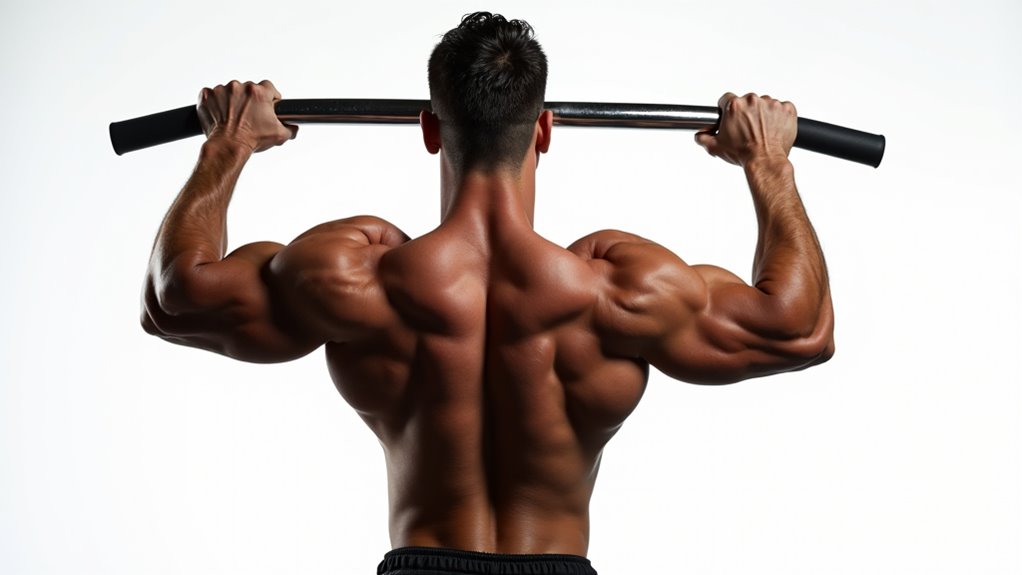
When you grab that chin up bar and start pulling yourself up, you’re actually firing up a whole network of muscles that work together like a well-oiled machine. Think of it like wiring a house – every circuit has to connect properly for the system to work.
Your abs are doing the heavy lifting here, acting as your main stabilizers. The traps handle shoulder stability, while your lats pull everything together. Your biceps get a solid workout too, though they’re not running the show. Even your forearms and rhomboids join the party, creating this coordinated effort that gets you up there.
Trapezius: Your Shoulder Stability Powerhouse
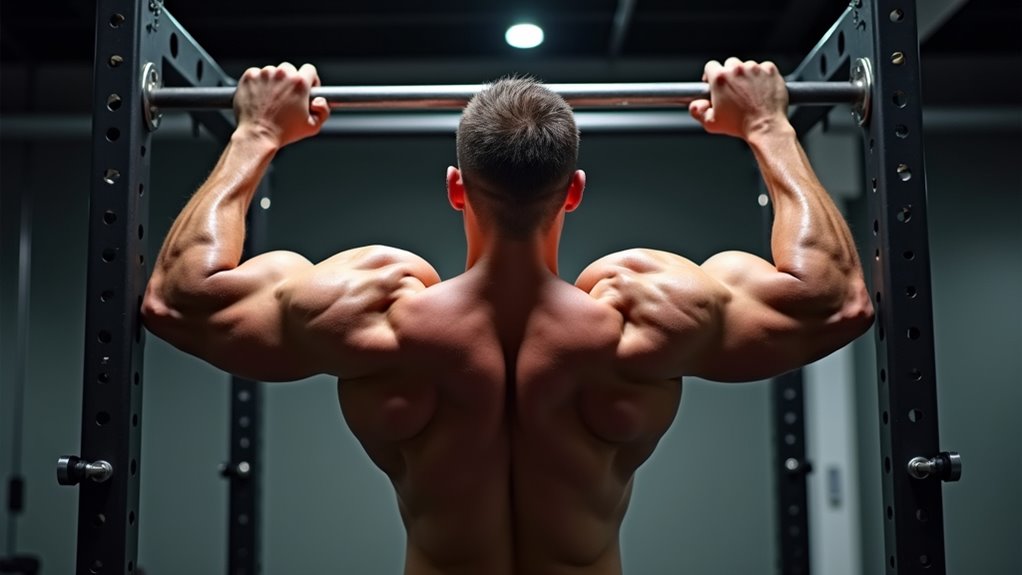
Picture the trapezius as the foreman of your shoulder construction crew – it’s actually doing most of the heavy lifting when it comes to keeping everything stable during a chin up. This muscle acts like three different workers on the same job site, with upper, middle, and lower sections all pulling their weight.
Think of it this way – without proper stabilization, you’d be like trying to lift heavy materials on an unstable platform.
- Upper traps elevate and rotate your shoulder blades upward
- Middle traps retract and squeeze shoulder blades together
- Lower traps depress and stabilize the entire shoulder girdle
Latissimus Dorsi and the Science of Pulling Power

The latissimus dorsi muscles – or “lats” as most folks call them – function like the main support cables on a suspension bridge, doing the actual heavy lifting work of pulling your body weight upward. These wide, wing-shaped muscles stretch from your armpits down to your lower back. During chin ups, they’re what yanks your arms down and inward toward your hips. Here’s the thing though – they don’t get as much action as you’d expect because of that narrow, underhand grip. It’s like using a wrench that’s slightly too small for the job.
Why Your Core Matters More Than You Think
Moving up from those lats, there’s an unexpected powerhouse doing most of the work during chin ups – and it’s not what most people think. Actually, research shows the rectus abdominus – your abs – are the most activated muscle group during this exercise.
Think of your core like the foundation of a house. Without it, everything else crumbles. Here’s why your abs matter so much:
- Torso stabilization – prevents unwanted swaying and rotation
- Leg control – keeps your lower body from swinging around
- Power transfer – connects upper body strength to actual lifting force
Strong abs don’t just help; they’re essential.
Chin Ups Vs Pull Ups: Choosing the Right Grip for Your Goals
Grip position might seem like a small detail, but it’s actually the difference between two completely different exercises. Think of it like choosing between a hammer and a screwdriver – both are tools, but they’re designed for specific jobs.
| Aspect | Chin Ups | Pull Ups |
|---|---|---|
| Grip | Palms facing you | Palms facing away |
| Primary Focus | Biceps emphasis | Upper back emphasis |
| Difficulty | Generally easier | Typically harder |
| Reps Possible | Usually more | Usually fewer |
| Best For | Arm development | Back strengthening |
Well, you’ll probably find chin ups feel more natural at first. The supinated grip lets your biceps do more work, which – let’s be honest – makes them easier for most people.
About The Author


